Almond Flour Peanut Butter Cookies: Easy 3-Ingredient Recipe
Almond flour peanut butter cookies made with just 3 ingredients in one bowl. Soft, chewy, gluten-free biscuits ready in under 25 minutes. A foolproof family favourite.
The Kind of Baking Day I Actually Enjoy
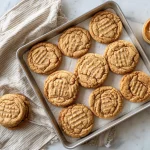
Some afternoons just call for a batch of cookies, and I don’t always want to drag out the stand mixer or spend an hour measuring seventeen things. That’s where almond flour peanut butter cookies come in. Three ingredients. One bowl. Done in under 25 minutes, start to finish, and the result is a soft, slightly chewy cookie that honestly surprises people when you tell them what’s in it.
I’ve made these more times than I’d care to admit, usually on a weeknight when someone in my house starts orbiting the pantry looking hopeful. Almond flour peanut butter cookies have become my go-to answer for that particular problem. They’re gluten-free without making a big deal of it, they hold together well, and they taste like an actual cookie, not a sad substitute for one.
The almond flour is what does most of the heavy lifting here. It gives the cookies a tender, slightly dense crumb that’s more satisfying than you’d expect from something this straightforward. I grab the Woolworths Macro almond flour most of the time, though Harris Farm usually stocks a couple of good options too.
What Makes These Actually Work
The ratio is everything
Look, a lot of 3-ingredient cookie recipes fall apart, sometimes literally. The reason almond flour peanut butter cookies work is that almond flour already contains enough natural fat and protein to bind with the peanut butter without needing a separate flour or leavening agent. You’re essentially letting the ingredients do what they’re already good at.
Almond flour doesn’t behave like plain flour. It won’t form gluten, which means you can’t overwork the dough. That’s kind of a gift for anyone who tends to fuss. The cookies spread just enough during baking to go from sticky ball to proper round biscuit, and they firm up as they cool rather than in the oven, so don’t panic if they look underdone when you pull the tray out.
Egg is the third ingredient, and it’s doing real structural work. Without it, you’d get a crumbly mess. With it, the dough comes together in about 60 seconds flat.
One more thing: the peanut butter brand matters more than you’d think. I’ve used both smooth and crunchy, and both work, but the natural styles (the ones where the oil separates at the top) can make the dough a bit loose. Bega peanut butter or the Aldi Diplomat smooth peanut butter give you a more consistent result right out of the jar.
What You’ll Need
You probably already have all of this. Almond flour peanut butter cookies are the kind of recipe that works with pantry staples, no special trip to the shops required.
The almond flour should be blanched and finely ground, not almond meal. Almond meal (which still has the skins) is coarser and gives a grainier texture. The difference matters. Most Woolworths and Coles stores stock both, so just check the label. For the peanut butter, I’d say go with smooth if it’s your first time making these, mostly because the dough is easier to portion. And use a free-range egg if you can get one. Australian Eggs has a solid rundown on why eggs behave differently in baking, which is worth a read if you’re curious.
For an optional fourth touch, a small pinch of flaky salt on top before baking does something genuinely nice to the flavour.
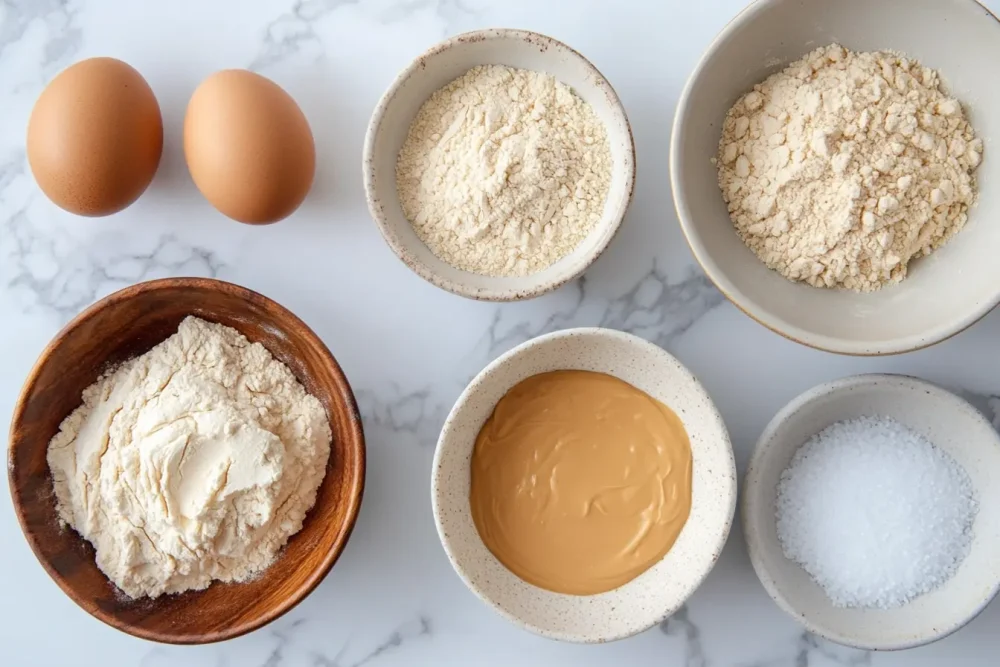
- 250g (2 cups) blanched almond flour, finely ground
- 240g (1 cup) smooth peanut butter (Bega or similar)
- 1 large egg, free-range
- Optional: flaky sea salt for topping (Maldon or Murray River)
How to Make Them
Preheat your oven to 180°C (350°F, Gas Mark 4). Line a large baking tray with baking paper.
1. Combine the dough
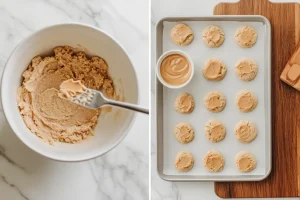
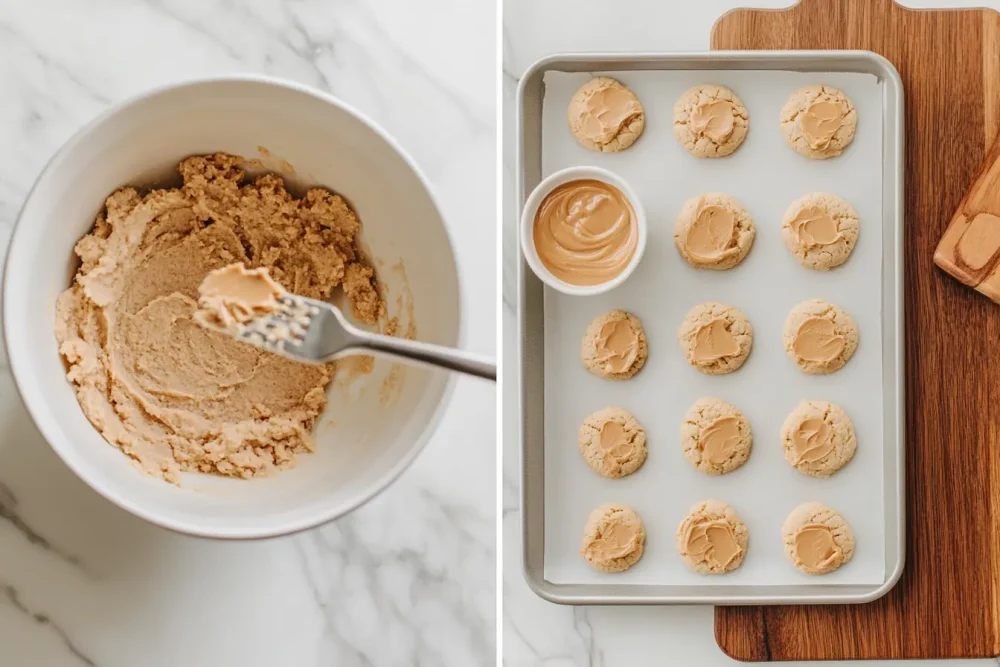
Add the almond flour, peanut butter, and egg to a medium bowl. Mix with a fork until a thick, uniform dough forms. This takes about 60-90 seconds. The dough will be stiff but workable.
2. Portion and shape
Roll tablespoon-sized portions into balls (roughly 30g each) and place them about 5cm apart on the lined tray. You should get 12 from this batch.
3. Press with a fork
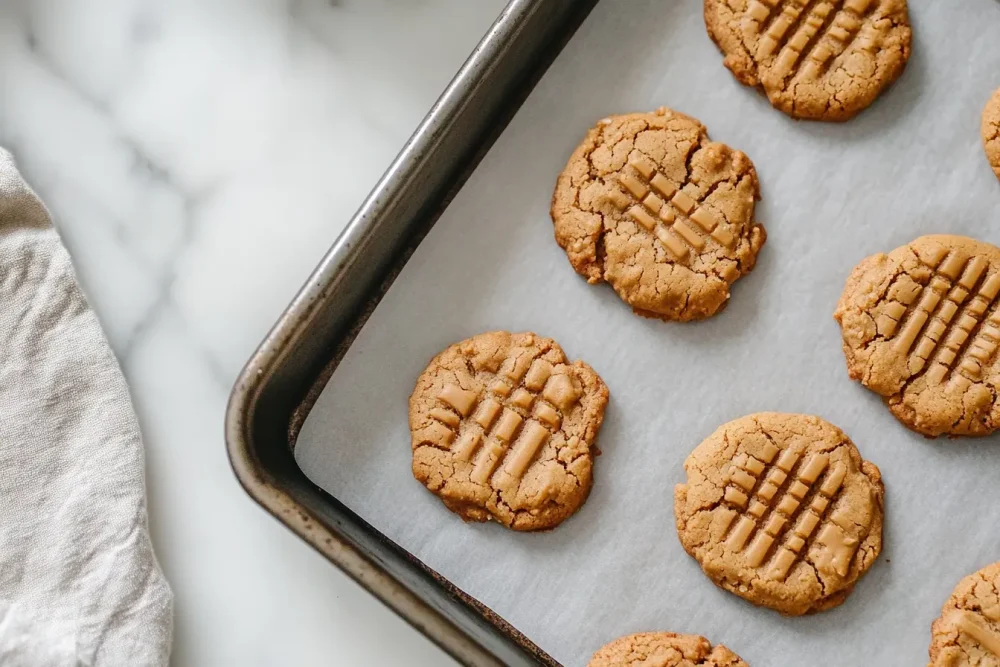
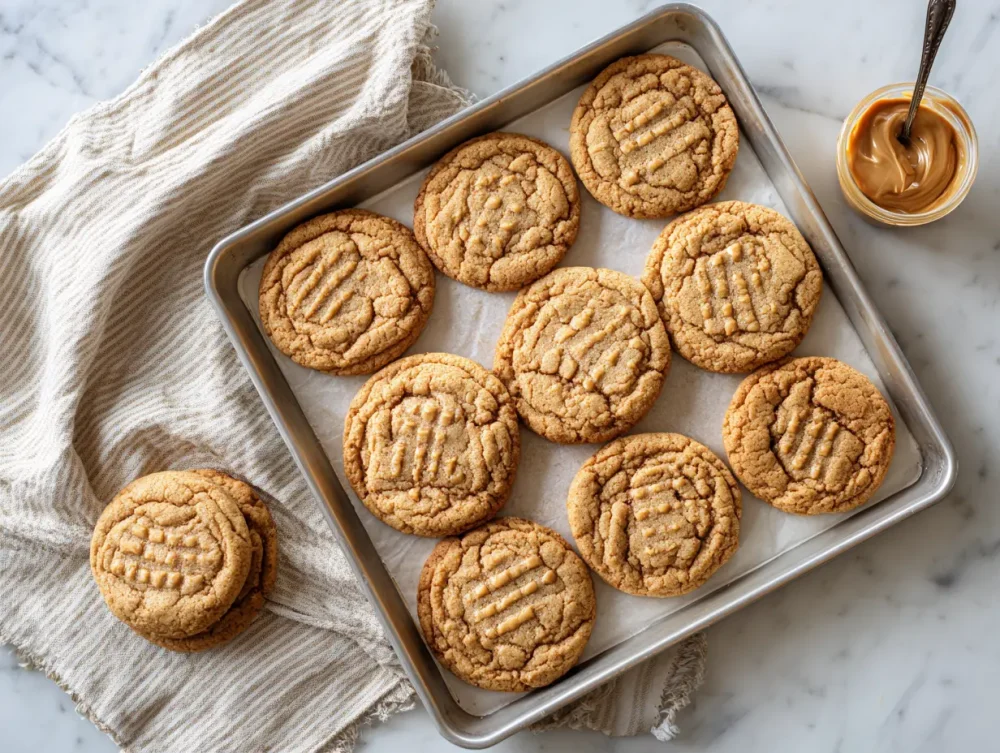
Use a fork to press each ball down twice in a crosshatch pattern, flattening to about 1cm thick. If the dough sticks to the fork, dip it in a little cold water between presses.
4. Add salt and bake
Scatter a pinch of flaky salt over each cookie if using, then bake for 10-12 minutes until the edges are just golden. The centres will look slightly underdone. That’s fine.
5. Cool on the tray
Leave the cookies on the tray for 10 minutes before moving them. They firm up as they cool. Trying to move them early is how they fall apart. Ask me how I know.
For more gluten-free baking ideas using similar ingredients, the gluten free peanut butter cookies recipe on the site is worth bookmarking too.
My Take on These
Right, so the first time I made almond flour peanut butter cookies, I pulled them out of the oven convinced I’d done something wrong. They looked too soft, too pale around the middle, and I nearly put them back in for another five minutes. I’m glad I didn’t.
Once they cooled, the texture was spot on, dense without being heavy, with a clean peanut butter flavour that wasn’t masked by flour or anything else. My daughter asked if I’d bought them from somewhere, which I’m choosing to take as a compliment.
I think the appeal of this recipe is that it removes most of the ways you can fail at baking. No creaming butter, no sifting, no resting the dough. You mix three things together and put them in the oven. The result is a cookie that earns its place on any afternoon plate, and one I’ll probably keep making long after I’ve found a reason to complicate it.
What I Got Wrong Before I Got It Right
Honestly, testing almond flour peanut butter cookies took more rounds than I expected for a three-ingredient recipe. You’d think there’s not much to get wrong. There’s quite a bit, it turns out.
The first batch used a natural peanut butter I’d bought from Harris Farm, the kind with the oil sitting on top. I stirred it well, or so I thought. The dough was noticeably looser than it should have been, and the almond flour peanut butter cookies spread too thin in the oven, going almost lacy around the edges. They tasted fine but looked a mess. Switching to Bega smooth peanut butter fixed that immediately. The stabilised oils give you a consistent texture every single time.
The second problem was oven temperature. My oven runs a bit hot, and at 190°C the edges were browning before the centres had set. I dropped to 180°C and added two minutes to the cooling time on the tray, and that was it. These almond flour peanut butter cookies firmed up exactly as they should.
Round three, I tried almond meal instead of blanched almond flour because that’s what I had on hand. The almond flour peanut butter cookies came out grainier, almost gritty, with a heavier texture that didn’t have the same clean finish. I wouldn’t recommend it. Blanched almond flour is worth hunting down, and both Coles and Woolworths carry it in the health food or baking aisle, usually around $8-10 for a 400g bag.
Tips Worth Knowing
Use a kitchen scale, not cups for the almond flour if you want consistent almond flour peanut butter cookies every time. Cups of almond flour can vary by 20-30g depending on how packed they are, and that changes the dough texture more than you’d expect from a recipe this lean.
Don’t skip the cooling time on the tray. These almond flour peanut butter cookies are genuinely fragile when warm. The structure needs about 10 minutes to firm up after coming out of the oven. I set a timer now because impatience has cost me more than a few cookies.
Sweetness is adjustable. The base almond flour peanut butter cookie recipe isn’t very sweet, which some people love and others find surprising. If you want more traditional biscuit sweetness, stir 60g (1/4 cup) of caster sugar into the dough before portioning. For a richer flavour, 2 tablespoons of pure maple syrup works too, though the cookies will spread a little more, so reduce baking time by a minute.
For another low-fuss biscuit that works on a weeknight, the 4 ingredient peanut butter cookies no egg version on the site uses a different base and is worth comparing.
Variations That Actually Work
Chocolate chip version. Fold 80g of dark chocolate chips (70% cocoa, Lindt or the Woolworths Select dark chips) into the dough before portioning. The chocolate cuts through the richness in a way that makes these almond flour peanut butter cookies feel more like a proper dessert biscuit. I’d say this is probably the most crowd-pleasing version of the three.
Peanut butter and jam thumbprints. Instead of the fork crosshatch, press your thumb into the centre of each ball to make a well, then drop half a teaspoon of good raspberry jam into each one before baking. The jam bubbles slightly and sets as the almond flour peanut butter cookies cool. Kids go absolutely wild for these. Use a Bonne Maman or the Coles brand jam, something with a bit of texture rather than the smooth supermarket squeeze type.
Double peanut crunch. Press 3-4 dry-roasted peanuts into the top of each cookie before baking for extra crunch and a more pronounced peanut flavour. Slightly rustic looking, which in my experience is completely fine for a home kitchen.
How to Serve Them
These are genuinely good on their own, still slightly warm from the tray with a cup of tea. That’s how I eat most of them, honestly. For something a bit more pulled-together, stack two or three almond flour peanut butter cookies on a small plate alongside a scoop of vanilla ice cream. The warm-cold contrast works really well, and the dense cookie texture holds up rather than going soggy.
Almond flour peanut butter cookies also work well as a lunchbox addition for school-age kids, especially if nut-free policies aren’t in play. They travel well in a small container and don’t crumble the way some gluten-free biscuits do. I’d say they’re at their best on day one or two, though they rarely last that long around here.
If you’re putting together a small dessert spread, these pair nicely alongside the easy banoffee pie no bake for something richer, or next to the cottage cheese chocolate mousse if you want a lighter contrast.
How I’m Using These Lately
These almond flour peanut butter cookies have sort of become a fixture in my week, which I didn’t anticipate when I first made them. I’ll bake a batch on Sunday afternoon and keep them in a tin on the bench. Gone by Wednesday, more often than not. My husband takes two with his morning coffee before work, my daughter has one after school, and I usually eat one standing at the kitchen counter at some point in the afternoon telling myself I’ll sit down properly in a minute. Most weeks that tin of almond flour peanut butter cookies costs me less than $6 to fill, and that feels like a very reasonable deal for the enthusiasm they generate.
Storage and Meal Prep
Store these almond flour peanut butter cookies in an airtight container at room temperature for up to 4 days. A tin or glass jar works better than a zip-lock bag, which can trap moisture and make the edges soft. If your kitchen runs warm (Sydney summers, I feel this), pop them in the fridge and they’ll keep for up to a week.
For freezing, layer the baked and cooled almond flour peanut butter cookies between sheets of baking paper in a freezer-safe container. They freeze well for up to 2 months. Thaw at room temperature for about 30 minutes, or give them 10 seconds in the microwave if you want them slightly warm.
You can also freeze the raw dough balls before the fork press. Freeze them on a lined tray until solid, then transfer to a bag. Bake from frozen at 175°C for 13-14 minutes, adding a couple of minutes to account for the chill.
A Word on What’s in These
Almond flour brings a lot to the texture and flavour of these almond flour peanut butter cookies. It’s higher in fat than plain flour, which is what gives them their richness without needing butter or oil. Peanut butter adds protein alongside that familiar, slightly savoury depth that makes almond flour peanut butter cookies taste more complex than three ingredients probably should. According to USDA FoodData Central, smooth peanut butter contains around 25g of protein per 100g, which is a reasonable amount for a biscuit.
The egg binds everything and adds structure that keeps each almond flour peanut butter cookie holding its shape after cooling. Three things, working together, doing exactly what you need them to.
Mistakes That Catch People Out
Moving the cookies too soon. This is probably the most common issue with almond flour peanut butter cookies. They look done before they are. If you slide a spatula under them while they’re still warm, they’ll crack or crumble. Wait the full 10 minutes on the tray.
Using too much peanut butter. If you spoon rather than weigh, it’s easy to go heavy. Too much peanut butter makes the dough oily and the almond flour peanut butter cookies spread flat. 240g to 250g of almond flour is the right ratio. A kitchen scale takes the guesswork out entirely.
Skipping the fork press. Leaving the dough as balls looks like it might work, but the cookies bake unevenly that way. The crosshatch press isn’t just aesthetic; it flattens the dough so heat moves through it consistently, giving you an even bake from edge to centre.
FAQ
Can I make almond flour peanut butter cookies without eggs?
I’d say it’s possible but tricky. A flax egg (1 tablespoon ground flaxseed mixed with 3 tablespoons water, rested for 5 minutes) is the most reliable swap. The almond flour peanut butter cookies will be slightly more fragile and a bit denser than the egg version, but they’ll hold together if you’re careful with the cooling time.
What’s the difference between almond flour and almond meal in almond flour peanut butter cookies, and does it matter which one I use?
It matters quite a bit. Almond flour is made from blanched almonds with the skins removed, then ground finely. Almond meal still has the skins and is coarser. In a recipe like almond flour peanut butter cookies, where the flour is doing most of the structural work, almond meal produces a grainier, heavier result that doesn’t have the same clean texture. Most Coles and Woolworths stores stock both, so check the label before you buy.
My almond flour peanut butter cookie dough feels too dry and won’t come together into a ball. What am I doing wrong, and how do I fix it without ruining the batch?
This usually happens when the peanut butter is on the drier side, which can occur with some natural styles or if the jar was stored in the fridge. Try adding one teaspoon of neutral oil (rice bran or light olive oil) and mix again. If the almond flour peanut butter cookie dough is still crumbly, add a second teaspoon. You’re looking for a dough that holds its shape when pressed together without feeling wet or sticky. If the dough is still too loose after that, it means the peanut butter had too much oil to begin with, and a more stabilised brand will give you a better starting point next time.
Closing
Almond flour peanut butter cookies are the kind of recipe I come back to not because I have to, but because they’re genuinely good and genuinely easy. Three ingredients, one bowl, done in under half an hour. That’s a fair trade for a biscuit tin that stays full for most of the week.
I’d say it’s possible but tricky. A flax egg (1 tablespoon ground flaxseed mixed with 3 tablespoons water, rested for 5 minutes) is the most reliable swap. The almond flour peanut butter cookies will be slightly more fragile and a bit denser than the egg version, but they’ll hold together if you’re careful with the cooling time.
: It matters quite a bit. Almond flour is made from blanched almonds with the skins removed, then ground finely. Almond meal still has the skins and is coarser. In a recipe like almond flour peanut butter cookies, where the flour is doing most of the structural work, almond meal produces a grainier, heavier result that doesn’t have the same clean texture. Most Coles and Woolworths stores stock both, so check the label before you buy.
This usually happens when the peanut butter is on the drier side, which can occur with some natural styles or if the jar was stored in the fridge. Try adding one teaspoon of neutral oil (rice bran or light olive oil) and mix again. If the almond flour peanut butter cookie dough is still crumbly, add a second teaspoon. You’re looking for a dough that holds its shape when pressed together without feeling wet or sticky. If the dough is still too loose after that, it means the peanut butter had too much oil to begin with, and a more stabilised brand will give you a better starting point next time.

Almond Flour Peanut Butter Cookies
Ingredients
Equipment
Method
- Preheat the oven to 180°C (350°F). Line a large baking tray with baking paper.

- Add the almond flour, peanut butter, and egg to a medium bowl. Mix with a fork until a thick, uniform dough forms, about 60 to 90 seconds.
- Roll tablespoon-sized portions of dough into balls, about 30g each. Arrange them 5cm apart on the prepared baking tray.
- Press each dough ball twice with a fork to create a crosshatch pattern, flattening each cookie to about 1cm thick.
- Sprinkle with flaky sea salt if using. Bake for 10 to 12 minutes until the edges are lightly golden while the centers remain slightly soft.
- Leave the cookies on the tray for 10 minutes to cool and firm up before transferring them to a wire rack.