Cottage Cheese Pancakes: 5-Ingredient High Protein Recipe
Cottage cheese pancakes made with 5 simple ingredients and ready in 15 minutes. Fluffy, filling, and foolproof — a family favourite weekend breakfast.
There’s a specific kind of Sunday morning I keep coming back to – the one where the kitchen smells like butter hitting a warm pan, and you’ve got about 20 minutes before everyone wakes up and starts asking what’s for breakfast. That’s exactly when I reach for cottage cheese pancakes. I started making these probably three years ago when I had a tub of Jalna full-fat cottage cheese sitting in the fridge and not much else, and I’ve barely gone back to regular pancakes since. These cottage cheese pancakes come together with just 5 ingredients, they cook in under 15 minutes flat, and they’re genuinely filling in a way that keeps you going well past the 10am slump.
Honestly, I was sceptical the first time. The batter looks a bit odd – kind of lumpy and pale – and I remember thinking I’d made a terrible mistake. But then you flip that first one and it’s golden underneath, slightly puffed, smelling faintly of vanilla. That’s when you know.
Right, let’s get into it.
Why These Cottage Cheese Pancakes Actually Work
The cottage cheese does two things at once in this recipe. It adds a soft, almost creamy interior texture that you don’t get from a standard flour-and-milk batter, and it gives the pancakes enough body that they hold together without needing a long resting time.
Eggs are the second workhorse here. Three whole eggs per batch bind everything and give you that slight lift on the edges – that little puff you see on a good stack. The oats (more on those in a second) add bulk and a subtle chew without making the pancakes dense. A splash of vanilla and a pinch of salt round everything out.
What you end up with is a cottage cheese pancakes recipe that reads like a short list but delivers a proper, satisfying breakfast – the kind that earns its place on a slow weekend morning or a school-day turnaround when you need something fast.
Ingredients
The ingredient list is short by design. I’ve tested this with add-ins and variations over many batches – some worked, some didn’t – and the base recipe below is the one that I keep coming back to. If you want to experiment, I’ll cover variations later in the article.
A quick note on the cottage cheese: I always use full-fat. I’ve tried the reduced-fat version from Woolworths and the pancakes came out slightly watery and didn’t hold their shape as well. Full-fat Jalna or the Woolworths Select full-fat tub are both spot on. Either works.
For the oats, rolled oats blended briefly (I’ll explain in the method) give a smoother batter than just throwing them in whole. I use Woolworths Macro rolled oats, but any standard rolled oat from Coles or Aldi Australia will do the job.
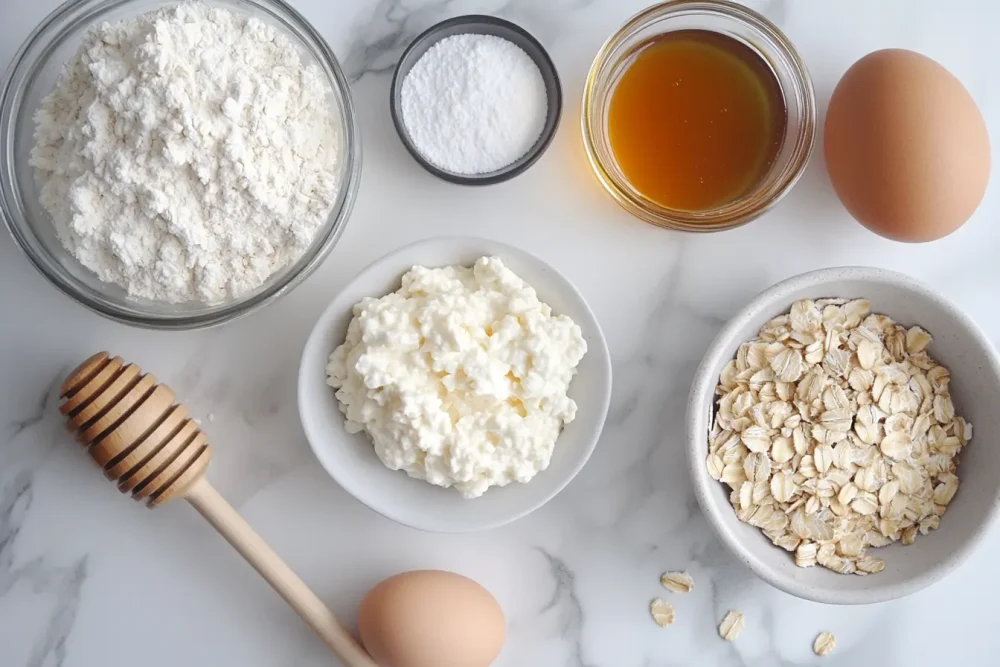
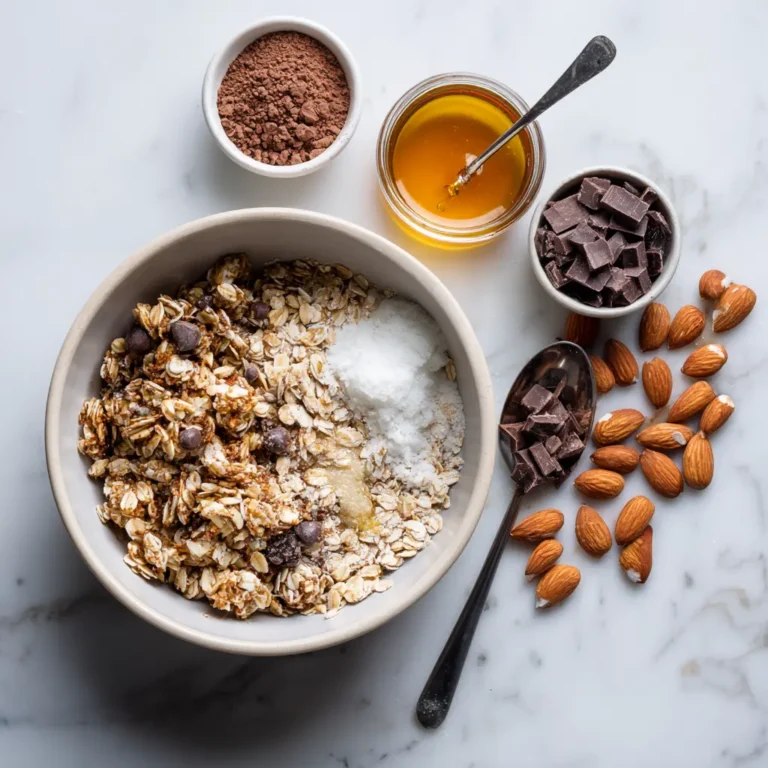
- 250g (1 cup) full-fat cottage cheese
- 3 large eggs
- 60g (½ cup) rolled oats, blended to a rough flour
- 1 tsp vanilla extract
- Pinch of fine salt
Optional add-ons (not counted in the 5 essentials):
- 1 tsp baking powder, for extra lift
- 1 tbsp honey or maple syrup, if you prefer a slightly sweet batter
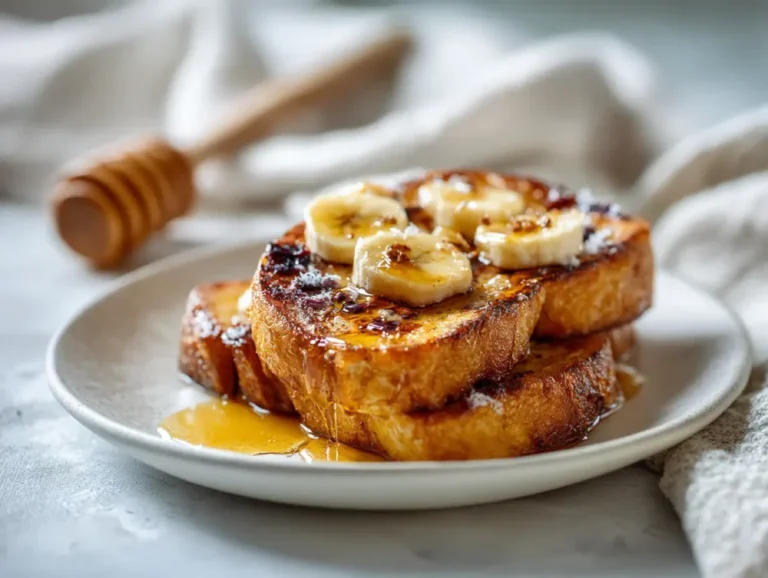
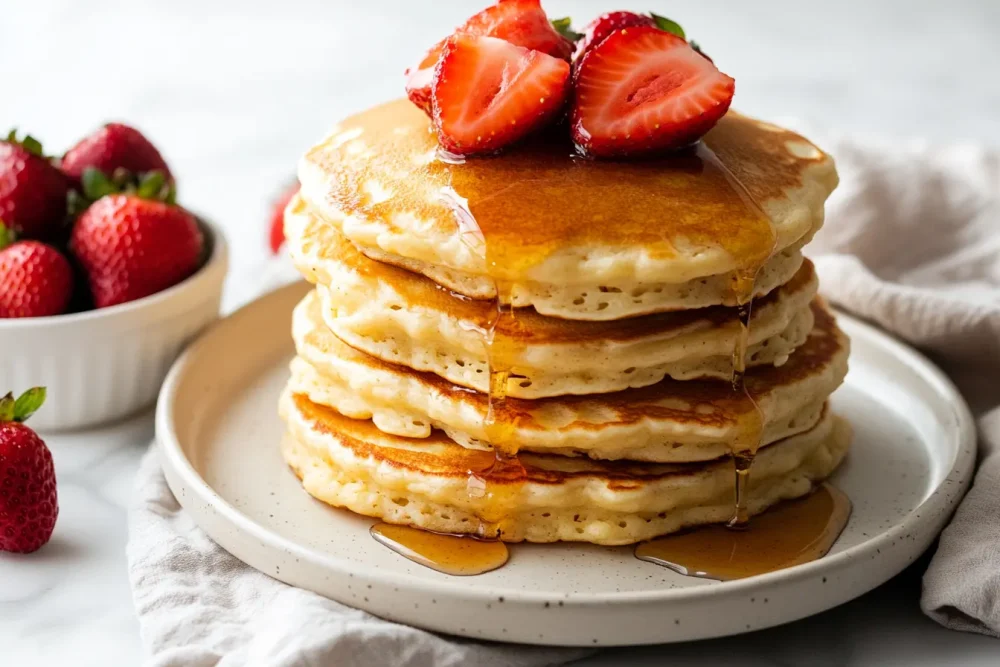
For serving, I usually keep it simple: sliced banana, a drizzle of honey, and a spoonful of Jalna Greek yoghurt on the side. You can see more easy breakfast ideas over at our recipes page.
For guidance on Australian egg sizes and storage, Australian Eggs has reliable, no-nonsense information.
Step-by-Step Instructions
1. Blend the base
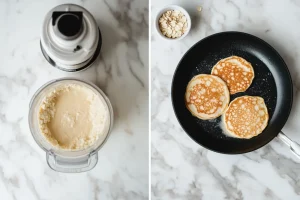
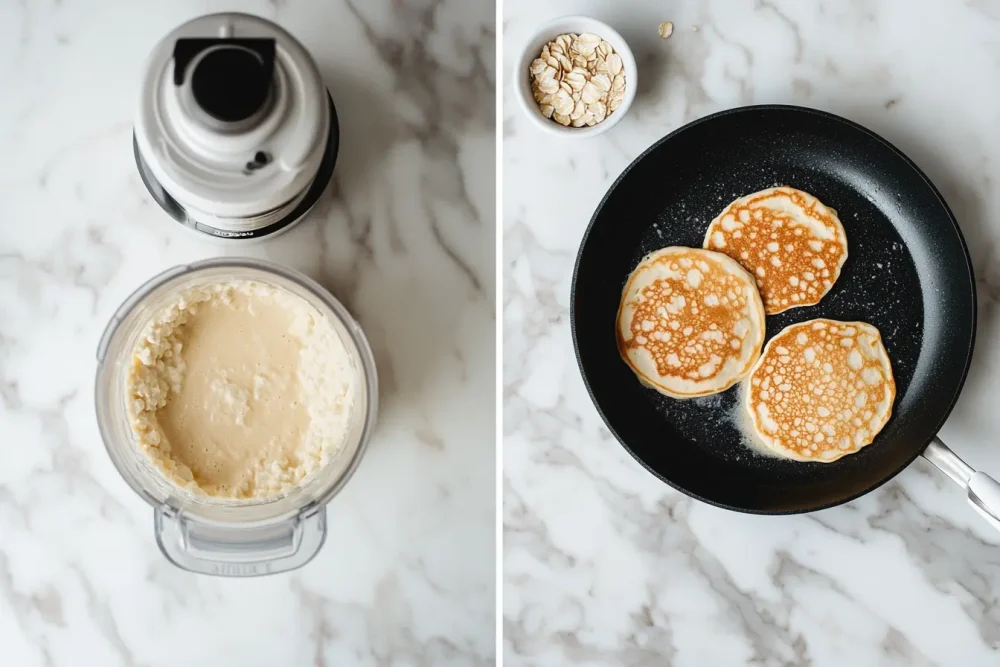
Add the rolled oats to a blender or food processor and blitz for about 20 seconds until you get a rough, coarse flour – you don’t want a fine powder, just no whole oats left. Add the cottage cheese, eggs, vanilla, and salt. Blend again for 30-40 seconds until the batter is mostly smooth. A few small curds are fine and actually expected.
2. Rest the batter
Let the batter sit for 3-4 minutes. This gives the oat flour a moment to absorb some of the moisture and thicken things up slightly. If you skip this step, the pancakes spread a bit too thin in the pan.
3. Heat the pan
Set a non-stick frying pan over medium-low heat. I use a 26cm Tefal non-stick – the lower heat is important here because cottage cheese pancakes can brown too fast on the outside while staying raw in the middle if the heat’s too high. Add about half a teaspoon of butter and let it melt and foam.
4. Cook in batches
Pour roughly 3 tablespoons of batter per pancake into the pan. Cook for 2.5 to 3 minutes on the first side, until the edges look set and a few bubbles appear on the surface. Flip carefully – these are softer than standard pancakes – and cook for another 1.5 to 2 minutes. You should hear a gentle sizzle, not a hard sear. Repeat with remaining batter.
5. Serve warm
Stack and serve immediately. These cottage cheese pancakes don’t hold their heat as long as regular ones, so get them to the table fast.
For a savoury twist, these also pair well with eggs – check out our cottage cheese egg bites air fryer recipe for another quick high-protein breakfast option.
My Take on This Recipe
I’ll be honest – the first batch I made was a bit of a mess. I used the blender on high for too long and the batter came out almost liquid, and then I panicked and added flour, which made them rubbery. The second batch I didn’t blend enough and you could see whole oat pieces. The third time I got it right, more or less by accident, and I’ve made them the same way since.
My daughter, who is deeply suspicious of anything that deviates from regular pancakes, ate four of these one Saturday without asking what was in them. That’s probably the highest endorsement I’ve ever received in my own kitchen. I reckon that’s a win. She still doesn’t know there’s cottage cheese in them and I have no plans to tell her anytime soon.
What Went Wrong Before I Got It Right
I’d say I probably made these cottage cheese pancakes eight or nine times before I landed on the method above, and a few of those attempts were genuinely bad. Worth talking through.
The first real problem was heat. My initial instinct was to cook them on medium-high the way I do regular pancakes, and I scorched three batches in a row. The outside would go deep brown in under 90 seconds while the inside stayed almost custardy and raw. Cottage cheese holds a lot of moisture, and that moisture needs time to cook off gently. Once I dropped to medium-low and kept it there, the whole thing started making sense.
The second failure was over-blending. I ran the blender for a full minute thinking smoother was better. The batter turned almost liquid and the pancakes spread flat like crepes, with no structure at all. Thirty to forty seconds is the limit. You want a few small curds still visible.
The third mistake was skipping the rest. I was impatient one morning and went straight from blender to pan and every pancake fell apart on the flip. Three to four minutes of resting genuinely changes the batter’s consistency. I was surprised how much difference it made.
Tips Worth Keeping
Use a proper non-stick pan. I can not stress this enough. These cottage cheese pancakes are stickier than standard ones because of the protein content. A good non-stick – I use my Tefal 26cm Ingenio – means you can use very little butter and still get a clean flip. A stainless or cast iron pan will make your morning difficult.
Don’t crowd the pan. Two pancakes at a time, maximum. Three if your pan is large. Crowding drops the pan temperature and you end up steaming them rather than frying, which means pale, soft tops that don’t set properly.
Blend the oats first, alone, before adding anything else. If you throw everything in together, the wet ingredients slow down the oat blending and you get uneven texture. Thirty seconds solo, then add the rest.
If the batter thickens too much as it sits (it can, especially on a warm morning), add a teaspoon of water and give it a gentle stir. Don’t re-blend.
Leftover batter keeps for up to 24 hours in the fridge. Give it a stir before using. It’ll be thicker cold, which is actually fine – the pancakes come out a bit more substantial.
Variations That Actually Work
Lemon and blueberry. Add 1 teaspoon of lemon zest and a small handful of fresh or frozen blueberries to the batter after blending. Don’t add the berries to the blender – just fold them in. The blueberries burst slightly as they cook and the lemon lifts the whole thing. Probably my favourite version for a Saturday morning.
Banana batter. Mash half a ripe banana and blend it in with the cottage cheese and eggs. This makes the batter slightly sweeter and adds a gentle flavour that pairs well with a drizzle of honey on top. The banana also helps with binding, so you can reduce the eggs to 2 if you prefer. See also our fluffy mini pancakes for another banana-friendly breakfast option.
Savoury version. Skip the vanilla and add a pinch of garlic powder, a tablespoon of finely chopped spring onion, and a handful of grated Bega cheddar to the batter. Serve with a fried egg on top. Sounds odd; tastes great. I made this version on a weeknight when I had nothing else in the fridge and it’s become a regular in our rotation.
How to Serve Them
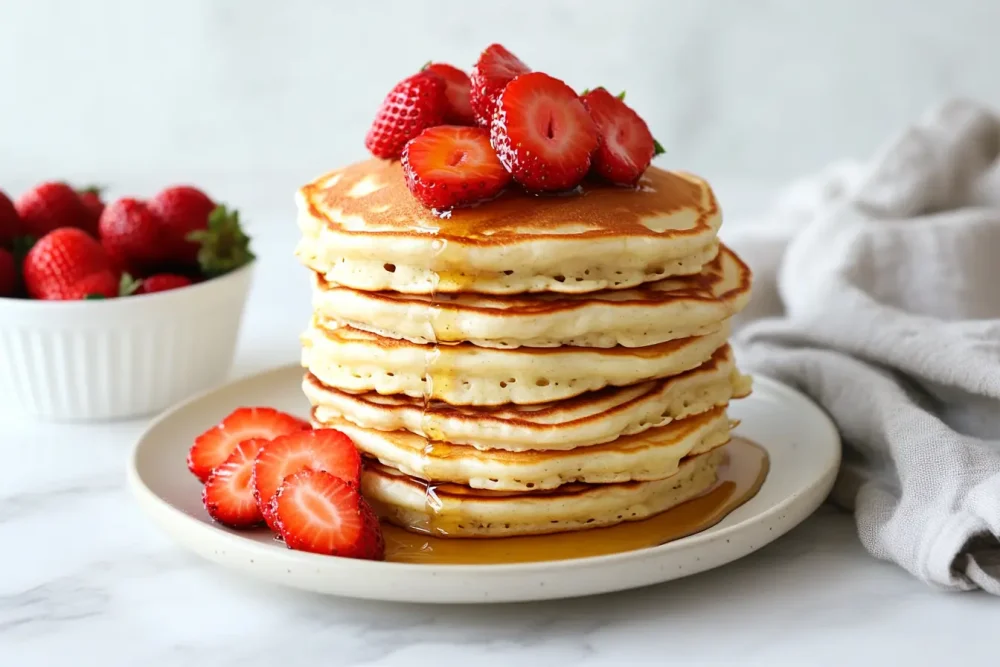
I keep the toppings simple most of the time. Sliced banana and a drizzle of honey is the weekday version. On weekends, I’ll do a spoonful of Jalna Greek yoghurt, some fresh blueberries or strawberries from the market, and a small dusting of cinnamon. If I have maple syrup – the real kind, not the compound stuff – that goes on at the end.
For a savoury direction, a soft poached egg on top with a few slices of avocado works well. It’s a solid Saturday brunch that feels a bit more put-together than the effort involved. These also work alongside our cottage cheese wrap recipe if you’re doing a bigger spread.
How I’m Using These Lately
Most of the time these cottage cheese pancakes are showing up on Sunday mornings before the footy, or as a school-week breakfast when I’ve run out of bread and need something that actually keeps the kids going until lunch. I’ll make a double batch on Sunday and refrigerate the extras on a plate covered with a tea towel – they reheat in a dry pan in about 90 seconds each side and are almost as good as fresh. I’ve also started making the savoury version on Thursday nights as a light dinner when the week’s caught up with me and I don’t want to think too hard about what’s for tea.
Storage and Meal Prep
Cooked pancakes keep in the fridge for up to 3 days. Stack them with a piece of baking paper between each one so they don’t stick together, then store in an airtight container. Reheat in a dry non-stick pan over low heat for about 60-90 seconds per side, or in the oven at 160°C (320°F) for 5 minutes on a baking tray. I wouldn’t microwave them – they go a bit rubbery.
For freezing, freeze in a single layer on a baking tray first, then transfer to a zip-lock bag. They keep for up to 6 weeks. Reheat from frozen in the oven at 170°C (340°F) for 8-10 minutes, flipping once. Batter can be refrigerated uncooked for up to 24 hours, but I find freshly made batter gives the best result.
A Note on What’s in These
Cottage cheese is a fresh dairy product made by curdling milk and draining the whey, which leaves behind a soft, slightly tangy curd. Full-fat varieties – like the Jalna or Woolworths Select tubs available at most Coles and Woolworths stores – contain mostly water, protein, and fat, with very little added sugar. The rolled oats in this recipe provide soluble fibre and some complex carbohydrates, while the eggs contribute additional protein and fat. For factual information on cottage cheese composition, the USDA FoodData Central database is a reliable reference. For Australian dairy labelling specifics, Food Standards Australia New Zealand (FSANZ) has clear guidance on how dairy products are categorised and labelled locally.
Common Mistakes to Avoid
Flipping too early. The temptation is real, especially when the batter looks set. But cottage cheese pancakes need that full 2.5 minutes on the first side before you even think about touching them. If you flip early, the inside is still liquid and you’ll end up with a folded mess. Wait until you see bubbles on the surface and the edges have gone from glossy to matte.
Using low-fat cottage cheese. I’ve mentioned this already, but it’s the single most common reason these don’t work for people. Low-fat varieties have a higher water content and the batter ends up too loose. If that’s all you have, drain it through a fine sieve for 10 minutes first.
Making the pancakes too large. If you use more than 3 tablespoons of batter per pancake, they’re very hard to flip without breaking. Smaller is better here – about 8-9cm in diameter is the sweet spot.
Closing
These cottage cheese pancakes have quietly become one of the most-made recipes in my kitchen, which I didn’t see coming when I first threw them together on a whim. Give them a go on a slow morning when you’ve got 20 minutes and a tub of cottage cheese that needs using – I think you’ll be surprised.
FAQ
Q1: Can I make cottage cheese pancakes without a blender?
You can, but the texture won’t be as smooth. If you don’t have a blender, use oat flour instead of rolled oats , about 60g and whisk everything vigorously by hand. Your cottage cheese pancakes will still have faint white flecks from the curds, which doesn’t affect flavour but does change the look of the finished pancake.
Q2: How do cottage cheese pancakes compare to regular flour pancakes in terms of how they hold up?
Regular pancakes made with plain flour tend to be a bit fluffier and hold their shape longer at room temperature. Cottage cheese pancakes are denser and softer, and they start to lose their texture after about 15-20 minutes off the heat. They’re best eaten immediately, or reheated well the next day rather than left sitting on a plate. The trade-off is that cottage cheese pancakes keep you fuller for considerably longer, in my experience, which makes the slightly shorter serving window worth it most mornings.
Q3: I’ve seen some cottage cheese pancakes recipes that use baking powder, is it necessary, and what does it actually do to the batter if you add it?
It’s not necessary for this version, and I’d say it’s kind of optional even if you want a slightly puffier result. A quarter teaspoon of baking powder added to the batter before blending will give your cottage cheese pancakes a touch more lift and a slightly airier centre. It won’t dramatically change things, but if you’ve made this recipe a few times and want to experiment, that’s the lever to pull. Without it, cottage cheese pancakes are a bit denser and more crepe-like around the edges, which I personally prefer.

Cottage Cheese Pancakes
Ingredients
Equipment
Method
- Add the rolled oats to a blender or food processor and blend for about 20 seconds until they become a coarse flour.
- Add the cottage cheese, eggs, vanilla extract, and salt. Blend for 30 to 40 seconds until mostly smooth, leaving a few small curds.
- Let the batter rest for 3 to 4 minutes so the oats can absorb moisture and slightly thicken the mixture.
- Heat a non-stick frying pan over medium-low heat and melt about 1/2 teaspoon of butter.

- Pour approximately 3 tablespoons of batter per pancake into the pan. Cook for 2½ to 3 minutes until the edges are set and bubbles appear on the surface.
- Carefully flip each pancake and cook for another 1½ to 2 minutes until golden and cooked through.
- Repeat with the remaining batter. Stack and serve immediately with your preferred toppings.