Cottage Cheese Pancakes: Easy 4-Ingredient High-Protein Recipe
Cottage cheese pancakes made with 4 simple ingredients in 20 minutes. Blender-easy, golden, and filling enough to last past 10am. A reliable weekend staple.
Sunday mornings in my Sydney kitchen have a rhythm to them. The stovetop hisses, the flat white is already half gone, and I’m standing there in yesterday’s t-shirt trying to make something that actually fills me up past 10am. Cottage cheese pancakes have become my answer to that. Four ingredients, one blender, about 20 minutes start to finish. These cottage cheese pancakes come together so fast that I’ve started making them on weekday mornings too, which honestly I didn’t think I’d ever say about pancakes.
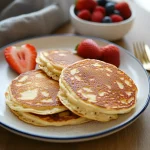
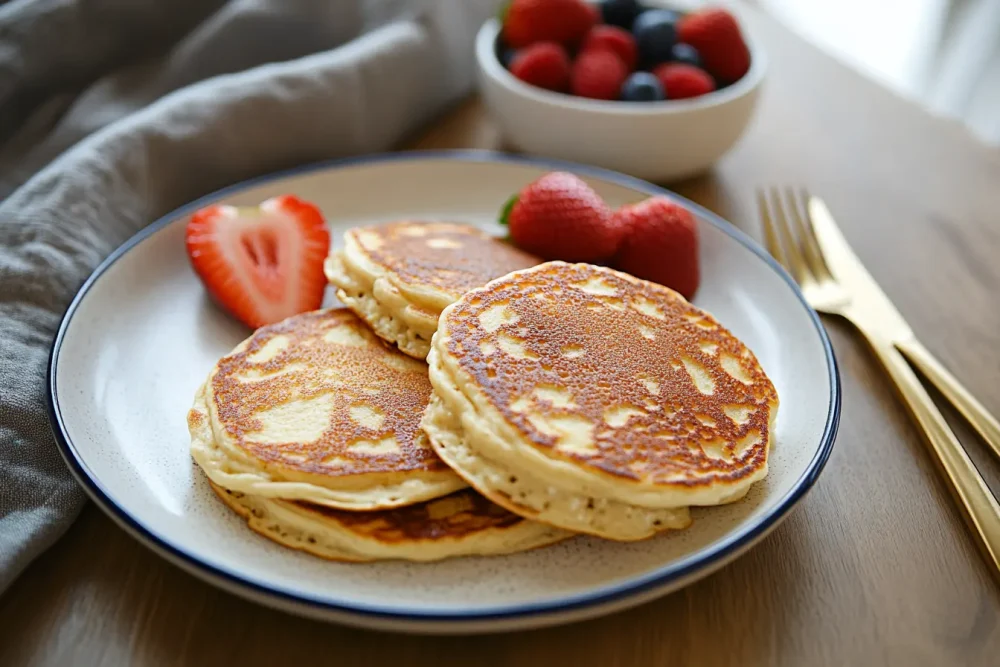
The texture caught me off guard the first time. I was expecting something dense or kind of grainy – cottage cheese isn’t exactly known for its glamour – but they cook up surprisingly light, with golden edges and a soft middle that holds together when you stack them. There’s a mild tang from the cottage cheese that works really well under maple syrup or fresh berries.
Most mornings I grab a 250g tub of Jalna full-fat cottage cheese from Woolworths. It’s usually around $3.50 and one tub gives you a solid stack for two people.
Why the Ratio Actually Matters Here
Getting the right balance of cottage cheese to eggs to oats is what separates a good batch from a flat, rubbery disaster. Too much oat flour and they turn stodgy. Too little and they fall apart in the pan. The sweet spot – and I reckon it took me about six batches to find it – is roughly equal weights of cottage cheese and rolled oats, blended until smooth, with two eggs to bind the whole thing.
The protein here comes mainly from the cottage cheese and eggs working together. Cottage cheese is a solid source of casein protein and brings a creaminess to the batter that you just can’t get from water or plant-based alternatives. The eggs add structure. Without both, you’d have either a crepe or a crumble.
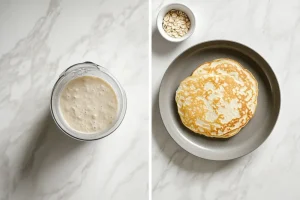
Blending is non-negotiable. Stir it by hand and you’ll see lumps in the finished pancake. A 30-second blitz in a NutriBullet or any stick blender handles it cleanly. Batter should pour like thick cream – not so thick it plops, not so thin it spreads into a puddle.
What You’ll Need
Rolled oats are the base here. Not instant oats, not steel-cut. Rolled oats blend down into a fine flour that gives these cottage cheese pancakes structure without making them heavy. Coles and Woolworths both carry homebrand rolled oats for well under $2 a bag.
Full-fat cottage cheese is I think the most important call here. Low-fat versions have more water content and the batter ends up thinner and more prone to sticking. Jalna or any Woolworths Select full-fat tub works well. The eggs should be large (59g+), at room temperature if you can manage it – cold eggs straight from the fridge seem to tighten the batter slightly.
Vanilla extract is the fourth ingredient and it matters more than you’d expect. Half a teaspoon rounds out the flavour and takes the edge off that faint savoury note from the cottage cheese. Australian Eggs has a good breakdown of why room-temperature eggs behave differently in batters.
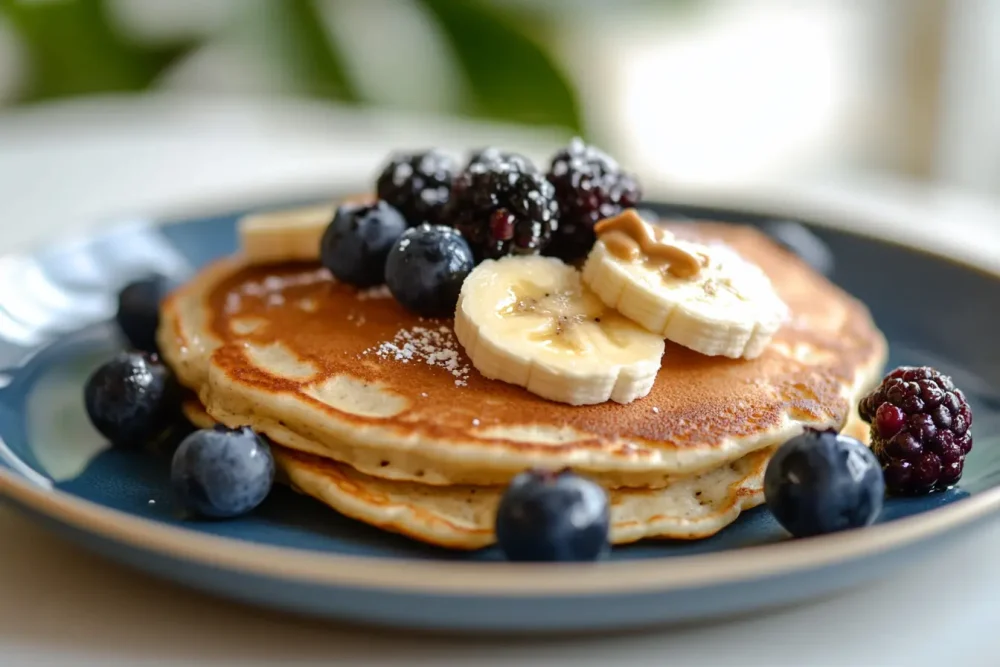
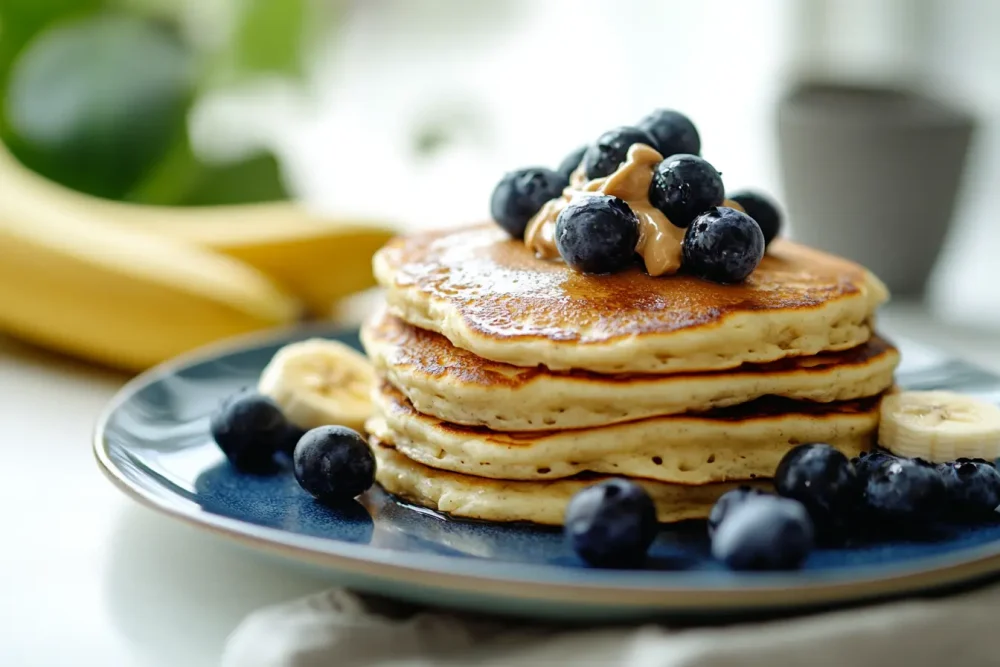
For toppings, I almost always go with fresh strawberries and a drizzle of maple syrup. You could use Greek yoghurt, sliced banana, or a spoonful of your favourite nut butter – worth trying a few combinations before you settle on a go-to.
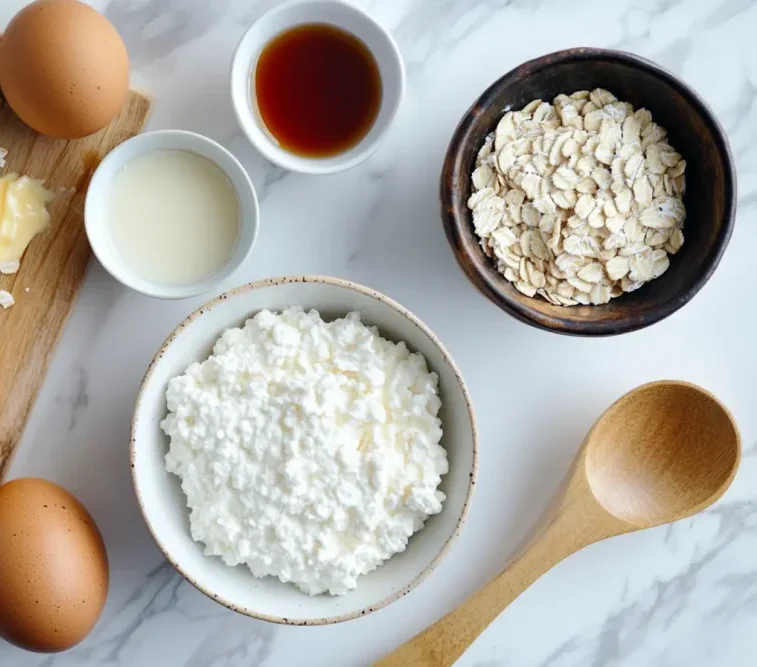
Ingredients (serves 2, makes 8-10 pancakes):
- 250g (1 cup) full-fat cottage cheese
- 2 large eggs (room temperature)
- 80g (1 cup) rolled oats
- 1/2 tsp vanilla extract
Optional add-ons (not counted in the 4 ingredients):
- Pinch of salt
- 1 tsp honey or maple syrup in the batter
- Fresh berries to serve
You can find a similar blender technique used in my fluffy mini pancakes recipe if you want another quick-stack option for the week.
How to Make Them
1. Blend the batter
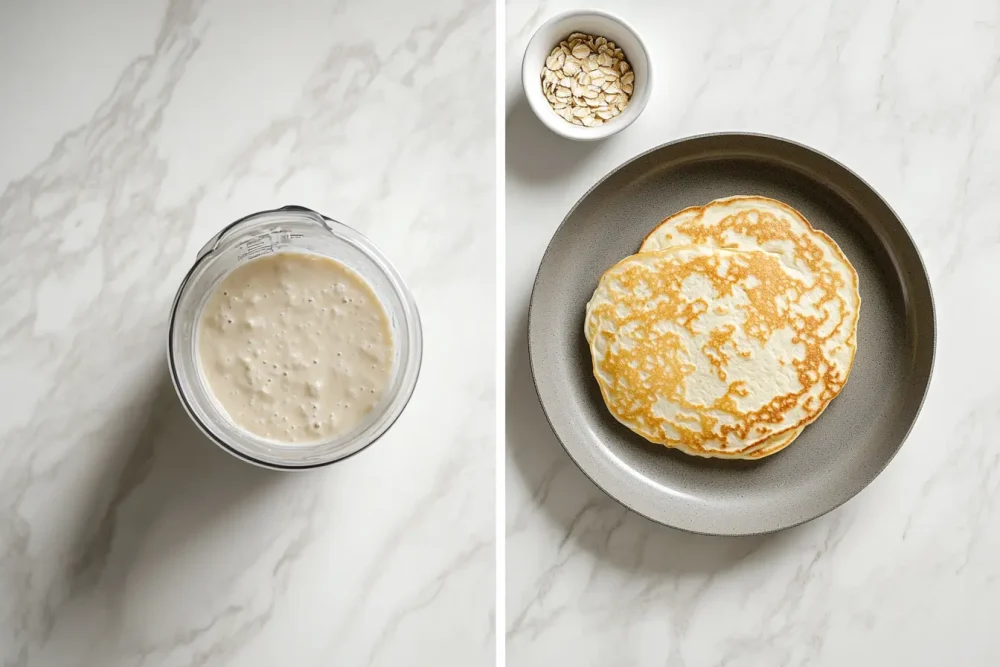
Add oats to the blender first and pulse 5-10 seconds to break them down. Add cottage cheese, eggs, and vanilla. Blend on high for 30 seconds until smooth and pourable. Let batter rest 3-4 minutes – it thickens slightly and the oats absorb the moisture.
2. Heat the pan
Set a non-stick frying pan or skillet over medium-low heat. Add a small knob of butter (about 5g) or a light spray of cooking oil. The pan is ready when a drop of water flicked onto the surface skitters and evaporates. If it smokes, it’s too hot.
3. Cook the first side
Pour batter in rounds, roughly 3 tablespoons each (a 1/4 cup measure works well). Leave space between them. Cook undisturbed for 2-3 minutes. You’re looking for bubbles forming across the top surface and edges that look set, not wet and shiny.
4. Flip and finish
Flip each pancake once. Cook the second side for 1.5-2 minutes. They should be a deep golden-tan on both sides. Transfer to a warm plate while you cook the remaining batches.
5. Serve immediately
Stack with berries, maple syrup, or whatever topping you like. These cottage cheese pancakes are best eaten straight from the pan – they soften a little as they sit.
Keep heat consistent between batches using the tips from my brioche French toast guide on managing pan temperature for even cooking.
My Take
I’ll be straight with you – the first time I made cottage cheese pancakes, I was half-convinced I was about to waste a perfectly good tub of Jalna. The batter looks nothing like a standard pancake batter. It’s thicker, slightly off-white, and smells faintly of eggs. Not exactly inspiring before your first coffee.
Then I flipped the first one. That sound – a clean, soft sizzle when the butter hits the batter edge – was the moment I stopped worrying. By the second batch I’d already started thinking about what toppings to try next. My partner, who is usually skeptical of anything I describe as “a healthy version of something,” ate four of them without asking a single question. That’s a result, in my house.
What Went Wrong Before I Got It Right
Honestly, the first three batches of these cottage cheese pancakes were not something I’d serve to anyone. Batch one: I skipped the blender entirely and stirred everything by hand. The oats didn’t break down, the cottage cheese sat in visible lumps, and the finished cottage cheese pancakes had this uneven, almost curdled texture across the surface. Edible, but barely.
Batch two: I used instant oats because that’s what was open on the shelf. They absorbed too much liquid too fast, the batter turned almost paste-like, and I couldn’t pour it properly. The cottage cheese pancakes came out thick and kind of gluey in the centre – cooked outside, raw-ish inside.
Batch three was a heat problem. I had the pan too high trying to speed things up and the outsides scorched before the centre set. I flipped them too early, the whole pancake folded, and I ended up with a scrambled mess. A medium-low setting on my gas range – around a 3 out of 9 – turned out to be the fix. Patient cooking. That’s the real trick with cottage cheese pancakes.
The fourth batch, I slowed everything down. Blender first, rested batter, low heat, proper non-stick pan (I use a 28cm Essteele Per Sempre that my mum handed down to me). First batch out was exactly what I’d been aiming for.
Tips Worth Keeping
Rest the batter, don’t skip it. Three to four minutes after blending makes a real difference to cottage cheese pancakes. The oats keep absorbing moisture and the batter thickens to a more pourable-but-stable consistency. If you cook straight from the blender, the pancakes spread too thin.
Full-fat cottage cheese only, I’d say. Low-fat versions carry more water and the batter runs in the pan. Full-fat gives you that slightly creamy density that holds cottage cheese pancakes together. Jalna and Woolworths Select full-fat both work. Avoid anything labelled “smooth style” – it behaves differently in the batter.
Match your pan size to your batch. If you’re cooking for one, a 20cm pan works fine. For a full double batch of cottage cheese pancakes, use a 28cm pan or a flat griddle so you can run 3-4 at a time. Crowding a small pan means uneven heat and edges that steam rather than brown.
If the first pancake sticks, your pan isn’t ready. Give it another 90 seconds on low heat before the next round. A too-cold pan is almost always the cause of sticking with cottage cheese pancakes – not the batter itself.
You might also enjoy the egg technique from my cottage cheese egg bites for another no-fuss cottage cheese breakfast that works on the same prep logic.
Variations to Try
Banana cottage cheese pancakes. Add half a ripe banana to the blender with the other ingredients. It thickens the batter a touch, adds natural sweetness, and means you can probably skip any extra honey or syrup on top. The banana flavour isn’t strong – more of a background warmth. Good for kids who are suspicious of anything “different.”
Savoury cottage cheese pancakes. Drop the vanilla, add a pinch of smoked paprika, a tablespoon of grated Bega cheddar, and a small handful of finely chopped spring onion to the batter. Serve with a soft-fried egg and a few slices of avocado. Feels more like a proper brunch and less like a sweet breakfast stack. I’ve made these on a Saturday when I couldn’t decide between sweet and savoury and didn’t want to choose.
Blueberry batter version. Fold 60g of fresh or frozen blueberries into the rested batter – don’t blend them in. They burst a little as the cottage cheese pancakes cook and you get jammy pockets through the middle. Serve with a spoonful of Jalna Greek yoghurt.
For a more involved cottage cheese recipe on weeknights, the cottage cheese Alfredo sauce is worth bookmarking.
How to Serve Them
In Sydney, I tend to eat cottage cheese pancakes on a Sunday alongside a long black and whatever fruit is cheapest at Harris Farm that week. Strawberries in summer, sliced mango if I’ve got it, or just banana and a drizzle of maple syrup when I haven’t shopped yet.
They work well as part of a bigger spread if you’ve got people over – stack the cottage cheese pancakes on a board with a bowl of yoghurt, some fresh fruit, and a jar of nut butter and let people build their own. For kids, a small drizzle of honey and a handful of blueberries usually does it.
If you want something savoury alongside, a soft-boiled egg and a few slices of cucumber takes about 7 minutes and rounds out the plate without any extra effort.
How I’ve Been Using This Recipe Lately
Most weeks I’ll make a double batch of cottage cheese pancakes on Sunday morning and keep the extras in a zip-lock bag in the fridge. Weekday mornings have been genuinely easier since I started doing this. I pull two or three out, press them flat in a dry non-stick pan on medium heat for about a minute each side, and they come back to life well. My partner reheats cottage cheese pancakes in the toaster on the lowest setting, which I was sceptical about, but it actually works fine. The whole thing has kind of become a Sunday ritual – make a big batch, eat half, the rest disappear by Tuesday.
Storage and Meal Prep
Leftover cottage cheese pancakes keep well in an airtight container in the fridge for up to 3 days. Stack them with a small square of baking paper between each one so they don’t stick together. Reheat in a dry pan on medium for 60-90 seconds per side, or in the toaster on a low setting.
Cottage cheese pancakes also freeze reasonably well. Lay them flat on a baking tray lined with baking paper, freeze until solid (about 2 hours), then transfer to a zip-lock bag. Good for up to 6 weeks. Reheat from frozen in a dry pan on medium-low with a lid on for the first minute to warm the centre through.
Meal prep note: the batter doesn’t store well. Make fresh batter each time, cook everything off, then store the finished cottage cheese pancakes. Blended oat batter sitting overnight goes a bit gluey and doesn’t cook the same way.
What’s Actually in These
Each serving of cottage cheese pancakes (4-5 pancakes) gives you a decent amount of protein from the combination of eggs and cottage cheese working together. Cottage cheese brings casein, which digests more slowly than whey, and the eggs contribute a complete amino acid profile. The oats add some fibre and slow-release carbohydrate, which I think is why these keep me going longer than regular pancakes. There’s no refined flour and no added sugar in the base. USDA FoodData Central has detailed nutritional data on cottage cheese if you want to look further into the numbers.
Mistakes That Catch People Out
Flipping too early. The most common one with cottage cheese pancakes. If the edges still look wet and shiny, it’s not ready to flip. Wait for bubbles across at least two-thirds of the surface. Rushing this gives you a broken, raw-centred pancake that’s hard to recover.
Using cold cottage cheese straight from the fridge. Cold cottage cheese blends less smoothly and leaves small white flecks through the batter. Let the tub sit on the bench for about 10 minutes before blending. Not essential, but it does make a difference to the final texture of your cottage cheese pancakes.
Cooking on too high a heat between batches. The pan keeps absorbing heat even when you’re not cooking. If your second or third batch of cottage cheese pancakes is browning faster than the first, drop the heat slightly between rounds. Consistent medium-low throughout is what gets you even colour across the whole stack.
FAQ
Can I make cottage cheese pancakes without a blender?
You can, but the texture won’t be as smooth. If you don’t have a blender, use oat flour instead of rolled oats – about 60g – and whisk everything vigorously by hand. Your cottage cheese pancakes will still have faint white flecks from the curds, which doesn’t affect flavour but does change the look of the finished pancake.
How do cottage cheese pancakes compare to regular flour pancakes in terms of how they hold up?
Regular pancakes made with plain flour tend to be a bit fluffier and hold their shape longer at room temperature. Cottage cheese pancakes are denser and softer, and they start to lose their texture after about 15-20 minutes off the heat. They’re best eaten immediately, or reheated well the next day rather than left sitting on a plate. The trade-off is that cottage cheese pancakes keep you fuller for considerably longer, in my experience, which makes the slightly shorter serving window worth it most mornings.
I’ve seen some cottage cheese pancakes recipes that use baking powder – is it necessary, and what does it actually do to the batter if you add it?
It’s not necessary for this version, and I’d say it’s kind of optional even if you want a slightly puffier result. A quarter teaspoon of baking powder added to the batter before blending will give your cottage cheese pancakes a touch more lift and a slightly airier centre. It won’t dramatically change things, but if you’ve made this recipe a few times and want to experiment, that’s the lever to pull. Without it, cottage cheese pancakes are a bit denser and more crepe-like around the edges, which I personally prefer.
These cottage cheese pancakes have properly earned a place in my weekly rotation. Make them once and you’ll probably understand why.

Cottage Cheese Pancakes
Ingredients
Equipment
Method
- Add the rolled oats to a blender and pulse for 5–10 seconds to break them down. Add the cottage cheese, eggs, and vanilla extract. Blend on high for 30 seconds until smooth and pourable. Let the batter rest for 3–4 minutes.

- Heat a non-stick frying pan or skillet over medium-low heat. Add a small knob of butter or a light spray of cooking oil.
- Pour the batter into rounds using about 3 tablespoons per pancake. Leave space between each pancake. Cook for 2–3 minutes until bubbles form across the surface and the edges look set.
- Flip each pancake once and cook for another 1½–2 minutes until both sides are deep golden-tan.
- Transfer the pancakes to a warm plate while finishing the remaining batter.
- Serve immediately with fresh berries, maple syrup, yogurt, banana, or your favorite toppings.