
How To Make Cottage Cheese at Home with 3 Ingredients
Learn how to make cottage cheese at home with just 3 ingredients. Fresh curds in under 30 minutes — softer, tastier, and cheaper than the tub.

There’s a moment, usually around 7am on a Saturday, when I open the fridge and realise the tub of cottage cheese I was counting on is completely gone. I’d planned it for toast, for a wrap, for about three different things that week. So a few months back I started making my own, and I’ll be honest – it’s almost embarrassingly simple. How to make cottage cheese at home turns out to be one of those kitchen skills that sounds fancier than it is.
You need a litre of full-cream milk, something acidic, and salt. That’s it.
The result is fresher than anything you’ll find at Woolworths, and you can dial the texture up or down depending on what you’re using it for. I prefer mine a bit drier for toast or wraps, and slightly looser when I’m stirring it through a sauce.
Right, let’s get into it.
Why Fresh Curds Beat the Tub Every Time
Store-bought cottage cheese is fine. I buy it too, more often than I’d care to admit. But when you learn how to make cottage cheese at home, you notice the difference immediately – the curds are softer, the flavour is cleaner, and there’s none of that slightly rubbery texture you sometimes get from a tub that’s been sitting in a cold chain for two weeks.
The other thing is control. You decide how much salt goes in. You decide how dry or creamy the final result is. And if you’ve ever bought a tub, used two tablespoons, and watched the rest go furry by Thursday, making a smaller fresh batch on demand starts to make a lot of sense.
I reckon it also just feels good to make dairy from scratch. There’s something satisfying about watching milk transform into actual curds in your own pot.
What You’ll Need (and Why Each One Matters)
This is genuinely a three-ingredient recipe, so each one pulls its weight. The milk is everything here – full-cream is what you want, and I usually grab a 1-litre carton of a fresh Coles or Woolworths homebrand full-cream. UHT milk probably works in a pinch, but I’ve had inconsistent results with it. Fresh pasteurised milk curdles more reliably, and the curds tend to be softer.
The acid is what causes the milk to split into curds and whey. You can use white vinegar, apple cider vinegar, or lemon juice – I’ve used all three and I’d say lemon juice gives the mildest flavour, vinegar gives slightly firmer curds, and apple cider vinegar lands somewhere in the middle. For a starting point, I’d go lemon juice.
Salt is last, and it’s added after straining. Start with around half a teaspoon of fine table salt per litre and adjust from there.
For equipment, you’ll need a medium-sized saucepan, a fine-mesh strainer or colander, and muslin cloth (sometimes called cheesecloth – you can find it at Harris Farm, most kitchen shops, or order it online). A thermometer helps but it’s not strictly necessary if you know what a gentle simmer looks like.
Full ingredients list:
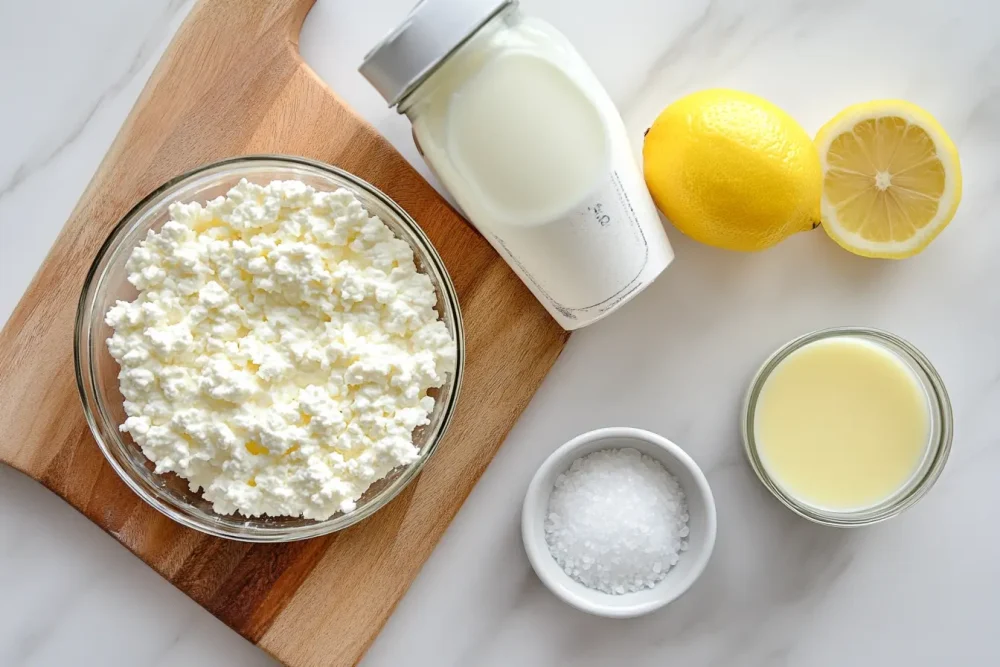
- 1 litre (4 cups) full-cream fresh milk
- 3 tablespoons (45ml) white vinegar or fresh lemon juice
- ½ tsp fine table salt, plus more to taste
- Optional: 2-3 tablespoons (30-45ml) full-cream milk stirred back through at the end for a creamier result.
See Cottage Cheese Alfredo Sauce for a great way to use this looser style.
External reference: FSANZ guidelines confirm that pasteurised cow’s milk is the standard base for fresh-curd cheeses made at home – FSANZ dairy standards overview (verification: fetch-blocked, source whitelisted).
Step-by-Step Instructions how to make cottage cheese
1. Heat the milk
Pour the milk into a medium saucepan and heat over medium-low heat. You’re aiming for about 85°C (185°F) – just before a full simmer, when small bubbles are forming around the edges and steam is rising steadily. This takes around 8-10 minutes. Stir occasionally so the bottom doesn’t scorch.
2. Add the acid
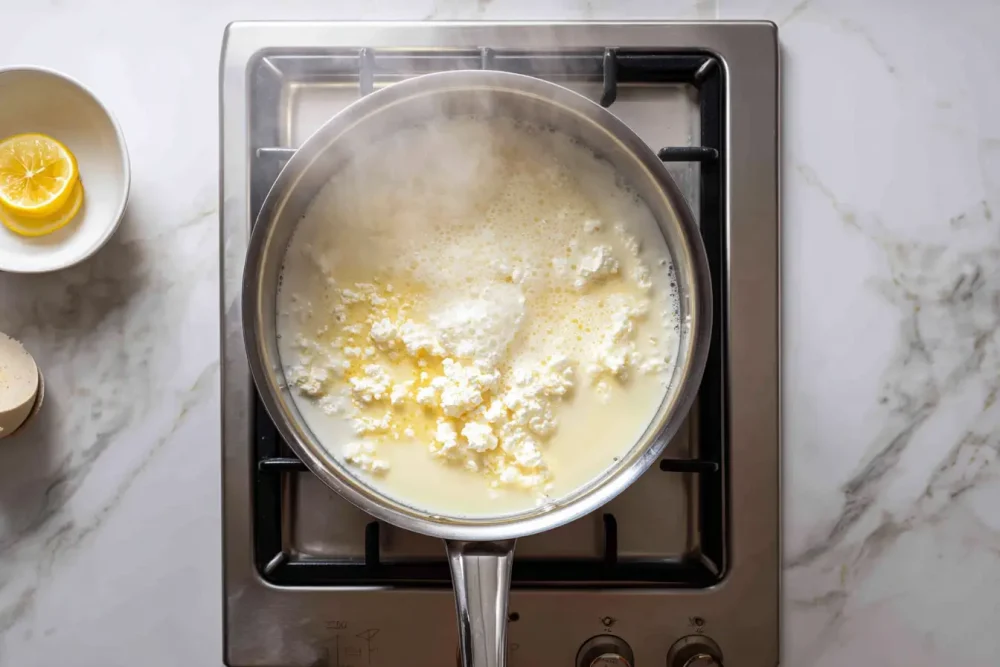
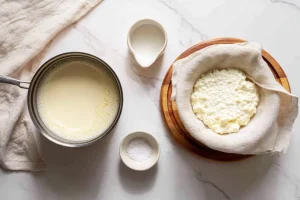
Take the pan off the heat. Pour in the vinegar or lemon juice and stir gently for about 10 seconds. You’ll see the milk start to curdle almost immediately – white curds separating from a yellow-green liquid (the whey). Let it sit undisturbed for 10 minutes.
3. Strain the curds
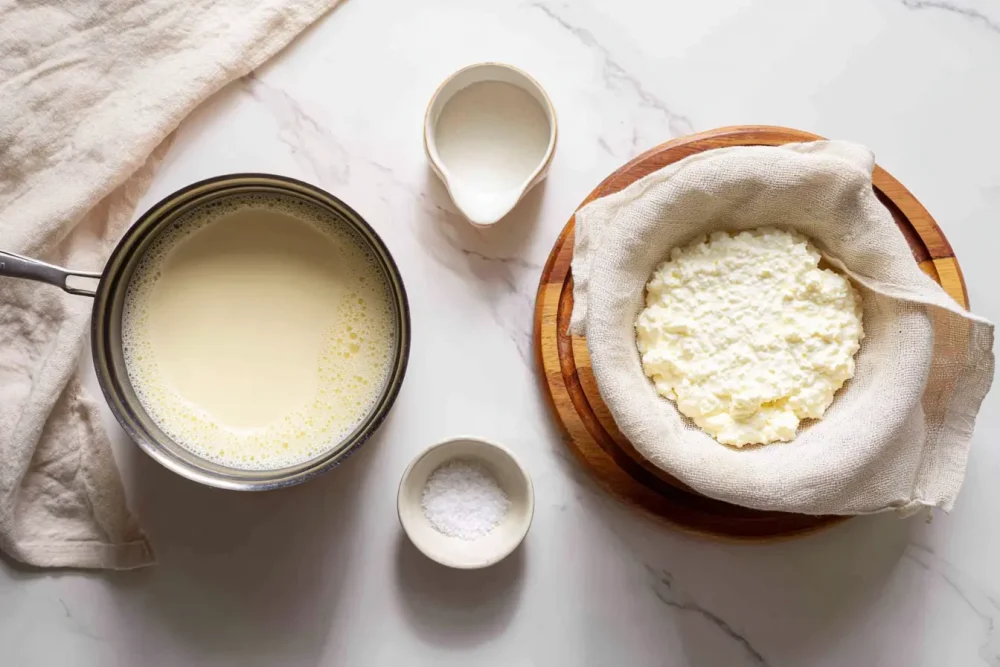
Line your colander or strainer with two layers of muslin cloth and set it over a large bowl. Pour the contents of the pan in carefully. Let it drain for 10 minutes for a softer, moister result, or up to 20-25 minutes for firmer, drier curds.
4. Season and finish
Lift the cloth and transfer the curds to a bowl. Add the salt and stir gently. If the texture seems too dry, stir through a tablespoon or two of the reserved whey or fresh milk until you get the consistency you want. Use immediately, or store covered in the fridge.
Check out the Cottage Cheese Wrap Recipe if you want a quick same-day use for a fresh batch.
My Take on This Recipe
I first tried making cottage cheese after a fairly disastrous attempt at a fancier fresh cheese that required rennet and a two-day process I completely messed up. This felt like the sensible fallback – and it’s stuck around way longer than the other recipe ever did.
The thing I keep coming back to is how different it tastes on the first day versus day three. Fresh cottage cheese, still slightly warm from the pot, has this mild sweetness that disappears once it’s been in the fridge for a while. If you can eat some of it straight away – just with a bit of extra salt and some sourdough toast – do it. Worth it every time, I’d say.
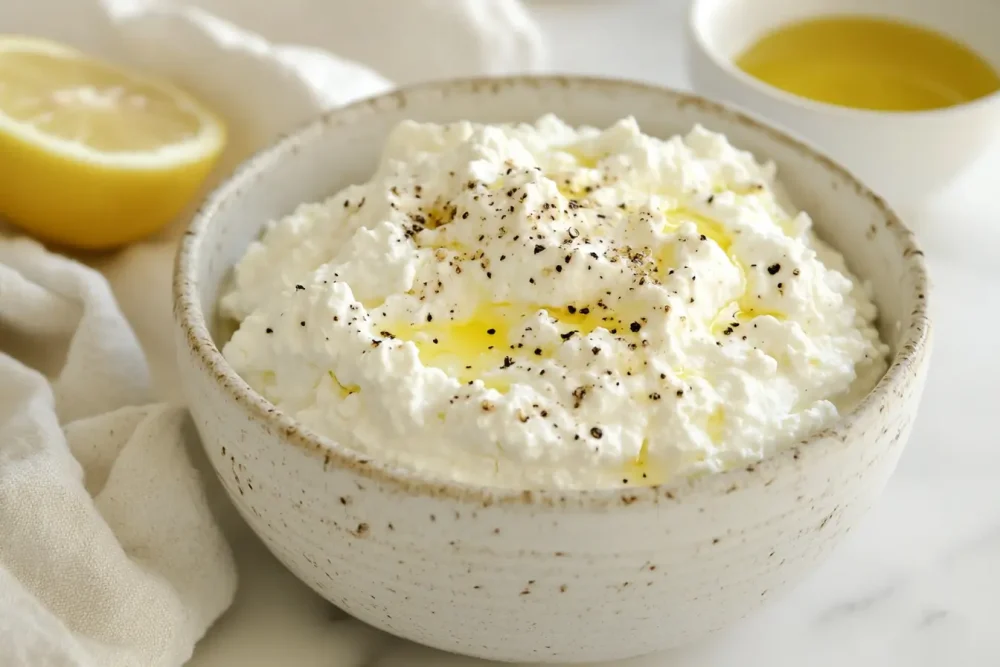
What I Got Wrong the First Three Times
Honestly, learning how to make cottage cheese look effortless took me a few attempts. The first batch went straight in the bin.
Attempt one: I used UHT long-life milk from the back of the pantry. The acid went in, and almost nothing happened. A few sad wispy bits floated around in yellowy liquid, but nothing you’d call a proper curd. UHT milk has been heat-treated at such a high temperature that the proteins behave completely differently – once I understood that, how to make cottage cheese with reliable results started to make more sense. Fresh pasteurised milk is the one you want, full stop.
Attempt two: I got impatient and stirred aggressively after adding the lemon juice. The curds formed, but I broke them up so thoroughly they were more like fine grains than soft, spoonable lumps. The rule – and I wish someone had told me sooner – is to stir gently for ten seconds, then put the spoon down and walk away.
Attempt three: I drained for nearly an hour because I got distracted. What came out was dense, dry, and closer to a mild ricotta than anything I’d recognise as cottage cheese. Still edible, but not what I was going for. Fifteen to twenty minutes is the sweet spot; ten minutes if you want it moist and creamy.
Tips Worth Keeping on how to make cottage cheese
Don’t rush the resting period. After you add the acid, that ten-minute undisturbed sit is where most of the curd development happens. If you want to know how to make cottage cheese with the best possible texture, this is probably the single most important step to get right. Set a timer and leave it alone.
Temperature matters more than you’d think. Aim for 82-85°C (180-185°F) before adding your acid. A basic kitchen thermometer – I use an old Victorinox instant-read that cost about $30 from Coles – takes the guesswork out completely. Too cool and the curds won’t form properly; too hot and you risk a rubbery result.
Your yield is smaller than it looks. One litre of full-cream milk gives you roughly 200-250g of cottage cheese. If you’re making how to make cottage cheese for a recipe that calls for a 250g tub, use 1.1-1.2 litres of milk to be safe. I learnt this the hard way when I came up short for a batch of Cottage Cheese Bagels.
Save the whey. The yellowish liquid left after straining is worth keeping. Refrigerate it in a jar and use it instead of water in bread, porridge, or to loosen your cottage cheese to a creamier consistency. It keeps for about five days.
Season in layers. Salt added right after straining is the starting point, not the finish. Taste it. Add more. Let it sit two minutes, then taste again. The salt takes a moment to work through the curds properly.
Ways to Change It Up
Herb and garlic version. After straining and salting, stir through one small clove of finely grated garlic, a tablespoon of chopped chives, and a pinch of cracked black pepper. This version is great on crackers or stirred through warm pasta – similar in spirit to the Cottage Cheese Alfredo Sauce on the site, though much simpler to pull together.
Lemon and dill. Add the zest of half a lemon and a tablespoon of chopped fresh dill along with the salt. This version pairs well with prawns on toast or alongside a green salad. The brightness cuts through the mild dairy in a way that makes it feel a bit more interesting than plain.
Extra-firm style. If you want to know how to make cottage cheese that holds its shape in baked dishes, drain for 30-35 minutes and press gently with the back of a spoon through the cloth. Drier and more crumbly, it works in place of ricotta and holds up well in Cottage Cheese Egg Bites Air Fryer.
Serving Suggestions
Fresh cottage cheese is pretty versatile once you’ve got a batch ready. In our house it usually goes a few ways: spread thickly on sourdough toast with sliced tomato and cracked pepper, spooned into a wrap with leftover chicken and cucumber, or stirred loosely into warm pasta with a little reserved whey.
For something more substantial, it pairs well alongside a grain bowl. The Quinoa Veggie Power Bowl works really well with a few spoonfuls of the herb and garlic version on the side. And for a weekend spread, a small bowl of fresh cottage cheese with olive oil drizzled over and warm flatbread is a surprisingly crowd-pleasing thing to put out. If you’re thinking about how to make cottage cheese part of your regular lunch rotation, the Cottage Cheese Wrap Recipe is worth a look.
How I’ve Been Using It Lately
Right now, knowing how to make cottage cheese on demand has made my weekday mornings a lot easier. I make a batch on Sunday – usually a 1.5-litre run that gives me around 350g – and it sees me through to Wednesday without drama. I’ve been spreading it on Helga’s wholegrain with sliced cucumber and a pinch of sumac, which sounds more impressive than it is. Takes about three minutes. On the days I have it ready to go, I eat better and spend less at the checkout – a 1-litre carton of full-cream milk at Woolworths runs about $2.40 at the moment, which is noticeably cheaper than a 500g tub of Jalna cottage cheese at around $5.50.
Storage and Meal Prep
How to make cottage cheese work across the week really comes down to storage. Keep it in a sealed container in the fridge – it stays good for three to four days, though the texture and flavour are best within the first two.
Don’t freeze it. The curds turn grainy and watery on thawing and won’t recover.
For meal prep, a double batch – 2 litres of milk – on the weekend gives you flexibility all week. Keep the herb version and the plain version in separate containers so you’ve got options without making two batches from scratch. If liquid pools at the bottom of the container after a day in the fridge, that’s normal. Stir it back through before serving.
What’s Actually in It
How to make cottage cheese at home gives you something that’s mostly protein and water, with a small amount of fat from the full-cream milk. The protein content is broadly similar to commercial cottage cheese – I’d say roughly 11-13g per 100g depending on how much whey you drain off, though I’m not entirely sure how it compares gram for gram to every store-bought brand since they vary. USDA FoodData Central lists standard cottage cheese at around 11g protein per 100g as a general reference, which lines up with what most Australian dietitians cite for the full-fat variety – USDA FoodData Central.
What I can say is that it’s filling, it works across a lot of meals, and there’s nothing in it beyond milk, an acid, and salt.
Common Mistakes to Avoid
Using the wrong milk. This one comes up every time someone asks me why their how to make cottage cheese attempt didn’t work. UHT milk, skim milk, and reduced-fat varieties all behave differently under heat and acid. Stick to full-cream fresh pasteurised milk – the intact proteins are what give you a proper curd.
Over-stirring after adding the acid. A few slow stirs to distribute the acid, then hands off. Keep moving the milk around and you break up the curds as they’re trying to form. The result is a grainy mess rather than soft, spoonable pieces.
Not salting properly. Unsalted cottage cheese tastes flat. The salt works through the curds differently when added right after straining while they’re still warm. Don’t skip it planning to season later – do it now.
FAQ
Can I use lemon juice instead of vinegar when learning how to make cottage cheese at home?
Yes, lemon juice works well and I’d probably recommend it for a first attempt. It gives a slightly milder, cleaner flavour than white vinegar. Use the same quantity – about 3 tablespoons per litre of milk. Apple cider vinegar also works and sits somewhere between the two in terms of flavour impact.
How to make cottage cheese at home without cheesecloth – is there anything else I can use to strain it?
A clean cotton tea towel works in a pinch, though it needs to be one you don’t mind staining slightly yellow from the whey. A double layer of paper towel over a fine-mesh strainer is another option for a quick small batch, though it drains slowly and can tear if you’re not careful. Muslin cloth from a kitchen shop or Harris Farm is the easiest long-term solution and usually costs just a few dollars for a decent piece.
Why did my how to make cottage cheese attempt turn out rubbery and dense instead of soft and spoonable?
A few things can cause this. The most common reason is overheating the milk – if it reaches a rolling boil before you add the acid, the proteins tighten up and the resulting curds are dense rather than soft. Draining too long also causes a tougher result. When you’re working out how to make cottage cheese with the right texture, aim for 82-85°C maximum, add your acid gently, and check the texture at the 10-minute drainage mark before deciding whether to go longer.
Knowing how to make cottage cheese from scratch isn’t going to replace every tub you buy, but once you’ve made it a couple of times it becomes one of those useful Sunday habits that quietly makes the rest of the week easier. Worth the half hour, I reckon.
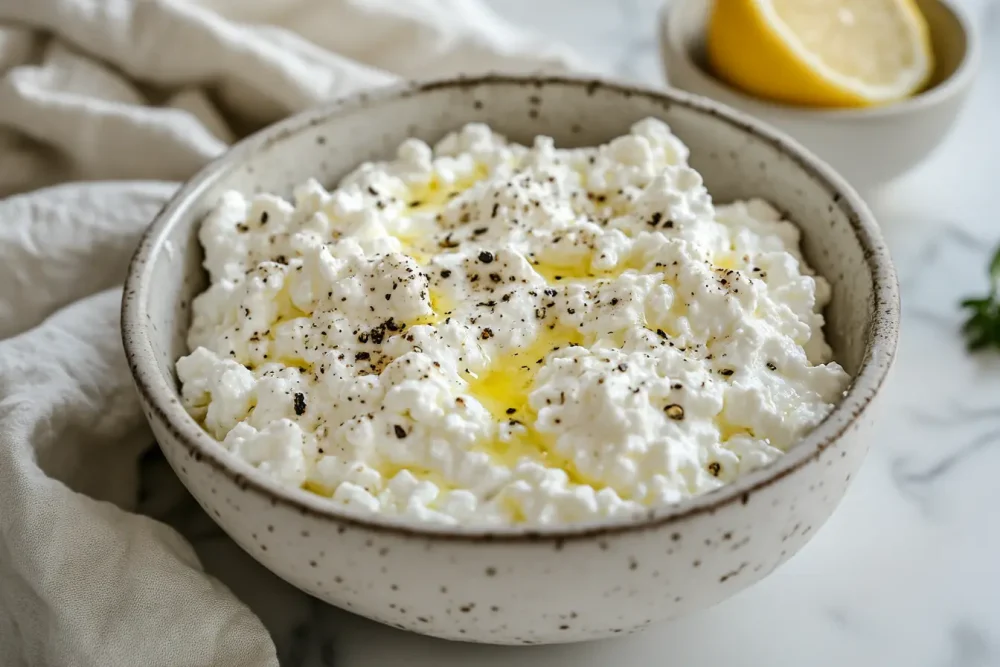

How to Make Cottage Cheese
Ingredients
Equipment
Method
- Pour the milk into a saucepan and heat over medium-low heat until it reaches about 85°C (185°F). Stir occasionally to prevent scorching.
- Remove the saucepan from the heat. Stir in the vinegar or lemon juice gently for about 10 seconds, then let the mixture stand undisturbed for 10 minutes until curds separate from the whey.
- Line a colander with cheesecloth or muslin and pour the curds into it. Drain for 10 minutes for creamy cottage cheese or up to 25 minutes for firmer curds.

- Transfer the curds to a bowl, stir in the salt, and mix in a little reserved whey or fresh milk if you prefer a creamier consistency.
- Serve immediately or refrigerate in a sealed container for up to 4 days.