
Apricot Chicken Recipe: Easy Healthy Baked Classic in 35 Minutes
This apricot chicken recipe is a sticky, golden weeknight bake ready in 35 minutes. Tender thighs in a tangy apricot nectar sauce the whole family loves.
There’s a specific kind of weeknight dinner that earns a permanent spot in your rotation. This apricot chicken recipe is exactly that kind of dish. I made it for the first time on a rainy Tuesday in Sydney with a tin of apricot nectar from Woolworths that had been sitting in my pantry for about three weeks, and honestly I wasn’t expecting much. What came out of that oven was sticky, golden, and a bit tangy in the best possible way, with chicken thighs that had absorbed the sauce all the way through. My husband ate two servings and asked if I’d made it before. I hadn’t. That’s how good this apricot chicken recipe gets on the first try.
It’s the kind of meal that works on a school night because it genuinely takes 35 minutes start to finish. You mix the sauce, pour it over the chicken, bake it, and you’re done.
Why This Apricot Chicken Earns Its Place
What makes this version stand out from the ones I’ve seen floating around online is the ratio. A lot of apricot chicken recipe versions lean too sweet or too thin. I think the key is using apricot nectar rather than jam, and balancing it with a good chicken stock and a splash of apple cider vinegar for some sharpness. The French onion soup packet, which I know sounds retro, binds the whole sauce together and gives it that savoury depth people always ask about.
The chicken thighs stay genuinely moist. They don’t dry out the way breast meat does in a long bake, and I’d say skin-on thighs probably give you about 20% more flavour from the rendered fat alone.
Honestly, this is the kind of recipe that reminds me why Australian home cooking is so good. No fuss.
What You’ll Need
The shopping list for this apricot chicken recipe is short. Everything comes from a standard Woolworths or Coles run, and most of it is pantry stuff you likely already have.
The chicken thighs are the star. I use bone-in, skin-on thighs because they hold up beautifully during baking and the skin crisps up in the last 10 minutes if you pull the foil off. You’ll need about 1kg (2.2lb) for four people.
The sauce is four main components: one 400ml tin of apricot nectar, one 30g packet of French onion soup mix, 125ml (1/2 cup) of chicken stock, and 2 tablespoons of apple cider vinegar. The vinegar is I think the thing most older versions leave out, but it cuts through the sweetness in a way that makes the sauce taste balanced rather than cloying.
If you want to round the meal out, check out this chicken Alfredo garlic bread for a good contrast to the fruity sauce.
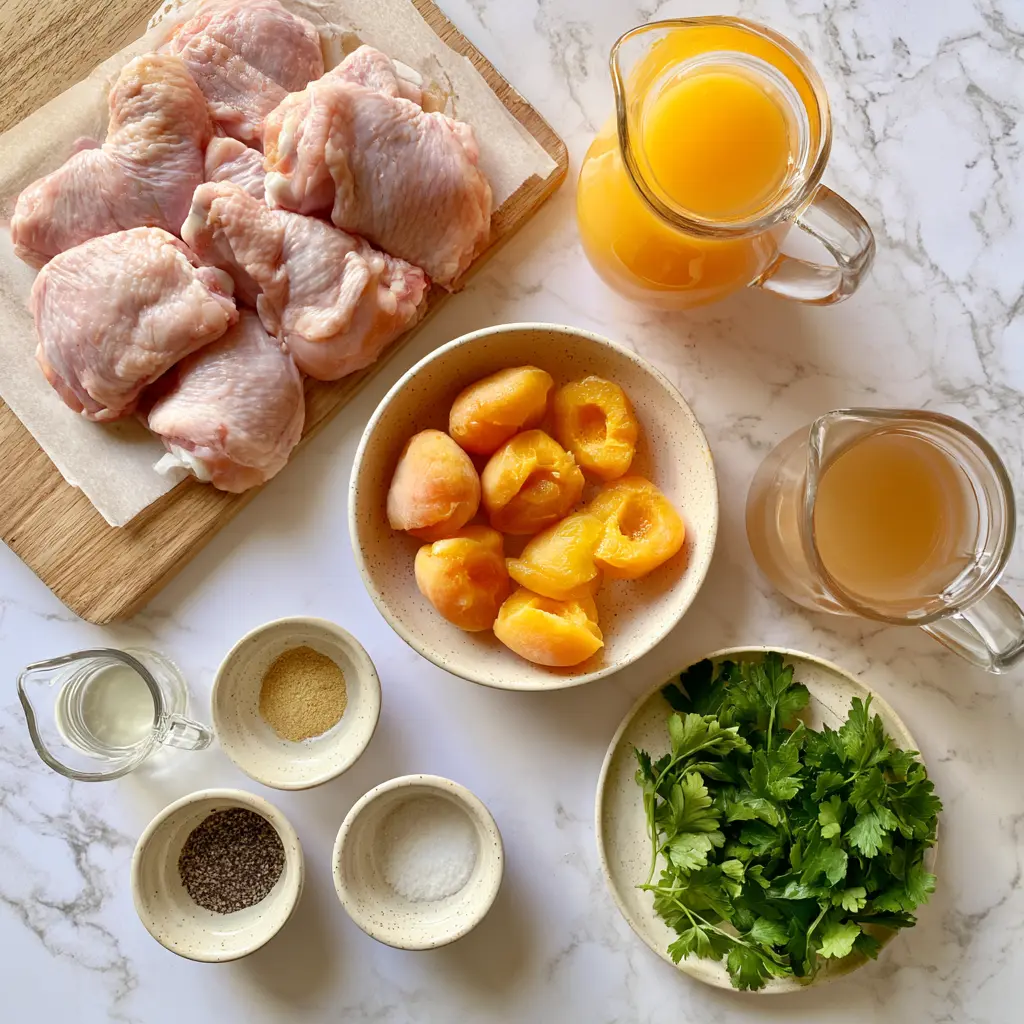
Ingredients Neded :
- 1 kg bone-in, skin-on chicken thighs
- 400 ml apricot nectar
- 1 × 410 g can apricot halves in juice, drained
- 40 g French onion soup mix
- 80 ml (⅓ cup) chicken stock
- 1 tbsp apple cider vinegar
- 1 tsp garlic powder
- Freshly ground black pepper
- Salt only if needed
- Fresh flat-leaf parsley, optional
How to Make Apricot Chicken Step by Step
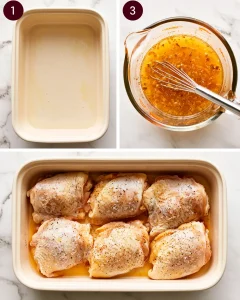
- Preheat and prep. Preheat the oven to 190°C (375°F). Lightly grease a 33 × 23cm (13 × 9-inch) baking dish. Pat the chicken thighs dry with kitchen paper so the skin browns better during the uncovered part of baking.
- Make the apricot sauce. In a large jug, whisk together 400ml apricot nectar, 40g French onion soup mix, 80ml (⅓ cup) chicken stock, 1 tablespoon apple cider vinegar, and 1 teaspoon garlic powder. Stir until evenly combined. The soup mix doesn’t need to dissolve completely because it will soften and blend into the sauce as it cooks.
- Arrange the chicken. Season the chicken thighs with freshly ground black pepper and only a little salt if needed, since the soup mix and chicken stock already contain salt. Arrange the thighs skin-side up in a single layer, leaving some space between each piece so they cook evenly.
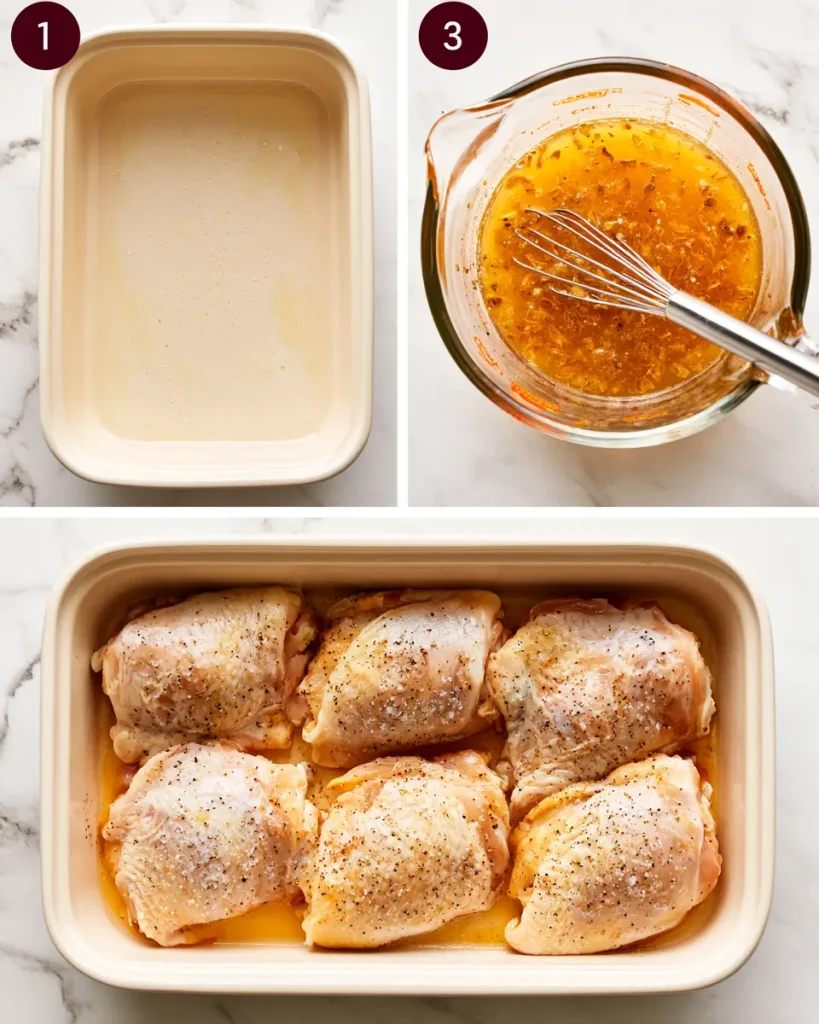
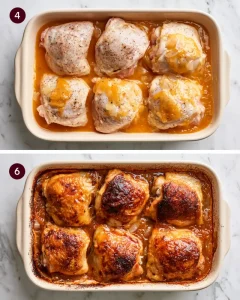
4. Add the sauce. Pour the apricot sauce around and over the chicken, making sure some of the sauce gets underneath each thigh. Keep most of the skin exposed rather than completely submerged so it has a better chance to brown later.
5. Bake covered. Cover the baking dish tightly with foil and bake for 30 minutes. This gives the bone-in thighs time to cook through while keeping the chicken moist and preventing the apricot sauce from reducing too quickly.
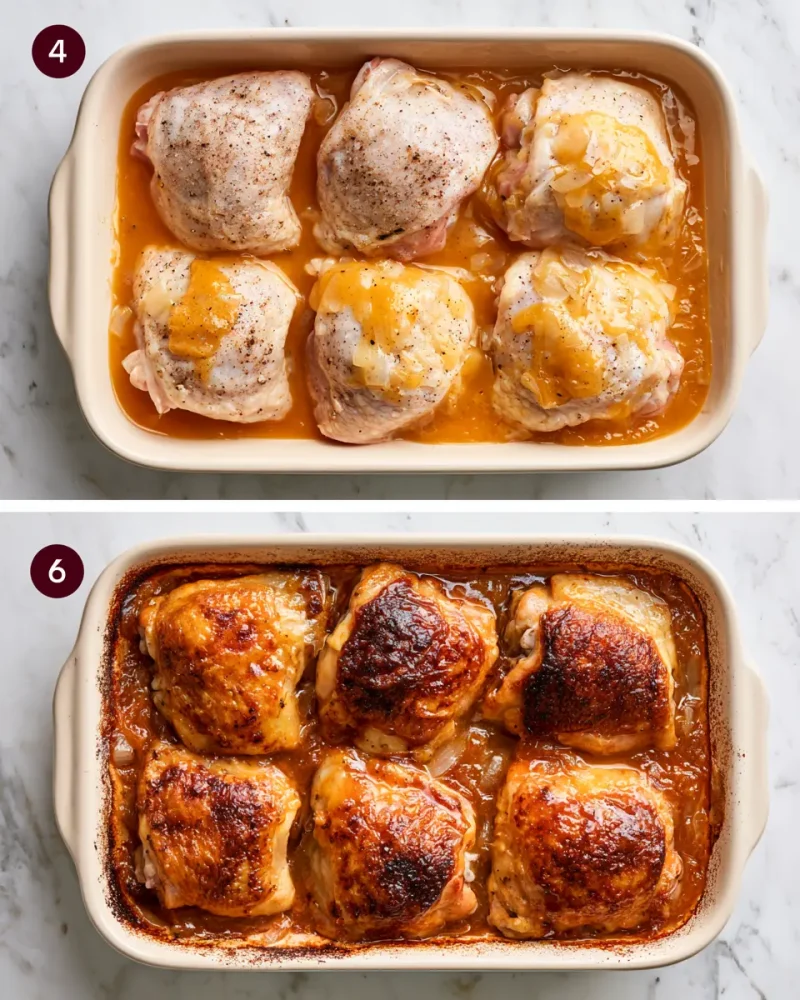
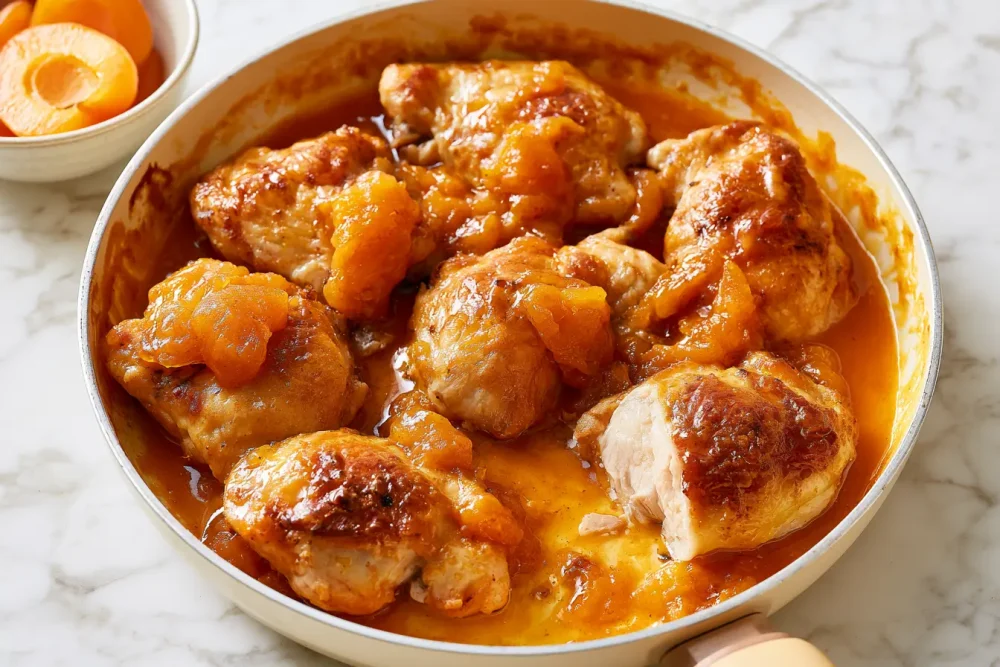
6. Add the apricots and finish uncovered. Remove the foil and spoon some of the hot sauce over the chicken. Arrange the drained apricot halves from one 410g can around the thighs. Return the dish to the oven uncovered for 15–20 minutes, until the chicken is cooked through, the apricots are heated and the sauce has started to thicken around the edges.
7. Check the chicken. Insert a food thermometer into the thickest part of a thigh without touching the bone. The chicken should reach at least 74°C (165°F) before serving. USDA specifically recommends 165°F/73.9°C for chicken thighs and other poultry. (FSIS)
8. Thicken the sauce if needed. If the chicken is cooked but you’d like a thicker glaze, transfer the chicken and apricots to a plate and keep them warm. Pour the sauce into a small saucepan and simmer for a few minutes until it reaches your preferred consistency, then spoon it back over the chicken.
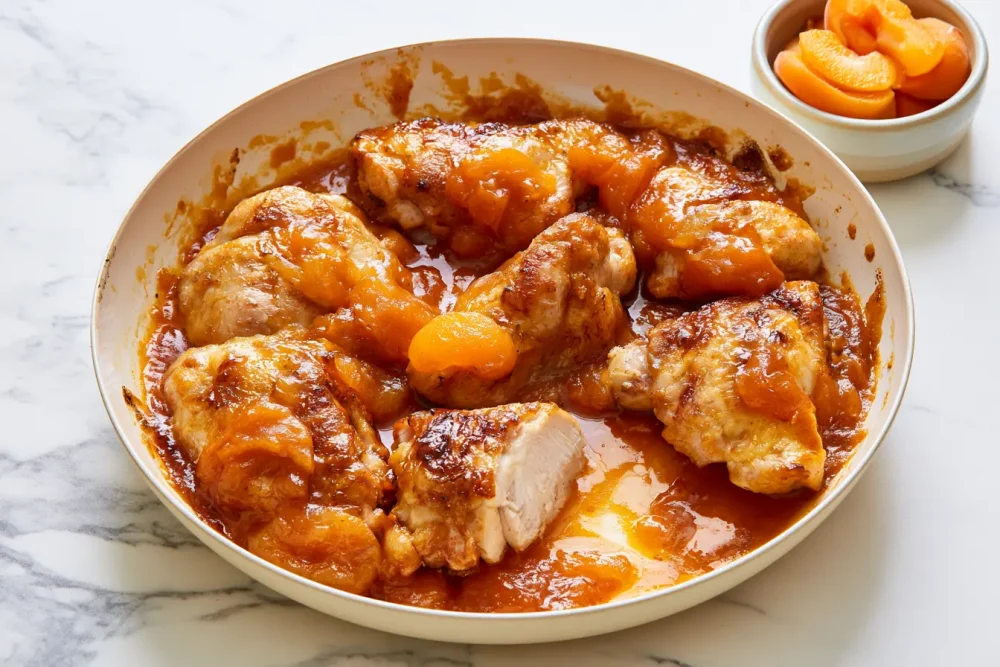
9. Rest and serve. Let the chicken rest for about 5 minutes, then scatter with fresh flat-leaf parsley. Spoon plenty of the apricot sauce and a few apricot halves over each serving. Serve with steamed rice, mashed potatoes, green beans or broccolini.
Total oven time: approximately 45–50 minutes, rather than the original 35 minutes. USDA’s approximate guidance for roasting chicken legs or thighs is 40–50 minutes at 350°F, with internal temperature rather than time being the definitive safety check. (FSIS)
My Take on This Recipe
I’ll be honest, I stuffed this up twice before I landed on the right version. The first time I used apricot jam instead of nectar and the sauce went almost caramel-thick and a bit too sweet for my taste. The second time I skipped the vinegar and it tasted flat, more like a fruit compote than a proper sauce. Once I sorted those two things, this apricot chicken recipe clicked into place and I haven’t changed it since.
I make it most often on Sunday afternoons when I want something that’ll also cover Monday’s lunchbox. The whole family eats it, including my daughter who usually insists she doesn’t like “fruity things.” She’s had three helpings across two nights. I reckon that says more than any tasting note I could write.
What Went Wrong Before It Went Right
I tested this apricot chicken recipe across about six batches before I’d call it dialled in, and three of those batches were genuinely disappointing in different ways.
The first real failure was temperature. I ran the oven at 200°C thinking a hotter bake would crisp the skin faster, but the sauce scorched against the sides of the dish before the chicken had finished cooking through. Apricot nectar has enough natural sugar that it burns if you push the heat too high. Dropping to 190°C fixed it immediately. Look, that single change probably saved this apricot chicken recipe from becoming a disaster I’d have written off entirely.
The second problem was dish size. I used a smaller 28 x 18cm (11 x 7 inch) dish the first few times, and the pieces were crowded. The sauce pooled but didn’t circulate properly, so some pieces came out much more glazed than others. A larger roasting tin made a visible difference to how evenly this apricot chicken recipe cooks.
The third issue was vinegar quantity. I tried 1 tablespoon instead of 2 on one batch, thinking I was balancing the sauce. The result tasted kind of one-dimensional, a bit like a fruit bowl over chicken rather than a proper savoury dinner. Two tablespoons sounds like a lot, but more often than not it’s exactly what this apricot chicken recipe needs to taste like a sauce and not a syrup.
Timing matters too. I tried skipping the foil and baking uncovered the whole way. The top browned well but the chicken inside was still a little underdone near the bone at the 35-minute mark. Covering for the first 25 minutes traps the steam and finishes the meat properly.
Tips That Actually Help
Use apricot nectar, not jam. Nectar gives you a pourable, fluid sauce. Jam creates something dense and overly sweet that almost candies onto the skin rather than baking into a glaze. Berri or Golden Circle apricot nectar from Woolworths or Coles both work fine.
Dry the chicken skin before baking. Pressing kitchen paper over the skin for about 30 seconds draws out surface moisture and makes a real difference to how the skin crisps in that last 10 minutes uncovered. If the skin is wet, it steams instead of caramelises.
Don’t skip the resting time. Three minutes out of the oven lets the sauce re-settle as it slightly tightens. If you cut into the thighs immediately, the sauce runs straight off the plate.
Spoon the sauce mid-bake. When you pull the foil off at 25 minutes, take 30 seconds to spoon the sauce from the base back over the pieces before returning the dish to the oven. That step is what gives the skin the sticky, lacquered finish that makes this apricot chicken recipe look properly done. For a similar bake-and-glaze approach, this comforting chicken Alfredo bake uses comparable technique.
Variations Worth Trying
Slow cooker version. This apricot chicken recipe adapts well to a slow cooker if you want a hands-off weeknight dinner. Mix the sauce, pour over chicken thighs in the bowl, set on low for 6 hours or high for 3.5 hours. You won’t get crispy skin, but the meat falls off the bone and the sauce intensifies. I’d say it’s a different dish, more suited to cold nights when you want something closer to a braise. Check the crockpot marry me chicken for pacing tips if you’re new to slow-cooker bakes.
Mustard addition. Stirring 1 tablespoon of Dijon mustard into the sauce before pouring gives this apricot chicken recipe a sharper edge. It doesn’t taste mustardy, but it rounds out the sweetness in a way that makes the whole dish feel more complex. I probably make the mustard version more often than the original these days.
Drumstick swap. Skin-on drumsticks work almost identically to thighs in this apricot chicken recipe. They’re usually a bit cheaper at Coles, probably around $6-7 per kilogram compared to $8-9 for thighs, and they hold up just as well through the bake. Cooking time stays the same.
How to Serve It
This apricot chicken recipe is made for white rice. The sauce is the whole point, and you want something that absorbs it rather than competing with it. Steamed Sunrice long-grain white rice or jasmine rice works well. I usually put about 200g (1 cup) of uncooked rice on before the chicken goes in the oven so they finish at the same time.
Mashed potato is the other option my family goes for, especially in winter. The sauce sits over the mash like a glossy gravy and it’s a properly filling dinner that way. Steamed broccolini or green beans keep the plate from feeling heavy. I’ve done it with rocket dressed in lemon and olive oil too, which is a bit underrated as a side for a sweet-savoury bake like this apricot chicken recipe. For another solid weeknight pairing idea, have a look at the lemony chicken thighs with hazelnut romesco page.
How I’ve Been Using It Lately
Right now, mid-2026, chicken thighs are sitting around $8-9 per kilogram for skin-on bone-in at Woolworths, which makes this apricot chicken recipe one of the better-value weeknight mains going. I make a double batch on Sundays most weeks. It feeds four people dinner twice or stretches into lunchboxes for three days. I pull the leftover chicken off the bone cold, shred it, and reheat it with a spoonful of reserved sauce in a pan. Honestly, the leftovers might be better than the original dinner. The sauce tightens overnight in the fridge and clings to the shredded meat in a way that’s kind of better than the freshly baked version. It goes into wraps, over rice, or alongside a quick salad with no extra effort.
Storage and Meal Prep
Leftovers from this apricot chicken recipe keep in an airtight container in the fridge for up to 3 days. The sauce thickens considerably when cold. It loosens again when you reheat it gently in a saucepan over low heat with about 60ml (1/4 cup) of water or chicken stock.
You can freeze this apricot chicken recipe for up to 2 months. Freeze the chicken and sauce together in portions. Thaw overnight in the fridge before reheating. The skin softens after freezing, so don’t expect the same texture as fresh, but the flavour holds well and the sauce is still really good reheated from frozen portions.
For meal prep, mix the sauce and store it separately in the fridge for up to 3 days before you need it. Pour over fresh chicken when you’re ready to bake.
Common Mistakes to Avoid
Using a dish that’s too small. If the chicken pieces are touching or overlapping, they steam rather than bake and the sauce doesn’t reduce around the edges. You want about 2cm of space around each piece. If in doubt, use a bigger tin. A crowded dish is probably the number one reason this apricot chicken recipe doesn’t come out as glossy as it should.
Skipping the foil for the first part of baking. The foil traps enough moisture to cook the chicken through near the bone before the skin starts to brown. Without it, the skin colours while the thickest part of the meat is still underdone.
Adding the parsley before the dish comes out of the oven. Fresh parsley added pre-bake turns khaki-coloured and slightly bitter. Add it after resting, right before you serve. Sounds obvious, but it’s caught me out more times than I’d care to admit.
FAQ
Can I use chicken breast instead of thighs for this apricot chicken recipe?
You can, but I’d say it’s not ideal. Breast meat dries out more easily in a 35-minute bake, especially in a sauce with this much natural sugar content. If you go that route, check the internal temperature at 25 minutes and pull the dish out the moment it reads 74°C (165°F). Thighs are genuinely more forgiving and I’d recommend them for a first go at this apricot chicken recipe.
What can I use instead of French onion soup mix in this apricot chicken recipe?
A reasonable substitute is a combination of 1 teaspoon onion powder, 1 teaspoon garlic powder, 1/2 teaspoon dried thyme, and 1 teaspoon of salt. It won’t be identical because the soup mix has a specific savoury character that comes from dehydrated onion and the way it slightly thickens the sauce as it dissolves during baking, but it’s a workable swap if you don’t have a packet on hand or prefer to mix your own seasoning blend. Most of the time the flavour still comes through well.
My apricot chicken recipe sauce came out very thin and runny after baking. What happened, and how do I fix it?
Most of the time this comes down to one of two things. The first is that the foil wasn’t tight enough and steam escaped during the covered portion of baking, which means the liquid didn’t concentrate properly during the uncovered stage. The second is that the dish was too large relative to the amount of sauce, so it spread too thin across the base to reduce. To fix it mid-cook, remove the foil, tip the dish slightly so the sauce pools at one end, spoon it back over the chicken, and give it an extra 5-8 minutes uncovered. Alternatively, pour the sauce into a small saucepan after baking and simmer on the stovetop for 4-5 minutes until it reaches the consistency you want, then pour it back over the plated apricot chicken recipe. Either approach works.

Apricot Chicken Recipe
Ingredients
Equipment
Method
- Preheat the oven to 190°C and lightly grease a 33 × 23 cm baking dish. Pat the chicken thighs dry with kitchen paper.

- Whisk together the apricot nectar, French onion soup mix, chicken stock, apple cider vinegar and garlic powder until combined.
- Season the chicken with black pepper and a little salt if required. Arrange skin-side up in a single layer in the baking dish.
- Pour the sauce over and around the chicken, keeping most of the skin exposed. Cover tightly with foil and bake for 30 minutes.
- Remove the foil, spoon sauce over the chicken, arrange the drained apricot halves around the dish and bake uncovered for 15–20 minutes until the chicken reaches 74°C and the sauce has thickened.
- Rest the chicken for 5 minutes, garnish with parsley and serve with the apricot sauce.