
Cottage cheese cookie dough: 5 quick steps to a tasty snack
Craving cottage cheese cookie dough? This simple, no-bake recipe delivers a thick, satisfying treat in minutes without turning on the oven. Try it tonight.
The craving always hits around half-eight on a rainy Tuesday. The kitchen’s quiet. The kettle’s just boiled for a cup of tea. I usually want something sweet but can’t be bothered turning on the oven or making a massive mess on the worktop. That’s exactly when cottage cheese cookie dough saves the evening. Honestly, I was a bit sceptical the first time I blitzed up a tub of Glenilen Farm curds, expecting it to taste like a slightly confused, watery breakfast bowl rather than a proper, thick evening dessert that actually satisfies. I was wrong. I couldn’t have been more wrong about the whole thing, to be perfectly honest. Properly wrong. Cottage cheese cookie dough doesn’t take long to pull together if you’ve got a half-decent food processor sitting on the worktop and all your ingredients weighed out beforehand in little glass bowls ready to go. It’ll probably sound a bit strange if you grew up only eating the stuff on Ryvita with a slice of ham. Look, blending it completely removes the lumpy texture entirely. I make it, actually no, I’ll make it most weeks now because it saves me from reaching for a stale packet of biscuits. It sits in the fridge in a little glass tub, waiting for that post-dinner slump. Just simple ingredients. Cottage cheese cookie dough is my reliable, no-fuss answer to a sweet tooth.
Why blended curds make a brilliant sweet base
Getting the texture right’s the main reason cottage cheese cookie dough actually doesn’t feel like a sad compromise. Most of the time, people just stir chocolate chips straight into the tub and hope for the best. That won’t work. A complete disaster. The magic happens when you blitz the curds until they’re completely smooth and glossy, which mimics the fat content of traditional creamed butter and sugar without leaving you feeling horribly sluggish afterwards when you’re just trying to relax on the sofa. I’d say the slight tang of the dairy actually balances the sweetness better than a standard batter would.
Cottage cheese cookie dough relies on almond flour to thicken the mixture into a scoopable, dense consistency that holds its shape on a spoon. You won’t need to bake it. I mean, you couldn’t bake it even if you tried. You shouldn’t worry about raw flour or eggs either. Cottage cheese cookie dough just works because it’s using pantry staples to create something rich and satisfying in minutes.
Ingredients
You’ll need full-fat dairy for this to work properly. I’ll usually grab the 300g tubs from SuperValu on a Monday afternoon, making sure to check the nutritional label to guarantee it’s the proper full-fat version, because the low-fat ones simply don’t hold enough structure to carry the chocolate chips without turning into a sad, weeping puddle at the bottom of the bowl. Cottage cheese cookie dough needs that fat content to replicate the mouthfeel of real batter.
Then you’ll need a binder. Ground almond flour is my absolute preference here since it’s adding a lovely nutty background note and absorbs moisture brilliantly without it needing to be heat-treated first. If I’m honest, standard plain flour just doesn’t taste right here and ruins the whole experience because it desperately needs to be heat-treated first to remove that chalky, raw flavour profile that lingers unpleasantly. You’ll find ground almonds in the baking aisle quite cheaply.
The rest’s just flavouring. A splash of vanilla extract, a drizzle of maple syrup for sweetness, and a generous handful of dark chocolate chips. Making cottage cheese cookie dough with dark chocolate rather than milk chocolate is essential because it’s cutting through the richness beautifully.
What you need
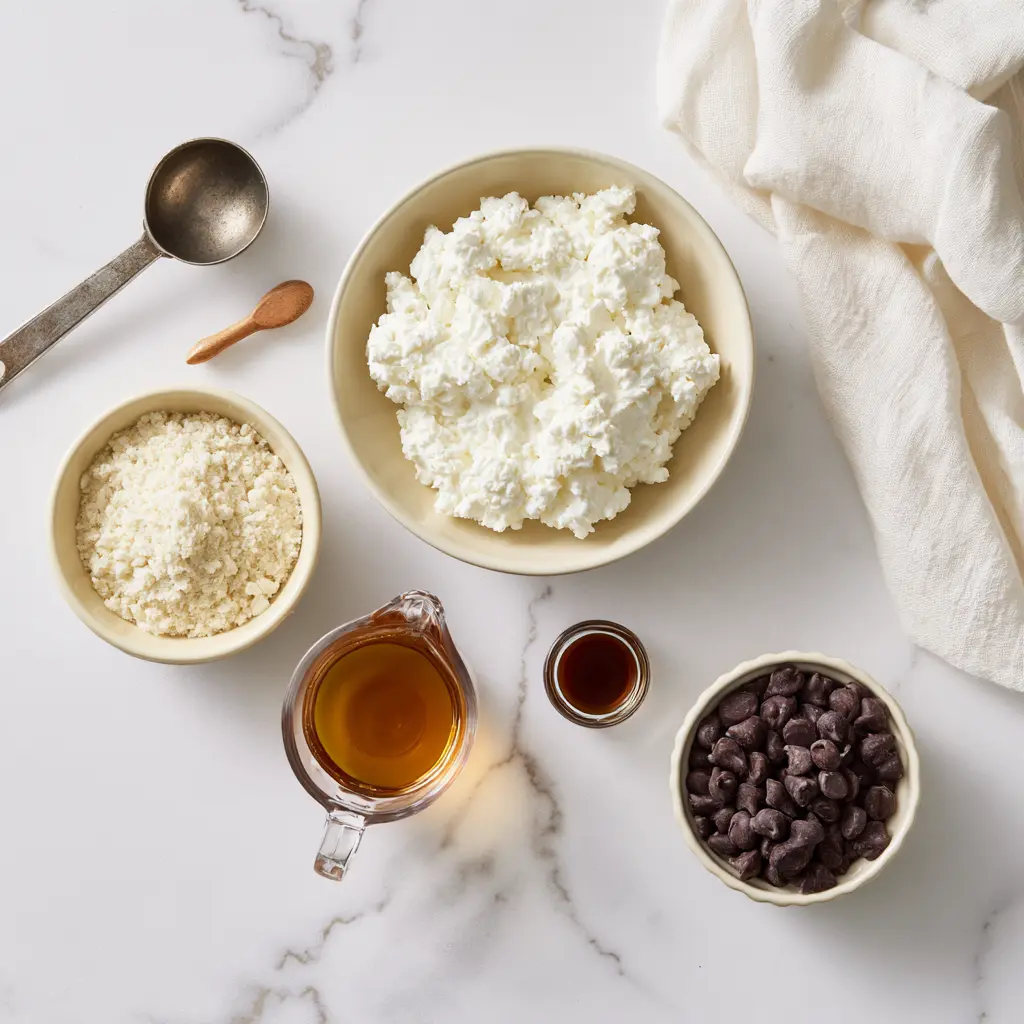
- 250g (9oz) full-fat cottage cheese
- 60g (2oz) almond flour
- 30ml (2 tbsp) maple syrup
- 5ml (1 tsp) vanilla extract
- 40g (1.5oz) dark chocolate chips
Step-by-step instructions
- Drain the dairy
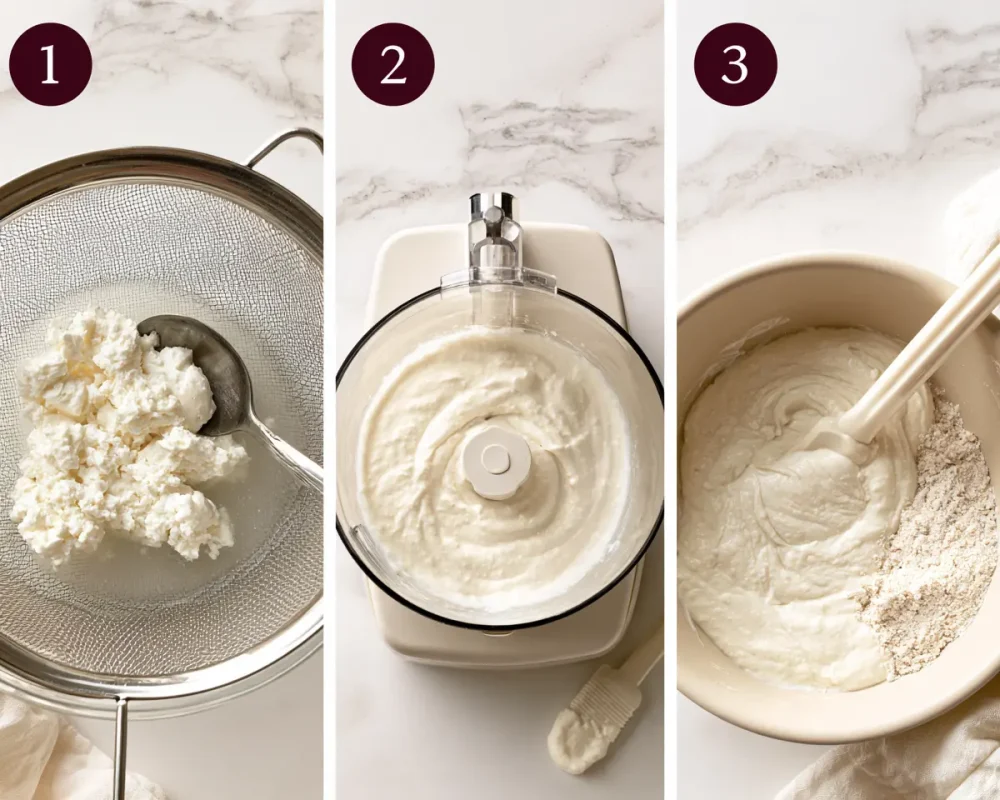
You’ll want to tip the cottage cheese into a fine sieve over the sink and press it gently with the back of a metal spoon to remove excess liquid, otherwise the whole mixture won’t set right and you’ll be left frustrated with a sloppy mess that resembles soup far more than anything you could ever roll into a neat little ball. Cottage cheese cookie dough won’t set right if you skip this step, especially if you’ve bought a particularly wet batch from the shops.
2. Blend until smooth
You’ll transfer the drained curds into a food processor or a tall jug if you’re using a stick blender. Blitz on high speed for about sixty seconds until there aren’t any lumps left. *Cook’s note: I’ve found that scraping down the sides halfway through is essential, otherwise you’ll end up with stray curds hiding at the bottom of the bowl.*
3. Mix the base
You’ll pour the smooth mixture into a mixing bowl and stir in the maple syrup and vanilla extract. Add the almond flour gradually. You mightn’t need the entire amount if it’s quite dry to begin with.
4. Fold the chocolate
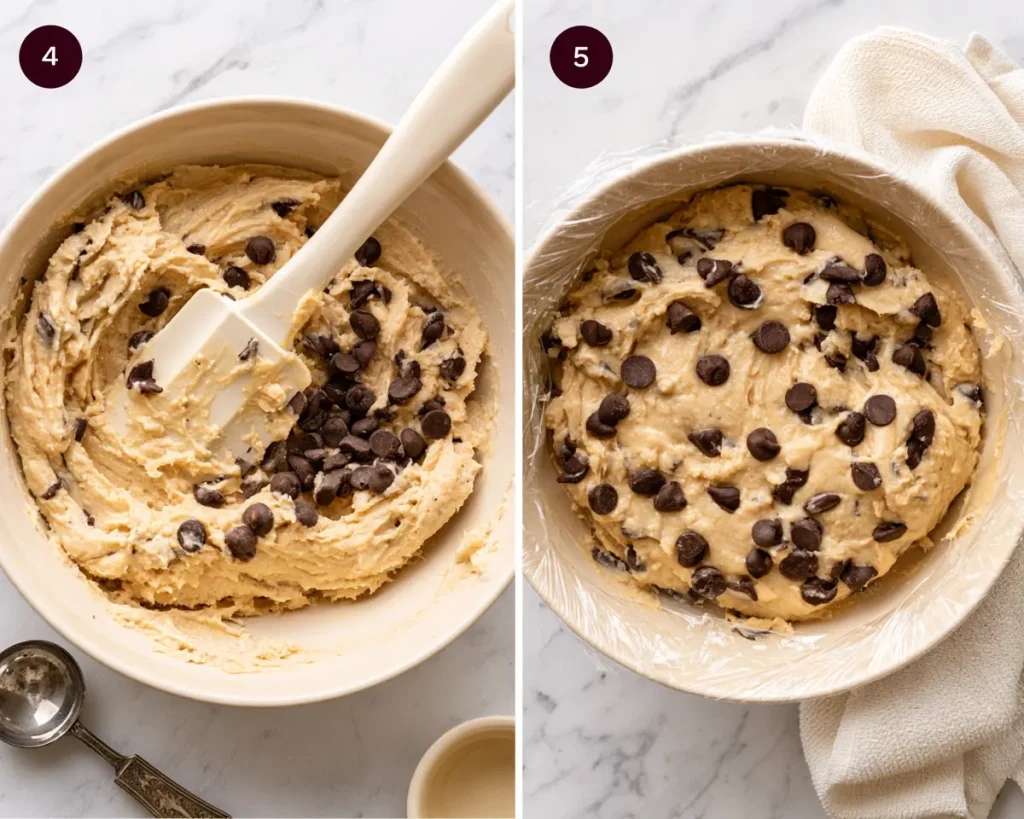
You’ll scatter the dark chocolate chips over the top and fold them through gently with a silicone spatula. If you’d like to try something different, swapping them out for homemade protein pudding recipe chunks is a rather odd but brilliant variation I tried last month.
5. Chill before eating
You’ll cover the bowl with cling film and place it in the fridge for at least thirty minutes. Cottage cheese cookie dough firms up significantly as it cools, so you’re getting that proper dense, scoopable texture.
My take on this snack
My sister’d called round unannounced last Friday just as I was scraping the last bits of a fresh batch out of the food processor, and she’ll usually turn her nose up at anything involving alternative baking methods or hidden protein, preferring traditional butter-heavy recipes every single time without fail. I handed her a spoon without telling her what was in the bowl. She’d eaten three massive mouthfuls before asking if I’d a spare cottage cheese pancakes recipe written down somewhere to go with it, assuming it’d been some fancy artisanal cream from a bakery in town that I’d queued up for all morning. The look on her face when I showed her the empty plastic tub from Aldi was absolutely priceless. Not a chance. Cottage cheese cookie dough has that effect on people. It’s totally tricking the brain. I’d reckon the texture is so spot-on that your mind’s just accepting it as the real deal. I’m keeping a tub of cottage cheese cookie dough in the fridge constantly now, mostly to save myself from baking a full tray of biscuits at ten o’clock at night.

Notes from the kitchen
I’ve probably tested this particular cottage cheese cookie dough recipe about fourteen times last November before getting the consistency spot-on. The early batches weren’t great. My first attempt on a rainy Tuesday involved chucking everything straight into a basic blender without draining the curds at all, which left me with a sloppy, watery mess that tasted exactly like vanilla-scented milk. A week later, I tried using coconut flour instead of ground almonds to save a bit of money. Bad idea. The coconut flour absorbed all the moisture instantly, leaving me with a crumbly, dry block that genuinely resembled damp sand rather than a smooth treat, so I couldn’t save it and binned the entire batch immediately. By batch number nine, I’d thought I’d cracked it by using a cheap hand whisk instead of my Magimix 5200XL food processor. I was wrong again. The whisk just couldn’t break down the curds properly, so every bite had these strange, rubbery little lumps of cheese mixed in with the chocolate chips. It was texturally jarring. You’ll really need the high-speed blade to whip it into that thick, glossy state. Getting the right balance of wet to dry ingredients took weeks of tweaking, but the final cottage cheese cookie dough ratio is firmly locked in now.
Essential tips for the best texture
Drain it properly before blending. If you skip the draining stage, then your cottage cheese cookie dough will separate in the fridge and leave a puddle of whey at the bottom of your container.
Scrape the sides down constantly. If you leave unblended curds clinging to the jug, then you’ll encounter weird savoury lumps in your sweet snack later.
Chill the bowl beforehand. If your kitchen is particularly warm, then chilling your mixing bowl helps the cottage cheese cookie dough firm up much faster before you stir in the chocolate.
Toast the almonds lightly in a dry frying pan for two minutes. I’ll often do this while preparing my almond flour cookie recipe base, as it brings out a much richer, toasted flavour that masks any lingering dairy tang.
Easy flavour variations
Swapping the dark chocolate for a handful of crushed pistachios and white chocolate chunks creates a brilliant weekend treat. You’ll get a lovely crunch that contrasts perfectly against the soft, creamy base.
Adding a spoonful of smooth peanut butter directly into the food processor yields a much denser, fudgy consistency. I’ve found this version pairs incredibly well with a banana pudding milkshake on a Friday night when I’m craving something rich.
How to serve this sweet snack
I’ll usually serve a generous scoop of the mixture straight from the fridge in a little ramekin alongside a strong cup of Barry’s tea. It’s the perfect evening companion after a heavy dinner of bacon and cabbage, when you want something sweet but don’t fancy a heavy pudding.
Sometimes I’ll spread a thick layer over a warm, toasted crumpet or a thick slice of Grandma’s banana nut bread a timeless recipe for a rather decadent Sunday afternoon snack while watching the heavy rain outside. The cold, thick spread melting slightly against the warm bread is simply brilliant.
When this earns its place in my week
This cottage cheese cookie dough usually makes an appearance on Thursday evenings. By that point in the week, my energy levels are completely depleted, and the thought of baking something from scratch feels impossible.
I’ll whip up a quick batch while waiting for the kettle to boil. I’ll usually pack a small Tupperware container of it into my work bag on Fridays too.
Sitting at my desk around three o’clock, staring at endless spreadsheets, having a few spoonfuls of cold cottage cheese cookie dough feels like a proper treat that stops me from wandering down to the local shop for an overpriced, stale pastry that costs 4 euros.
Storage and meal prep guidelines
Keeping your cottage cheese cookie dough fresh requires a proper airtight glass container. I’ll usually store mine in the fridge for up to four days, though it rarely lasts past the weekend.
The mixture actually thickens up beautifully overnight, becoming much easier to roll into neat little balls the next morning.
Freezing just isn’t something I’d recommend for this specific cottage cheese cookie dough, as the dairy tends to split and become grainy once thawed. Considering a tub of curds costs about 1.50 euros right now in 2026, making a double batch on Sunday night is a highly cost-effective way to prep your evening snacks for the whole working week.
A quick note on the ingredients
Using a dairy base for this sweet treat offers some solid nutritional benefits compared to traditional butter and sugar mixtures. The curds provide a substantial amount of protein, which helps keep you feeling satisfied long after you’ve finished eating.
Blending the mixture with ground almonds adds a good source of healthy fats and dietary fibre, giving the cottage cheese cookie dough a wonderfully dense, filling quality that keeps me going until my next meal.
According to Safefood, incorporating dairy into your daily routine is a great way to support overall bone health. The dark chocolate chips bring a lovely rich flavour alongside some naturally occurring antioxidants. I’d say it’s a rather clever way to enjoy a sweet, chocolatey snack while getting some genuinely useful nutrients into your day.
Common mistakes to avoid
Adding the chocolate chips directly into the food processor while the motor is still running is a classic error. The blades will pulverise the chocolate into tiny, bitter dust particles, turning your cottage cheese cookie dough an unappealing shade of grey. Always fold them in by hand afterwards.
A watery sweetener will thin out the cottage cheese cookie dough too much, leaving you with a runny batter that won’t set up in the fridge, no matter how long you chill it. Sticking to thick maple syrup is essential.
FAQ
Can I use a hand blender instead of a food processor?
Yes, a stick blender works well if you use a narrow, tall jug. It takes slightly longer to achieve a completely smooth base, but it handles the cottage cheese cookie dough base perfectly fine.
Will this recipe work with flavoured dairy tubs?
I wouldn’t advise using pre-flavoured or sweetened curds for this specific recipe. They’ll often contain artificial stabilizers and excess water that completely alter the final texture. Sticking to plain, full-fat dairy ensures your cottage cheese cookie dough maintains that authentic, thick consistency.
How do I know when the mixture is blended enough?
You’re looking for a specific visual change in the bowl. The mixture will transition from looking pale and slightly bumpy to having a glossy, thick sheen that resembles thick mayonnaise or soft buttercream. When you hear the food processor blade spinning smoothly without any resistance, and the cottage cheese cookie dough smells faintly of sweet vanilla rather than sharp dairy, it’s ready for the dry ingredients.
Final thoughts on this recipe
A quick bowl of this cottage cheese cookie dough really does make the darker evenings feel a bit more manageable. It’s just a simple, reliable recipe that I find myself returning to whenever the cupboards are looking bare.


Cottage Cheese Cookie Dough
Ingredients
Equipment
Method
- Place the cottage cheese in a fine-mesh sieve over a bowl or sink. Press gently with the back of a spoon to remove excess liquid. Avoid pressing out too much moisture, as the mixture should remain creamy enough to blend.

- Transfer the drained cottage cheese to a food processor or a tall jug suitable for a stick blender. Blend on high for approximately 60 seconds until completely smooth, thick and glossy. Stop halfway through to scrape down the sides so no curds remain.
- Transfer the smooth cottage cheese to a mixing bowl. Stir in the maple syrup and vanilla extract. Gradually add the almond flour, mixing until the dough becomes thick and scoopable. Use the full 60 g if needed, adjusting gradually according to the moisture remaining in the cottage cheese.
- Add the dark chocolate chips and gently fold them through the cookie dough using a silicone spatula until evenly distributed. Do not blend the chocolate chips in the food processor, as they should remain in distinct pieces.
- Cover the mixing bowl or transfer the dough to an airtight container. Refrigerate for at least 30 minutes to allow the almond flour to absorb moisture and the mixture to firm up.
- Divide the chilled cookie dough into four portions and serve cold in small bowls or ramekins. The mixture should be thick enough to scoop with a spoon. Keep any leftovers refrigerated.