
Cottage Cheese Bagels: Easy High Protein Homemade Recipe
Easy cottage cheese bagels made with cottage cheese, self-rising flour and simple ingredients. A soft, high-protein, no-yeast homemade bagel recipe. Cottage cheese and self-rising flour form the base of the dough, while egg wash and seasonings add colour and flavour. Blending the cottage cheese before mixing it with the flour creates a smoother dough and…
Easy cottage cheese bagels made with cottage cheese, self-rising flour and simple ingredients. A soft, high-protein, no-yeast homemade bagel recipe.
Cottage cheese and self-rising flour form the base of the dough, while egg wash and seasonings add colour and flavour.
Blending the cottage cheese before mixing it with the flour creates a smoother dough and distributes the cheese evenly. Once shaped, the bagels can be brushed with egg and finished with everything bagel seasoning, sesame seeds or another topping before baking until golden.
The result is a soft, substantial homemade bagel with extra protein from the cottage cheese. They work particularly well for breakfast sandwiches, with eggs, or simply toasted with your favourite spread.
Why Cottage Cheese Works in Bagel Dough
Cottage cheese does more than increase the protein content of these bagels. It also provides much of the moisture needed to turn the flour into a workable dough.
Blending it first breaks down the curds and creates a smoother consistency. This makes it easier to distribute throughout the flour and produces a more uniform dough.
Self-rising flour provides the dry structure and already contains raising agents, eliminating the need for yeast.
This also means these are not traditional yeast-raised bagels. Traditional bagels use yeast and are commonly boiled before baking. Cottage cheese bagels are a faster alternative with their own softer texture.
Ingredients You’ll Need
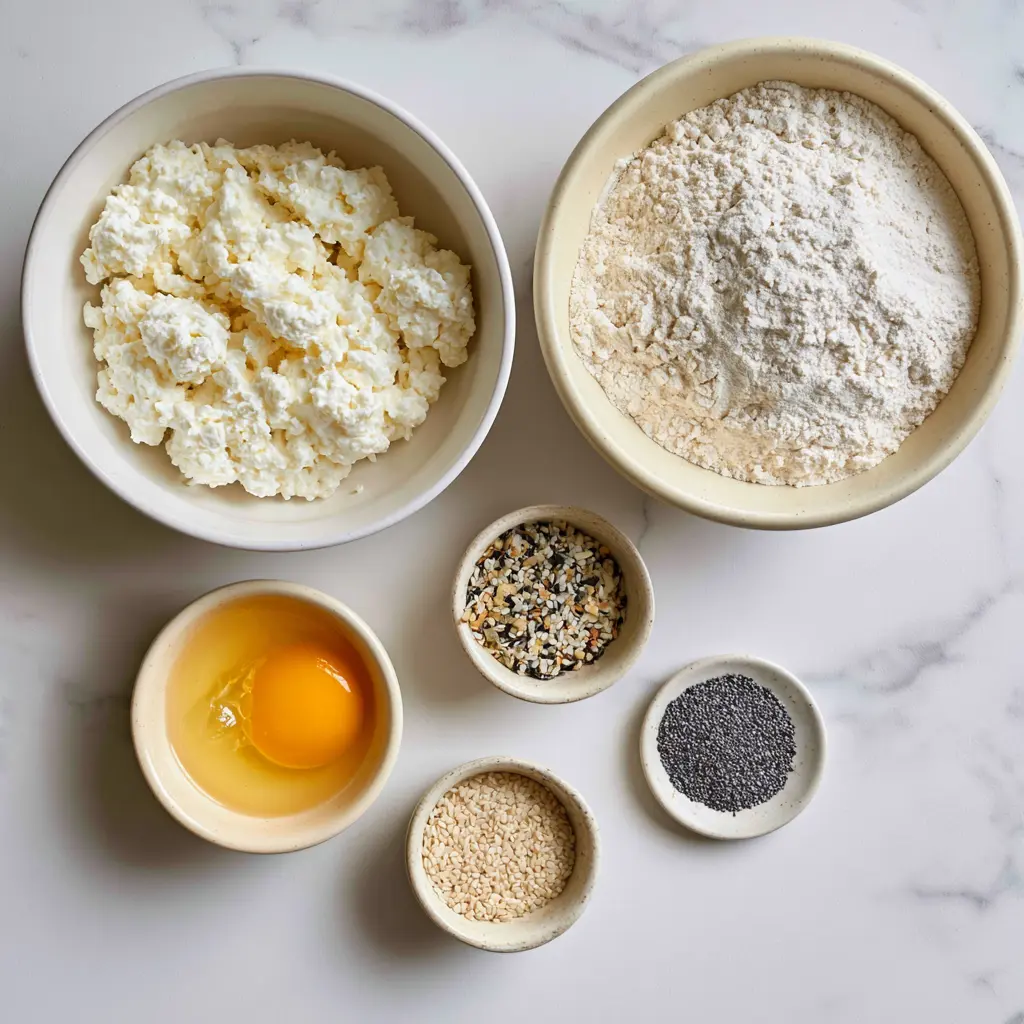
Cottage cheese: This provides moisture and contributes protein to the dough. Blending it until smooth gives the bagels a more even texture.
Self-rising flour: Provides structure and the raising agents needed for the bagels to puff during baking.
You can also add:
Egg: Optional for brushing over the surface before baking. It helps create a shinier, more golden exterior.
Everything bagel seasoning: Adds garlic, onion, sesame, poppy seed and savoury flavour depending on the blend used.
Sesame or poppy seeds: Simple alternatives if you do not have everything seasoning.
Ingredients
- 250g cottage cheese
- 250g self-rising flour, plus a little extra if needed for shaping
- 1 egg, beaten, optional for egg wash
- Everything bagel seasoning, sesame seeds or poppy seeds, optional
These cottage cheese bagels combine cottage cheese and self-rising flour with a few simple ingredients for soft, golden homemade bagels. There is no yeast, no boiling and no waiting for dough to rise, making them much quicker to prepare than traditional yeast bagels.
How to Make Cottage Cheese Bagels
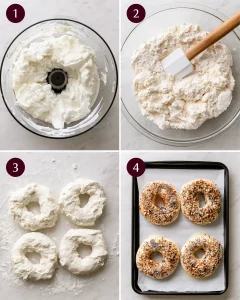
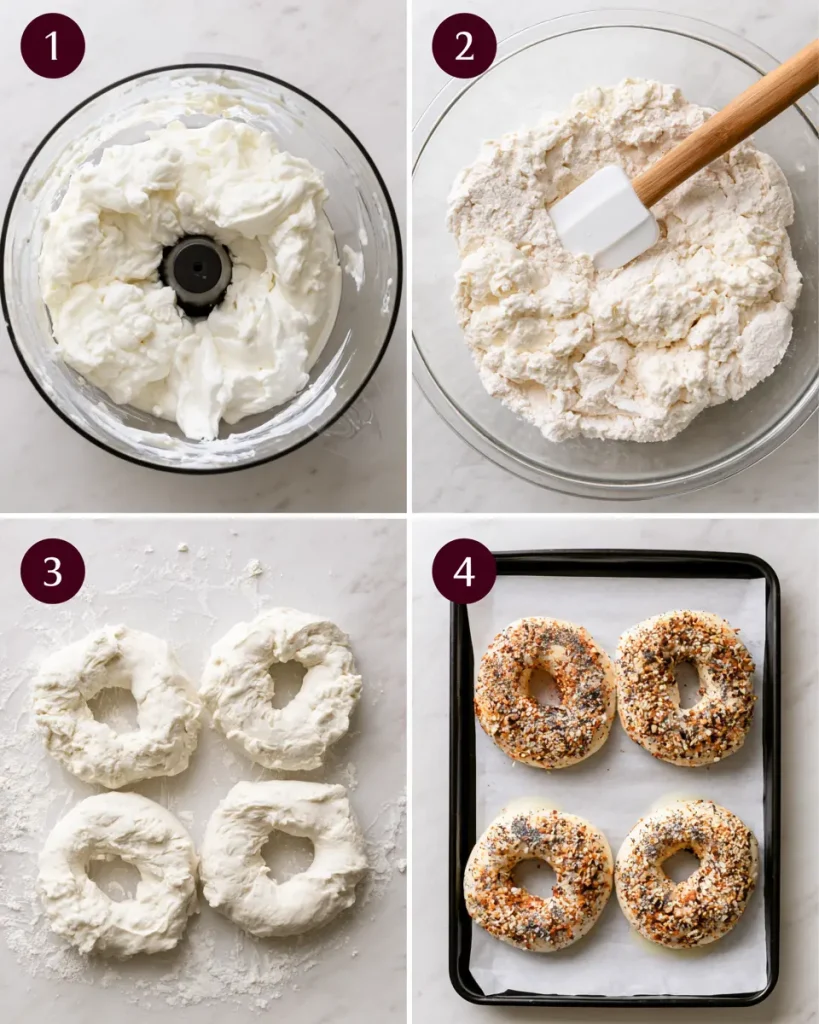
1. Blend the Cottage Cheese
Place the cottage cheese in a blender or food processor.
Blend until smooth and creamy, stopping to scrape down the sides if necessary.
This removes the larger curds and gives the dough a more uniform consistency.
2. Make the Dough
Transfer the blended cottage cheese to a large mixing bowl.
Add the self-rising flour and mix with a spoon or spatula until a rough dough forms.
Once it begins coming together, use your hands to gently bring the dough into a ball.
The dough should feel soft and slightly tacky but manageable. If it is extremely sticky, add a small amount of additional flour rather than adding a large quantity at once.
3. Divide and Shape
Transfer the dough to a lightly floured work surface.
Divide it into 4 equal portions.
Roll each portion into a short, thick rope and bring the two ends together. Pinch firmly to seal and create a bagel shape.
Alternatively, shape each portion into a ball, flatten it slightly and create a hole through the centre with your finger. Gently widen the hole because it will become smaller as the dough expands during baking.
4. Add the Toppings
Place the shaped bagels on a baking tray lined with parchment paper.
For a more golden surface, brush each bagel lightly with beaten egg.
Sprinkle with everything bagel seasoning, sesame seeds, poppy seeds or another topping of your choice.
5. Bake
Preheat the oven to 190°C (170°C fan).
Bake the bagels for approximately 25–30 minutes, or until they have risen and developed a golden exterior.
Exact baking time can vary depending on their size and your oven.
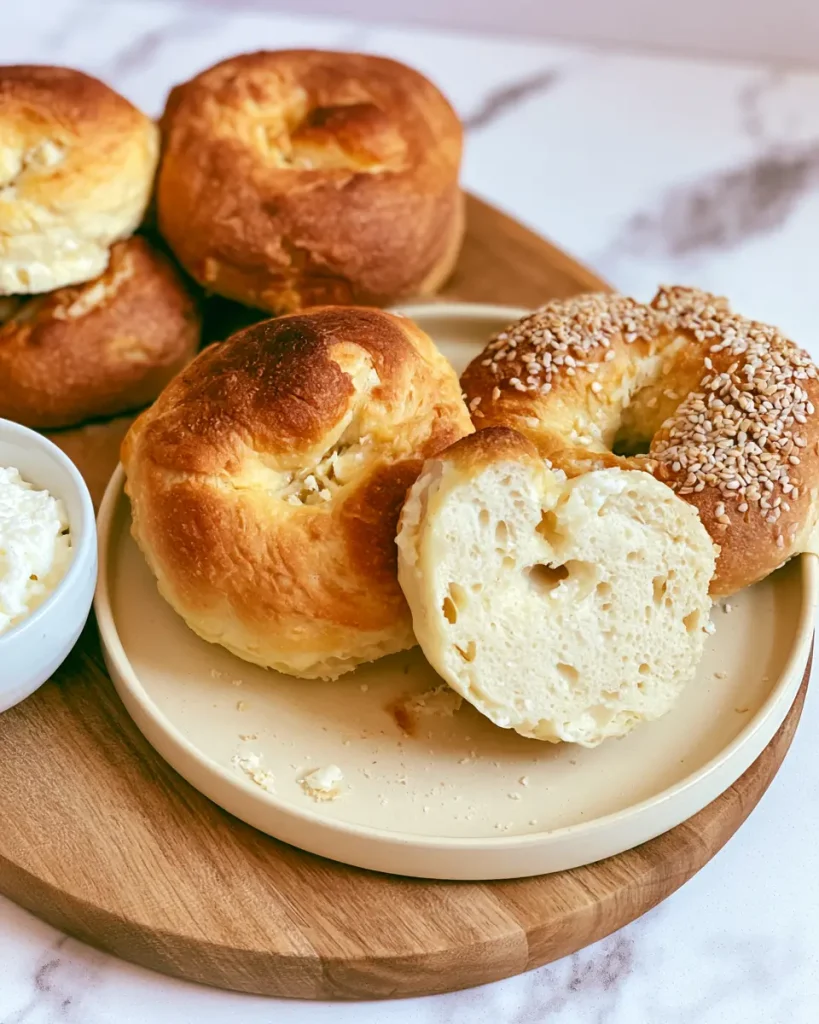
6. Cool Before Slicing
Transfer the baked bagels to a wire rack and allow them to cool for at least 10–15 minutes before slicing.
The interior continues to set as the bagels cool. Cutting them immediately can make the centre appear wetter or denser than it actually is.
How to Get the Dough Consistency Right
Dough consistency is one of the most important parts of this recipe.
Cottage cheese varies in moisture content between products, so the exact texture of the dough can differ even when the same quantities are used.
The finished dough should be soft and slightly tacky without coating your hands heavily.
If it is extremely sticky, add flour gradually, about one tablespoon at a time. Adding too much additional flour can make the finished bagels dry and dense.
If the dough feels unusually dry and struggles to come together, avoid automatically adding more flour. Continue gently mixing first to make sure all the cottage cheese has been incorporated.
The goal is a dough that can be shaped without requiring large quantities of flour on the work surface.
What If I Don’t Have Self-Rising Flour?
You can make a substitute using plain flour and baking powder.
For 250g plain flour, add approximately:
- 3¾ teaspoons baking powder
- ¼ teaspoon fine salt
Whisk them thoroughly before combining with the cottage cheese.
Commercial self-rising flour formulas can vary, so using actual self-rising flour gives the most predictable result.
Cottage Cheese Bagels vs Traditional Bagels
These should not be presented as identical to traditional bagels.
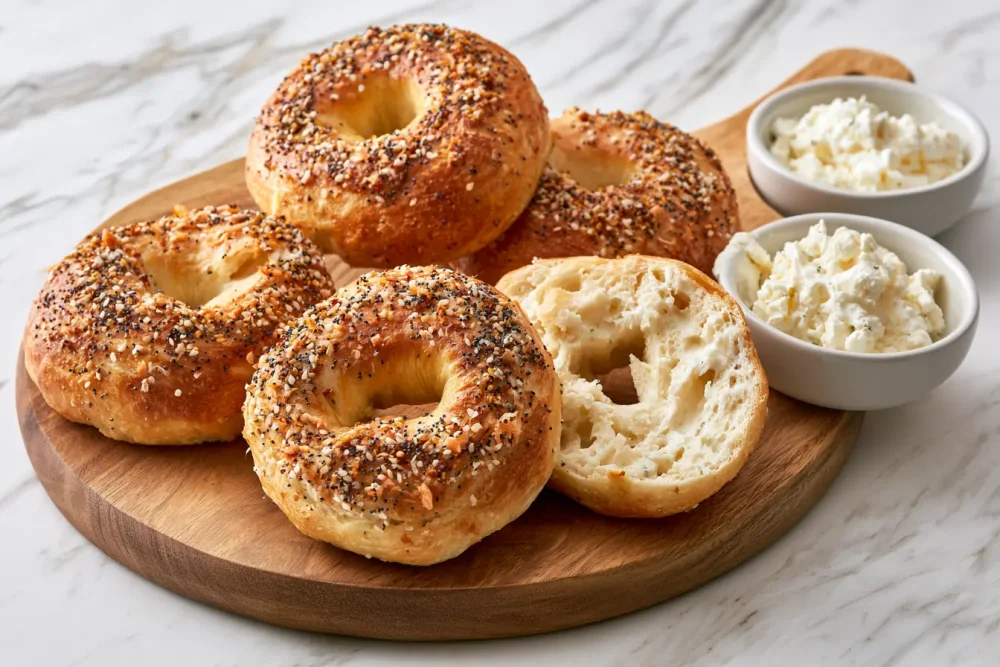
Traditional bagels typically use a yeast dough that is fermented, shaped, boiled and then baked. That process contributes to their characteristic chewy crumb and exterior.
Cottage cheese bagels skip both yeast fermentation and boiling. The cottage cheese supplies moisture while self-rising flour provides the structure and chemical leavening.
The advantage is speed and simplicity. The trade-off is a softer texture that differs from a traditional boiled bagel.
That distinction matters because it sets realistic expectations before someone makes the recipe.
How to Make Cottage Cheese Bagels More Golden
An egg wash is optional, but it makes a noticeable difference to the appearance of the finished bagels.
Beat one egg and lightly brush it over the shaped dough immediately before adding the seasoning.
The egg helps toppings adhere and encourages a darker, shinier surface during baking.
If you skip the egg wash, the bagels will still bake, but the surface may remain paler.
Best Cottage Cheese Bagel Toppings
Everything bagel seasoning is the obvious savoury option, but the basic dough is versatile.
Try:
- sesame seeds;
- poppy seeds;
- dried onion;
- dried garlic;
- grated cheddar;
- black pepper;
- cinnamon for a sweeter variation.
Add dry seasonings after the egg wash so they adhere to the surface.
For cheese toppings, watch the bagels toward the end of baking because exposed cheese can brown more quickly than the dough.
Cottage Cheese Bagel Variations
Everything Cottage Cheese Bagels
Brush the shaped bagels with beaten egg and generously sprinkle everything bagel seasoning over the surface before baking.
Sesame Bagels
Brush with egg and cover the tops with sesame seeds.
Cheddar Bagels
Fold a small amount of finely grated cheddar into the dough before shaping. You can also sprinkle additional cheese over the surface.
Adding cheese changes the calorie, protein, fat and salt content, so it should be included when calculating nutrition.
Cinnamon Bagels
Add ground cinnamon to the dough for a simple sweeter variation. Serve with fruit or nut butter.
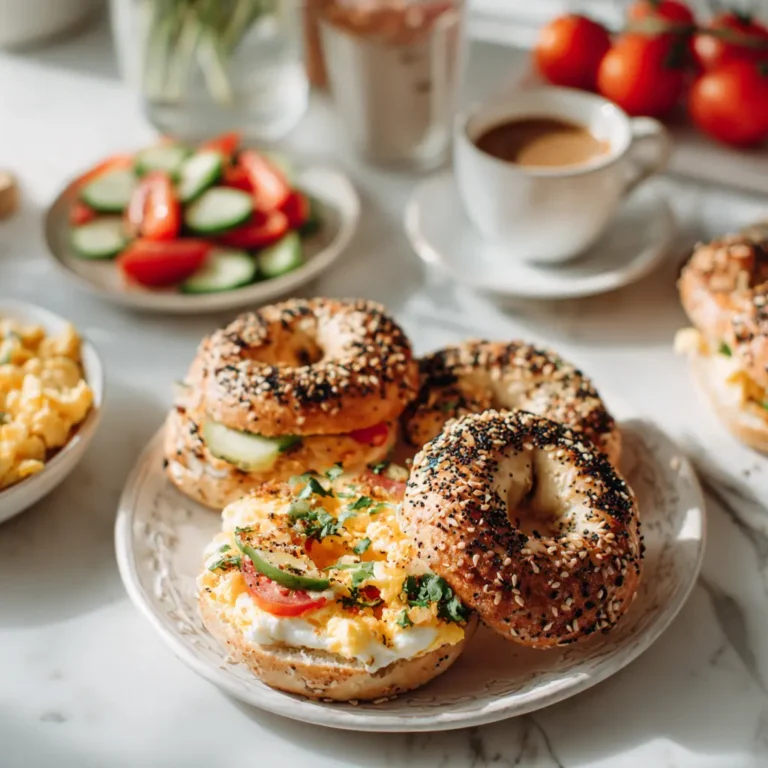
How to Serve Cottage Cheese Bagels
These bagels can be used much like other savoury bread products.
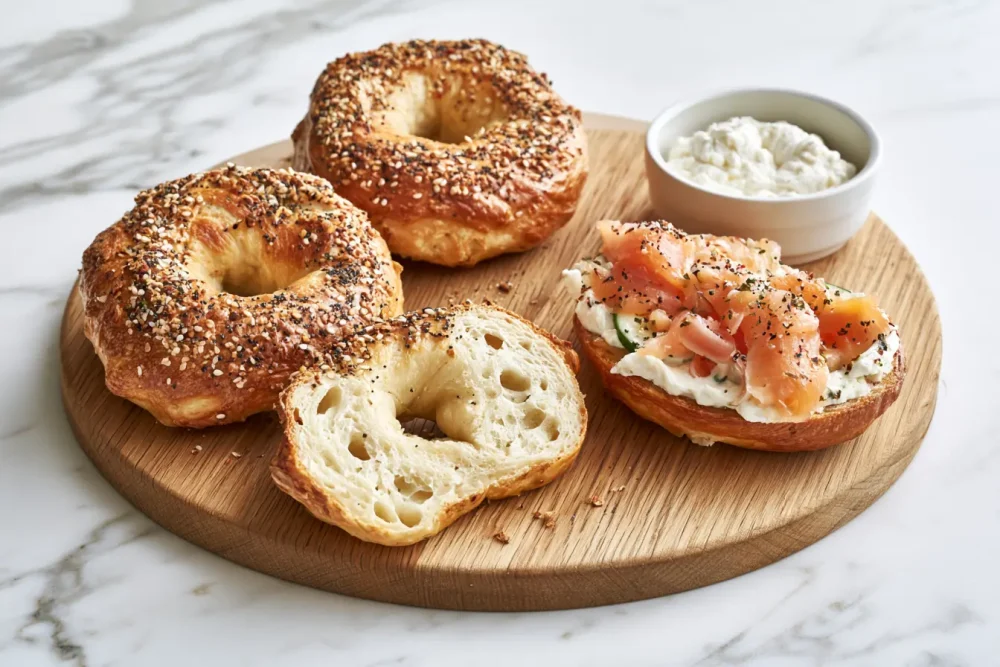
For breakfast, slice and serve them with scrambled or boiled eggs, avocado, tomatoes or cream cheese.
For a more substantial meal, turn one into a sandwich with chicken, egg, salad vegetables or another filling.
They can also be toasted after cooling. Toasting is particularly useful the following day because it restores some exterior crispness.
For another cottage-cheese breakfast, try these cottage cheese protein pancakes.
Are Cottage Cheese Bagels High in Protein?
Cottage cheese contributes considerably more protein to this dough than would be present if the same amount of moisture came from water alone.
However, the exact protein content per bagel depends on the cottage cheese, flour, size of the batch and number of bagels produced.
Do not use a generic figure such as “12g protein per bagel” without calculating your own recipe.
For example, current cottage-cheese bagel recipes report different protein values, including 9g, 11g and 12g per bagel, illustrating how substantially recipes and serving sizes can differ.
For your WP Recipe Maker card, calculate nutrition from the exact cottage cheese and flour used and divide it by 4 bagels.
Nutrition Information
Cottage cheese provides protein along with nutrients found in dairy foods. Flour provides most of the carbohydrate in the recipe.
The final nutrition profile depends strongly on the type of cottage cheese used. Full-fat, reduced-fat and other varieties can have different amounts of calories, fat, protein and salt.
Toppings also matter. Seeds, cheese, egg wash and spreads can change the final nutrition values.
For reliable values, calculate the complete recipe using the exact ingredients rather than copying nutrition information from another cottage cheese bagel recipe.
For more information about dairy foods and their contribution to a balanced diet, see the British Nutrition Foundation guide to dairy and alternatives.
Common Cottage Cheese Bagel Mistakes
The Dough Is Too Sticky
Different cottage cheeses contain different amounts of moisture.
Add extra flour gradually rather than pouring in a large quantity. The dough can remain slightly tacky as long as you can shape it.
Adding Too Much Flour
This is the opposite problem. Adding flour repeatedly until the dough feels completely dry can produce dense bagels.
Stop once the dough is manageable.
Not Blending the Cottage Cheese
You can technically mix cottage cheese directly into some doughs, but blending it gives this recipe a smoother and more consistent texture.
Making the Centre Hole Too Small
The dough expands during baking.
Make the opening larger than you want it to appear in the finished bagel.
Cutting Them Immediately
The centre needs time to set after baking.
Allow the bagels to cool for at least 10–15 minutes before deciding that the interior is undercooked.
Expecting a Traditional New York Bagel
These are quick cottage cheese bagels, not boiled yeast bagels. Their texture will naturally be softer.
Storage and Reheating
Allow the cottage cheese bagels to cool completely before storing them.
Place them in a clean, airtight container and refrigerate them for longer storage because they contain a substantial amount of fresh cottage cheese.
For serving, slice and toast refrigerated bagels until warmed to your preference.
They can also be frozen. Cool them completely, slice if preferred and place them in a freezer-safe container or bag. Separating individual bagels makes it easier to remove only what you need.
Frequently Asked Questions
Can You Make Bagels With Cottage Cheese?
Yes. Cottage cheese can provide the moisture for a quick bagel-style dough when combined with flour and a raising agent. The resulting bagel is softer than a traditional boiled yeast bagel.
Do Cottage Cheese Bagels Taste Like Cottage Cheese?
Blending the cottage cheese distributes it throughout the dough rather than leaving large curds. Its flavour becomes relatively mild once combined with flour and baked.
Do I Have to Blend Cottage Cheese for Bagels?
For this recipe, blending is recommended because it produces a smoother dough and distributes the cottage cheese more evenly.
Can I Use Plain Flour Instead of Self-Rising Flour?
Yes, but plain flour needs an appropriate raising agent. Combine it thoroughly with baking powder and salt before adding the cottage cheese.
Why Are My Cottage Cheese Bagels Sticky?
The cottage cheese may contain more moisture than expected. Add a small amount of flour at a time until the dough becomes manageable.
Why Are My Cottage Cheese Bagels Dense?
Too much flour can produce a denser result. Accurate measurements and avoiding unnecessary additional flour help maintain a softer texture.
Can I Make Cottage Cheese Bagels in the Air Fryer?
Yes, cottage cheese bagels can be air fried, and air-fryer versions are part of the current search intent around this recipe. (recipeswithcottagecheese.com) However, air fryers vary considerably in heat distribution and cooking speed. I would test a specific air-fryer time and temperature before publishing them in your recipe, rather than copying another site’s settings.
Can I Freeze Cottage Cheese Bagels?
Yes. Cool them completely before placing them in a freezer-safe container or bag. They can also be sliced before freezing for easier toasting.
Are Cottage Cheese Bagels the Same as Regular Bagels?
No. Traditional bagels generally use yeast and are boiled before baking. These use cottage cheese and chemical leavening for a quicker preparation method.

Cottage Cheese Bagels
Ingredients
Equipment
Method
- Blend the cottage cheese until smooth and creamy.

- Mix the blended cottage cheese with the self-rising flour until a soft dough forms. Add a little extra flour only if the dough is excessively sticky.
- Divide the dough into 4 portions. Shape each into a rope and join the ends, or form a ball and make a hole in the centre.
- Place the bagels on a lined baking tray. Brush with beaten egg if using and sprinkle with your chosen topping.
- Bake in a preheated 190°C (170°C fan) oven for 25–30 minutes until risen and golden.
- Transfer to a wire rack and cool for 10–15 minutes before slicing and serving.