
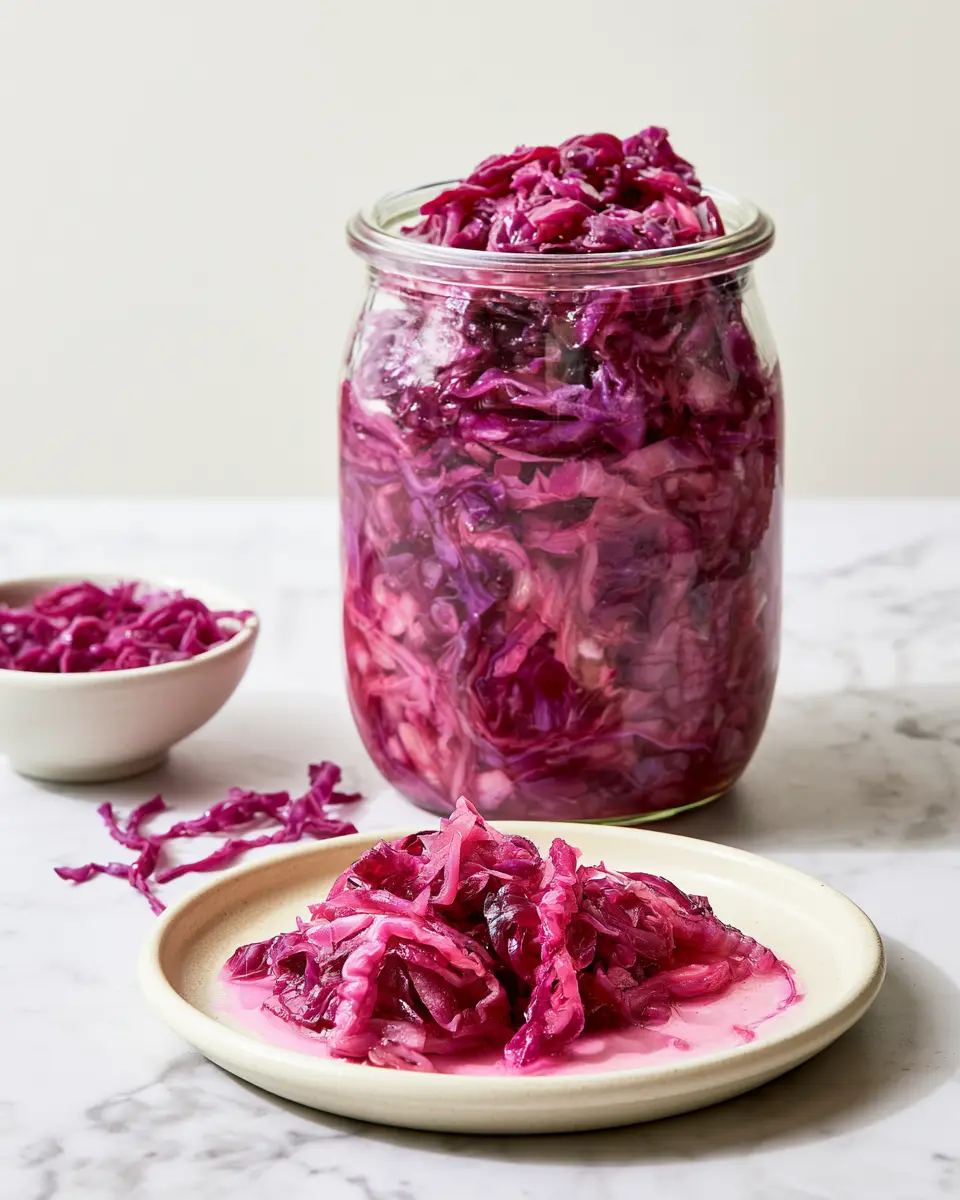
Pickled Red Cabbage: Easy 5-Ingredient Recipe for Tacos and Bowls
Pickled red cabbage made with 5 simple ingredients — ready in 2 hours, crunchy for 10 days. A quick, no-fuss recipe for tacos, bowls, and wraps.
Make crisp pickled red cabbage with just 5 ingredients. A quick, tangy recipe perfect for tacos, wraps, bowls and salads, ready in just 2 hours.
This quick pickled red cabbage is crisp, tangy and ridiculously easy to keep in the fridge for tacos, rice bowls, wraps and salads. The vivid magenta cabbage adds acidity and crunch to rich or savoury meals, and the whole recipe needs just five basic ingredients.
You’ll need red cabbage, apple cider vinegar, salt, sugar and black peppercorns. There’s no water-bath canning or complicated equipment involved: slice the cabbage, salt it briefly, add the warm brine and refrigerate. It’s ready to eat after a few hours, but the flavour is even better the next day.
Why You’ll Love This Pickled Red Cabbage
So here’s what I think makes this pickled red cabbage stand out from a bought version. The cabbage from Coles or Woolworths is usually around $3.50 to $4.00 for a whole head, and one medium cabbage makes two or three full jars. Shop-bought pickled red cabbage tends to be softer, a bit flat, sometimes with a sharp chemical edge. My version keeps its crunch for about a week in the fridge, and the colour that deep violet-pink, stays vivid because apple cider vinegar is gentler than white vinegar.
Right, there’s also the salt-first step, which I think is the difference between limp and crunchy. You massage salt into the shredded cabbage and let it sit for 20 minutes before adding the brine. The cabbage releases water, firms up slightly, and then when you pour the warm (not boiling) brine over, it doesn’t go soft on you. I’ve skipped this step before. Don’t.
Ingredients
You’ll need five core ingredients for this pickled red cabbage recipe. A bit of flexibility exists with the peppercorns I sometimes swap them for half a teaspoon of caraway seeds, which gives a slightly Eastern European edge that’s good with roast lamb or a grain bowl. That’s a variation though, not a requirement.
Here’s what you’re working with: apple cider vinegar is the backbone. Any standard apple cider vinegar works here. For the cabbage, choose a firm, heavy head with tightly packed leaves and no soft spots.
For the steak quesadilla and beef and bean burritos on this site, this pickled red cabbage is genuinely the topping I’d recommend over any store-bought option.
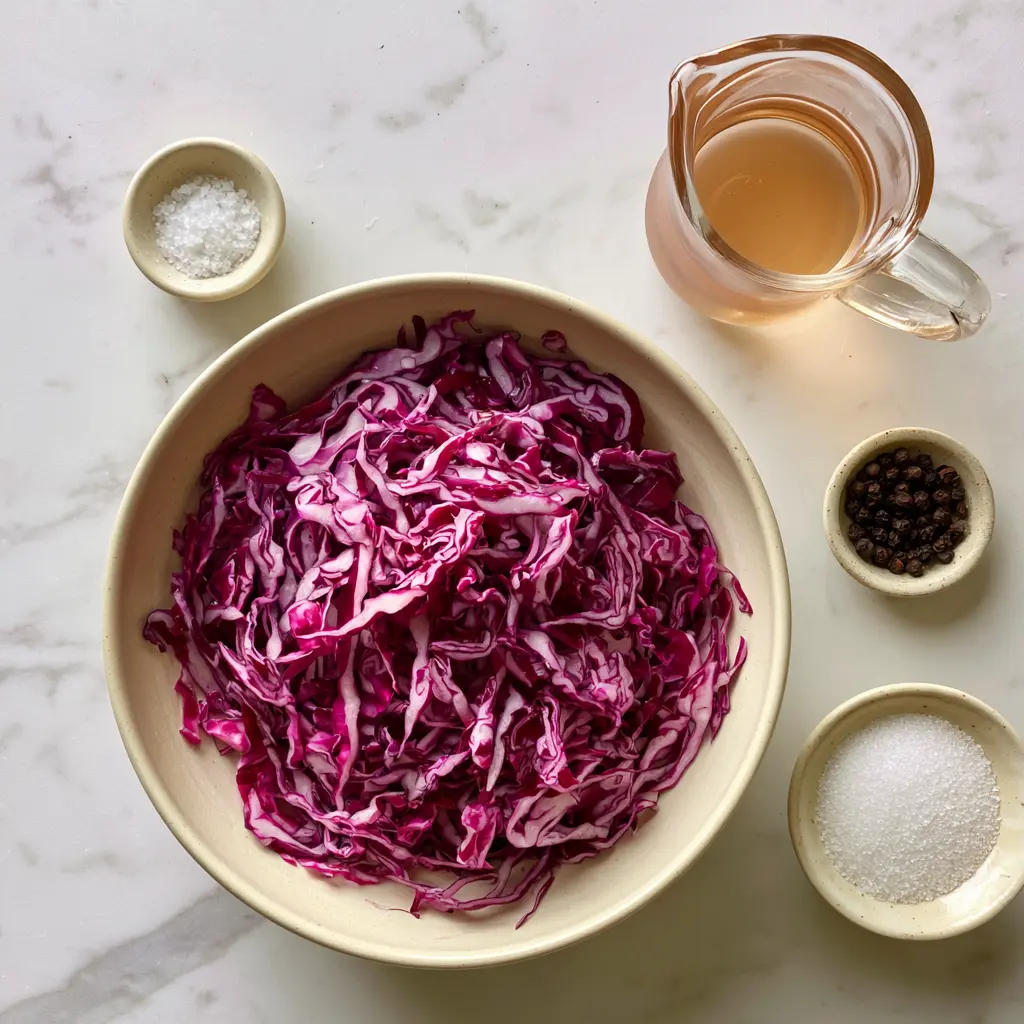
Ingredients list:
- 400g (about half a medium) red cabbage, very finely shredded
- 1 tsp fine sea salt (for the cabbage)
- 180ml (3/4 cup) apple cider vinegar
- 1 tbsp white sugar
- 1 tsp whole black peppercorns
How to Make Pickled Red Cabbage
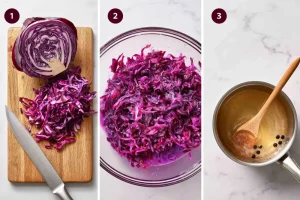
1. Shred the cabbage
Slice the cabbage as finely as you can manage ideally 2-3mm strips. A mandoline makes this faster, but a sharp knife works. Discard the tough outer leaves.
2. Salt and rest
Toss the shredded cabbage with 1 tsp salt in a large bowl. Massage briefly, then leave for 20 minutes. You’ll see liquid pooling at the bottom. Drain this off don’t rinse the cabbage.
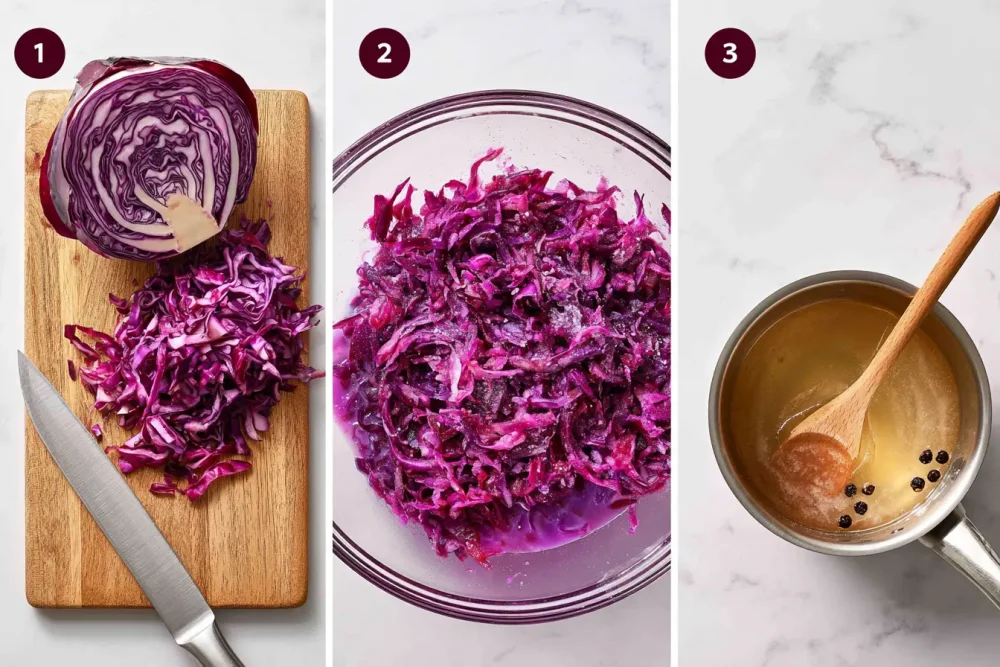
3. Make the brine
Warm the apple cider vinegar and sugar in a small saucepan over low heat for 2 minutes, stirring until the sugar dissolves. Remove from heat. Don’t boil it. You’ll smell that sharp vinegar tang shift into something slightly softer. Add the peppercorns.
4. Pack and pour
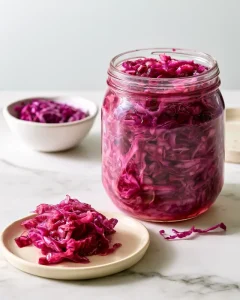
Pack the salted cabbage into a clean 500ml jar (or two 250ml jars). Pour the warm brine directly over. Use a spoon to press the cabbage down so it’s submerged. Seal with the lid.
5. Cool and refrigerate
Leave to cool on the bench for 30 minutes, then refrigerate. The pickled red cabbage is ready in 2 hours and best after 24 hours. That sizzle-hiss when you seal the warm jar is a good sound.
Once the jar has cooled, transfer it to the refrigerator and keep it chilled. This is a quick refrigerator pickle, not a shelf-stable preserve, so it should remain refrigerated. Always use a clean utensil when serving and discard the batch if you notice mould, an unusual smell, or other signs of spoilage.
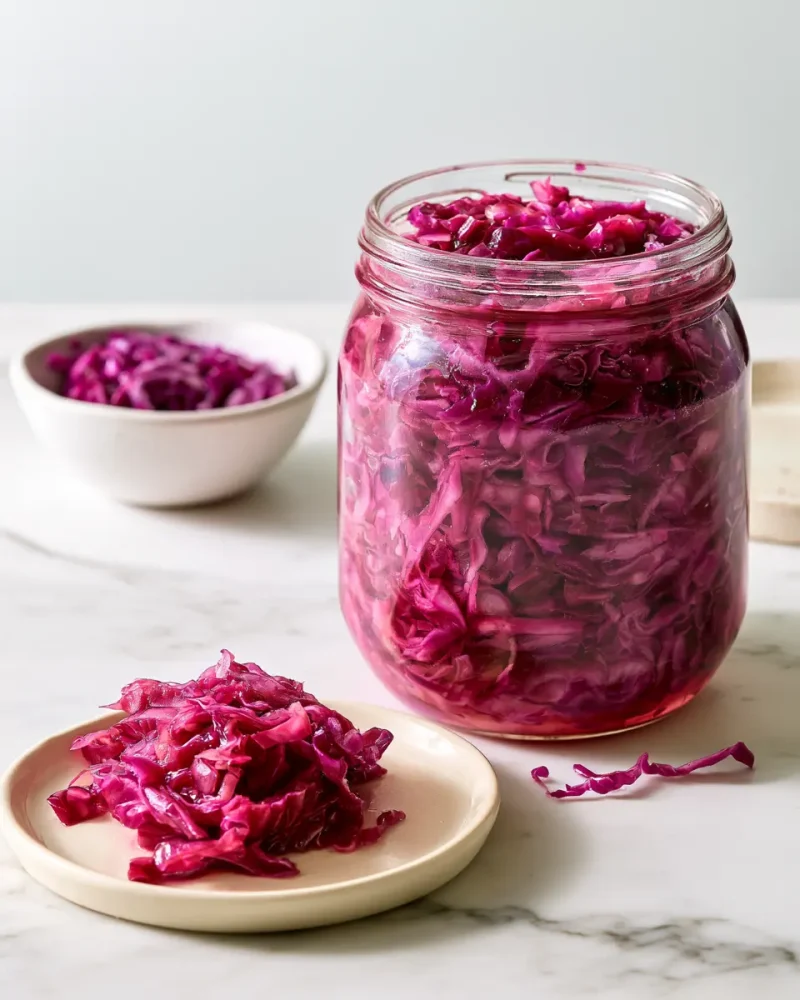
How to Keep Pickled Red Cabbage Crunchy
Then replace the personal story with:
Three details make the biggest difference to the finished texture: slice the cabbage thinly, don’t skip the salt-and-rest step, and use warm rather than boiling brine. Salting draws out some moisture before pickling, while avoiding excessive heat helps the cabbage retain its crunch.
Tips Worth Knowing
Shred it thinner than you think. The closer to 2mm you can get, the better the brine penetrates without the cabbage needing longer than 24 hours to mellow. A mandoline makes it easy to get thin, even slices, but a sharp chef’s knife works perfectly well too.
Don’t skip draining the salt liquid. That pooled water at the bottom of the bowl after the 20-minute rest is salt and cabbage juice. If you pour your brine into it, you dilute the pickling liquid and alter the flavour balance. Drain it off cleanly before packing the jar.
Give it time in the fridge. You can eat the pickled red cabbage after about 2 hours, but the flavour improves noticeably after 24 hours as the brine works through the thinly sliced cabbage. For the best balance of tang, sweetness, and crunch, make it the day before you plan to serve it.
USDA describes refrigerated pickles as products that must remain refrigerated, and notes that refrigeration inhibits microbial growth rather than making every homemade formulation automatically safe for a fixed period.
Taste the brine before you pour it. If it seems too sharp, add another half teaspoon of sugar. If it tastes flat, a pinch more salt. You can adjust this pickled red cabbage brine to your own preference before it goes anywhere near the jar.
Use it within 10 days for peak crunch. After that, the texture softens noticeably. Still edible, still tasty -just a bit more muted. I find the flavour actually peaks around day three.
Variations
Spiced version with caraway. Swap the peppercorns for 1/2 tsp caraway seeds and add a small bay leaf. This version tastes more like a central European-style pickle earthy, slightly anise-adjacent and sits really well alongside roast lamb or a lentil bowl. I’d say it’s probably my second favourite version.
Chilli-spiked pickled red cabbage. Add one dried chilli or a pinch of chilli flakes to the brine. The heat is subtle and background, not front and centre, and it pairs with the steak quesadilla on this site better than the plain version does. Worth trying if you cook anything with heat in it regularly.
Quick-pickled without the salt-rest step. If you genuinely don’t have 20 minutes, you can skip the salting and go straight to the brine but use slightly less vinegar (150ml instead of 180ml) and eat it within three days. The texture won’t hold as long, but it’s still a good result for a same-day need.
Serving This in an Australian Kitchen
Pickled red cabbage goes into more things than most people expect. I put it in the viral doner kebab I make at home a big spoonful on top right before serving, where it cuts through the lamb and yoghurt sauce. It goes on rice bowls with leftover roast chicken, into a cheese toastie with Bega cheddar and a thin smear of mustard, and most usefully it goes into school lunchboxes in a small container alongside a wrap.
For a proper dinner, I’d put a small bowl of it on the table next to the beef and bean burritos from this site and let everyone spoon their own. It works like a condiment more than a side, which means a single jar stretches across a whole week of meals.
Storage and Meal Prep
Keep the pickled red cabbage in a sealed jar in the refrigerator. For the best flavour and crunch, I prefer it during the first several days. Keep the cabbage submerged in the brine, use a clean utensil each time you serve it, and discard the batch if you notice mould, an unusual smell, excessive bubbling, or other signs of spoilage.
If you want to make a larger batch, simply scale the ingredients proportionally. One whole medium cabbage (around 800g after outer leaves are removed) needs 360ml apple cider vinegar, 2 tbsp sugar, and 2 tsp salt. That gives you roughly three 500ml jars, which I find lasts two people about a fortnight if you’re using it regularly.
Don’t freeze it. The texture doesn’t survive. And don’t use jars with metal lids that aren’t lined the vinegar will corrode them. Standard glass jars with plastic-lined lids (Fowler’s, Weck, or even a cleaned pasta sauce jar) work fine.
Common Mistakes
Boiling the brine. Heat drives off the volatile acids that keep the pickle bright and tangy. Warm the vinegar only until the sugar dissolves 2 minutes on low heat is plenty. Boiling gives you a flatter, less vivid result.
Over-packing the jar. If you push too much cabbage in, the brine can’t circulate properly. The cabbage at the top of the jar will sit above the liquid line and not pickle evenly. Pack firmly but not tightly, and make sure the brine covers everything by at least 1cm.
Using the wrong vinegar. White malt vinegar is sharper and more aggressive it produces a harsher result. Apple cider vinegar is the one for this. Rice vinegar also works as a substitute (adds a slightly softer, less tangy flavour), but I think apple cider is the better call for pickled red cabbage specifically.
FAQ
How long does pickled red cabbage take before it’s ready to eat?
It’s technically ready in 2 hours, but most of the time I find the flavour is noticeably better at the 24-hour mark. That’s when the brine has moved through the cabbage properly and the sharpness has settled.
Can I make pickled red cabbage without sugar, or is it necessary for the recipe to work?
You can leave out the sugar and the pickling will still work the vinegar does the preserving. The flavour will be sharper and more one-note without it, though. I’d say keep it in; one tablespoon across a whole jar isn’t a lot and it balances the acidity in a way that makes the finished pickled red cabbage much more versatile. If I’m honest, the sugar is probably what makes you want to eat it on everything.
My pickled red cabbage went purple-grey instead of that vivid magenta colour I see in photos what went wrong, and is there a way to fix it or prevent it next time?
Red cabbage gets its colour from anthocyanins, natural pigments that change colour depending on acidity. A sufficiently acidic brine encourages the vivid reddish-magenta tones associated with pickled red cabbage, while a less acidic environment can leave it looking more purple or blue. Natural variation between cabbages can also affect the final shade.

Pickled Red Cabbage
Ingredients
Equipment
Method
- Finely shred the red cabbage into 2–3 mm strips and discard the tough outer leaves.

- Toss the shredded cabbage with the sea salt, massage briefly and leave for 20 minutes. Drain away the released liquid without rinsing.
- Warm the apple cider vinegar and sugar over low heat for about 2 minutes until the sugar dissolves. Remove from the heat, stir in the black peppercorns and do not allow the mixture to boil.
- Pack the cabbage into a clean 500 ml jar, pour the warm brine over the cabbage and press it down so it remains fully submerged before sealing the jar.
- Leave the jar to cool for 30 minutes, then refrigerate for at least 2 hours before serving. The flavour is best after 24 hours.