
How to Make Matcha Latte at Home: Easy 5-Minute Recipe
How to make matcha latte at home in just 5 minutes with no fancy gear. Simple steps, creamy froth, zero bitterness — your cafe order, made in your kitchen.
Learn how to make matcha latte at home in 5 minutes. Get a smooth, creamy result without clumps, plus easy tips for hot or iced matcha.
Learning how to make a matcha latte at home is surprisingly simple. With good matcha, hot water and your favourite milk, you can make a smooth, creamy latte in about five minutes. The key is sifting the matcha, using water below boiling point and whisking thoroughly before adding warm, frothed milk.
This easy matcha latte recipe works with oat milk or dairy milk and can be lightly sweetened with honey or maple syrup. You can also turn it into an iced matcha latte using the same basic method.
How to Make a Smooth Matcha Latte at Home
Two things make the biggest difference: avoiding clumps and controlling bitterness. Sift the matcha before whisking, then use water around 70–80°C rather than pouring it straight from a boiling kettle.
For the milk, you don’t need a steam wand. Heat it until steaming but not boiling, then use a handheld frother or small whisk to create a light layer of foam.
Once you know how to make matcha latte at home, adjusting the sweetness, milk and matcha strength becomes easy.
Matcha Latte Ingredients
You only need a few ingredients, so the quality and proportions of each one have a noticeable effect on the finished drink.
Matcha powder: Use 1 teaspoon, or about 2g, for a balanced latte. You’ll often see products labelled ceremonial or culinary grade, although these aren’t universally standardized grades. For drinking, look for matcha that is fresh, vibrant green and pleasantly vegetal rather than dull or excessively bitter.
Hot water: You’ll need 60ml. I use water around 70–80°C rather than freshly boiling water. The small amount of water creates a concentrated matcha base before the milk is added.
Milk: Use around 200ml of your preferred milk. Whole dairy milk gives the latte a creamy body, while oat milk is an excellent dairy-free option because of its naturally smooth texture. Barista-style plant milks are particularly useful if you want more foam.
Sweetener: Honey and maple syrup both work well, but they’re optional. Start with one teaspoon, taste the finished latte and add more only if needed.
Vanilla: A small splash of vanilla extract is optional but works particularly well if you’re new to matcha and want a softer flavour.
Matcha is made from specially processed green tea leaves that are ground into a fine powder. You can learn more about how traditional Japanese matcha is produced from Japan’s Ministry of Agriculture, Forestry and Fisheries.
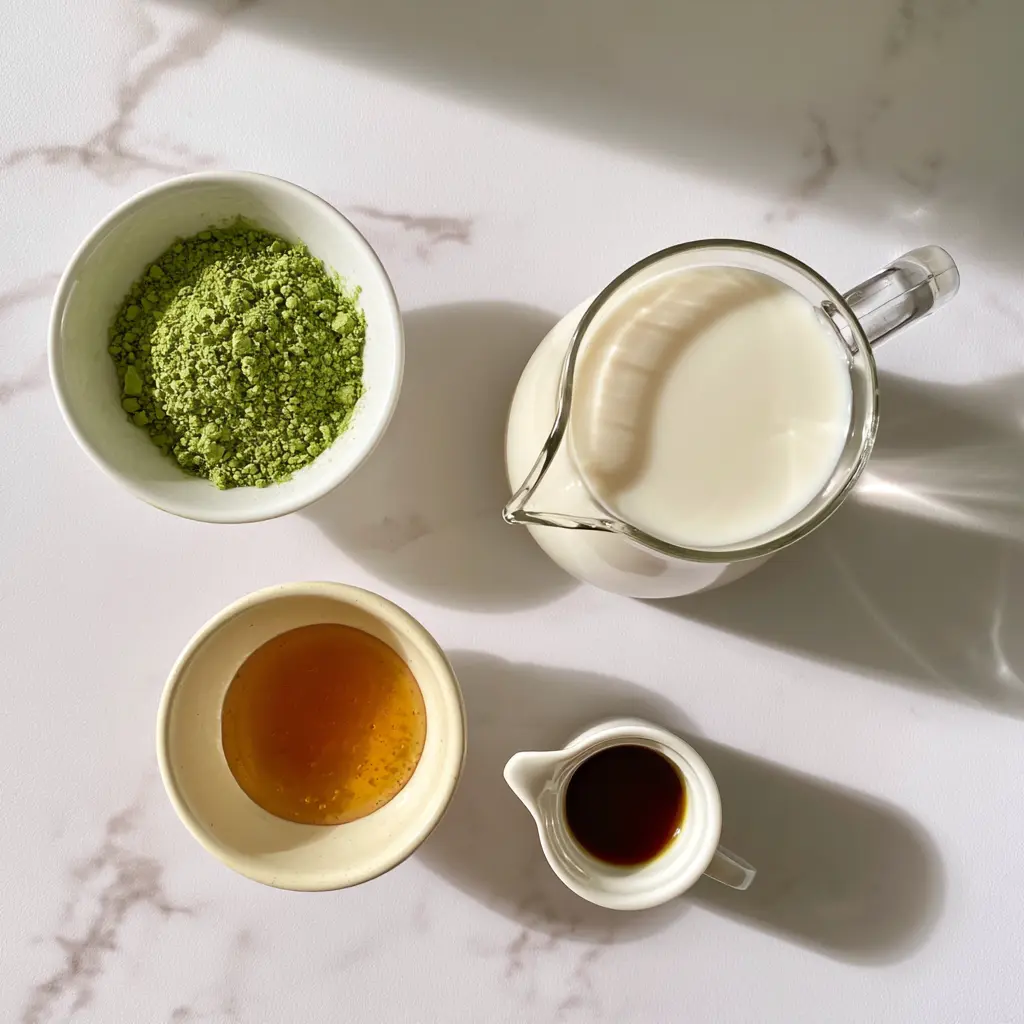
Ingredients for One Matcha Latte
1 tsp (2g) matcha powder
60ml hot water, around 70–80°C
200ml oat milk or whole dairy milk
1–2 tsp honey or maple syrup, optional
Small splash of vanilla extract, optional
For a stronger matcha latte: Increase the matcha to 1½ teaspoons first. If you already enjoy a pronounced matcha flavour, you can use up to 2 teaspoons and adjust the milk or sweetener to taste.
How to Make Matcha Latte
The key to how to make matcha latte at home successfully is preparing a smooth matcha base before adding the milk.
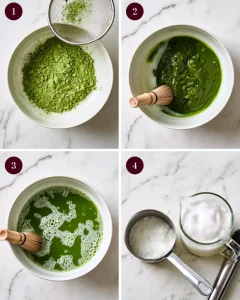
1. Sift the matcha
Spoon the matcha powder into a small bowl and sift it through a fine-mesh strainer. Takes 10 seconds and prevents every lump you’d otherwise spend the next two minutes fighting.
2. Make the paste
Add about 15ml (1 tbsp) of your 70-75°C water to the sifted matcha and stir it into a smooth paste using a small spoon or bamboo whisk. This step matters skipping it is why people end up with gritty bits at the bottom.
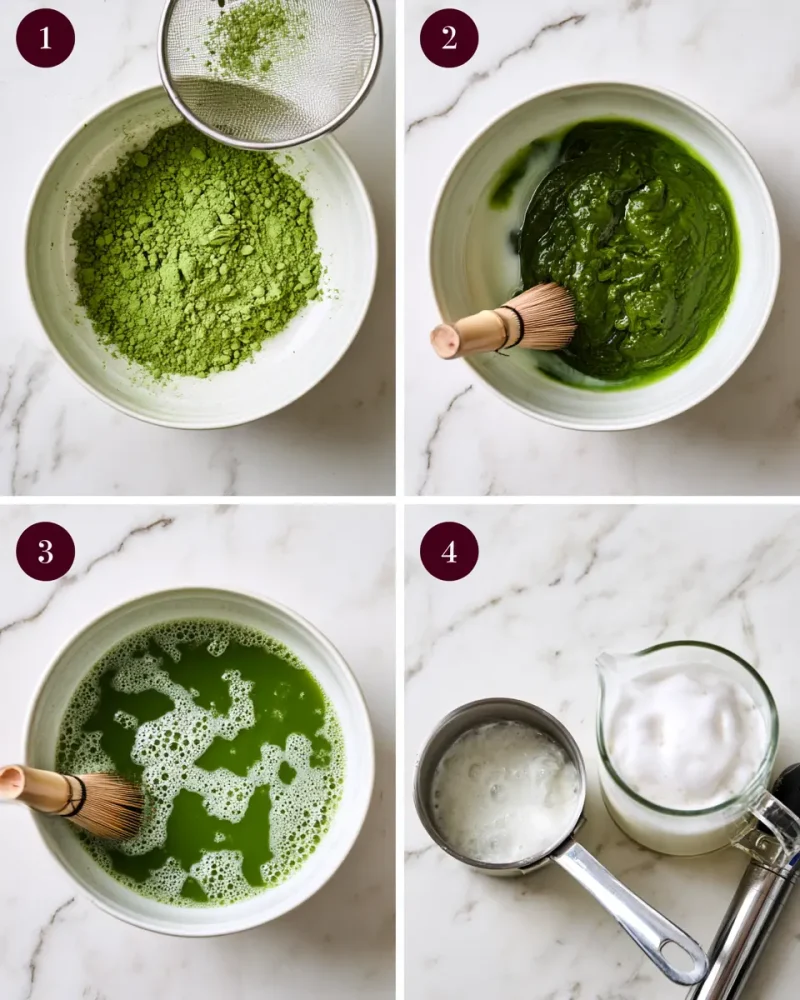
3. Whisk the matcha
Pour in the remaining hot water (about 45ml / 1.5 fl oz) and whisk vigorously in a W or M motion for 20-30 seconds until the surface shows a light froth. If you have a bamboo chasen, use it. If not, a small balloon whisk works fine.
4. Froth the milk
Heat your milk in a small saucepan over medium heat until steaming around 65°C (150°F), which takes about 90 seconds. Don’t let it boil. Use a handheld frother for 20-30 seconds until you get a foam layer about 1cm thick.
5. Combine and sweeten
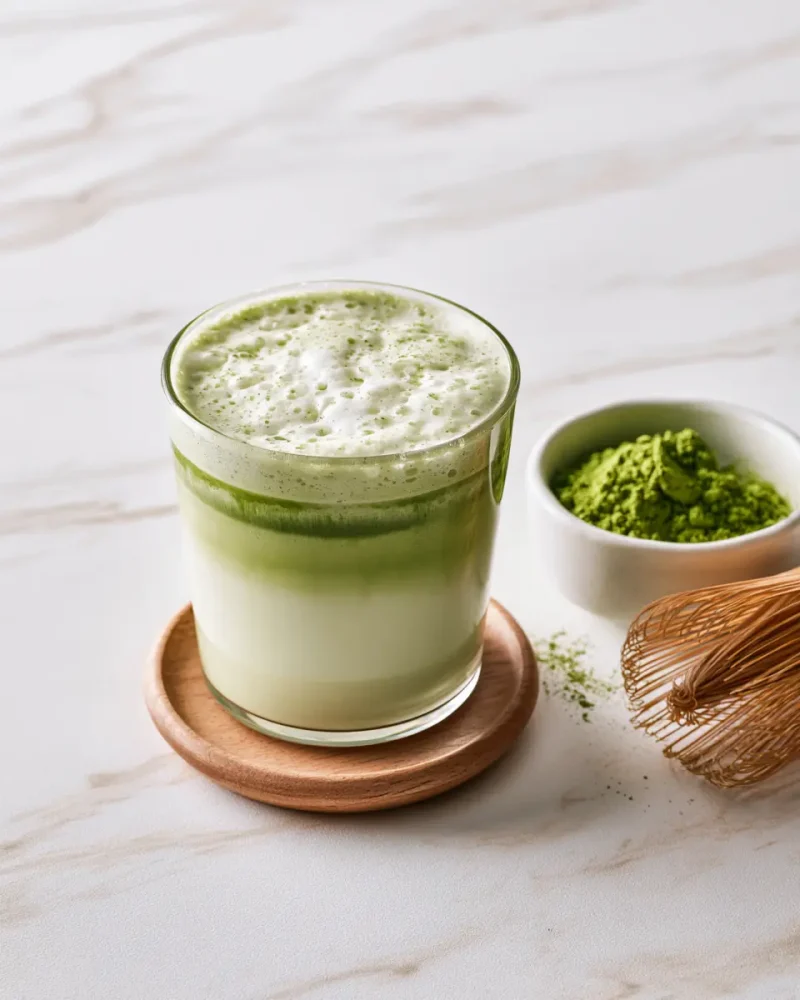
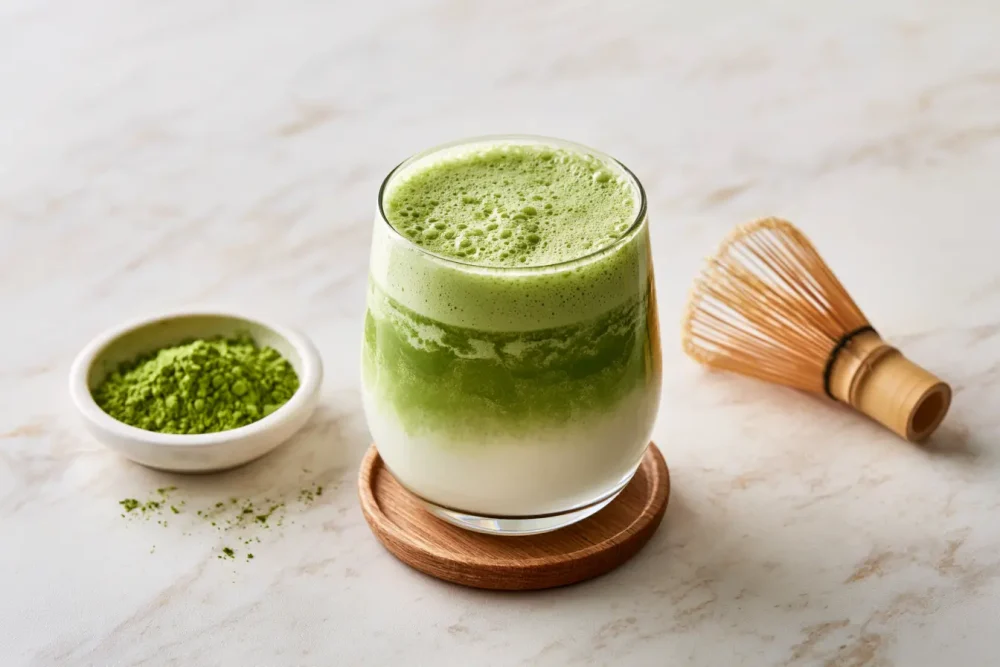
Pour the matcha into your mug first, then slowly pour the frothed milk over the back of a spoon to get that layered look. Add honey or maple syrup now if you want sweetness, and stir gently. Done.
How to Avoid a Bitter or Clumpy Matcha Latte
Sift the matcha first. Matcha forms small clumps easily, so passing it through a fine-mesh strainer helps create a smoother drink.
Avoid boiling water. Water around 70–80°C works well for this recipe and produces a smoother flavour.
Start with a small amount of water. Whisking the matcha with a little water first makes it easier to create a smooth mixture before adding the rest.
Don’t boil the milk. Heat it until steaming, then froth immediately for a creamy texture.
Tips That Actually Help
Pull the water off the boil and wait. Don’t guess at 70-75°C unless you have a thermometer. I boil the kettle, pour the water into a ceramic jug, and wait exactly two minutes. That gets you pretty close every time, and it’s the single most reliable habit I’ve built around how to make matcha latte at home.
Sifting takes 10 seconds. I keep a small fine-mesh strainer next to my matcha tin specifically for this. You can find one at any Coles or Woolworths in the baking aisle for around $4-6. Worth it.
Iced version works the same way. Make the matcha paste and whisk it with hot water as normal, then pour over a glass of ice and add cold oat milk. Don’t skip the hot paste step even for the iced version cold water won’t dissolve the powder. If you enjoy cold drinks through summer, the banana pudding milkshake is another easy no-blender-required option worth checking out.
Sweetener goes in at the end. If you add honey before frothing, the foam gets weirdly dense and sticky. Stir it in after the milk is combined.
Ceramic mugs hold temperature better. A 300ml white ceramic mug keeps the drink warm a good 10 minutes longer than a thin glass tumbler. Small thing, but it matters when you’re learning how to make matcha latte at home and want to actually enjoy the result without rushing.
Easy Matcha Latte Variations
Once you know the basic matcha-to-water ratio, you can turn the same recipe into several different drinks without changing the technique.
Iced Matcha Latte
Prepare the matcha with hot water exactly as described in the main recipe. Fill a tall glass with ice, add 200ml cold milk, then pour the prepared matcha over the top. Stir before drinking. Add maple syrup or honey if you prefer it sweetened.
Learning how to make matcha latte at home also gives you the perfect base for an iced version.
Vanilla Matcha Latte
Add a small splash of vanilla extract to the milk before combining it with the matcha. Vanilla softens some of matcha’s vegetal character without overwhelming it, making this a particularly approachable variation for someone trying matcha for the first time.
Honey Matcha Latte
Stir 1–2 teaspoons of honey into the warm matcha mixture before adding the milk. Starting with warm matcha helps the honey incorporate evenly.
Oat Milk Matcha Latte
Replace dairy milk with oat milk using the same quantity. For a hot latte, a barista-style oat milk will generally give you the easiest frothing experience. For an iced latte, regular oat milk works perfectly well.
Strong Matcha Latte
Increase the matcha from 1 teaspoon to 1½ teaspoons while keeping the other quantities the same. Taste before increasing it further. Using more powder changes both the intensity and bitterness, so small adjustments work better than immediately doubling the amount.
If you prefer cold, creamy drinks, try this banana pudding milkshake for another easy homemade option.
What to Serve With a Matcha Latte
Matcha’s earthy, slightly vegetal flavour pairs particularly well with lightly sweet breakfasts and baked treats. For breakfast, serve it alongside toast, overnight oats or fresh fruit. For something sweeter, these almond flour cookies make a simple pairing.
For weekend brunch, a matcha latte also works well alongside cinnamon roll French toast. The sweeter cinnamon flavour provides a good contrast to the matcha.
If you’re serving several people, prepare individual portions of matcha rather than leaving a finished latte sitting for a long time. Froth the milk shortly before serving so each drink keeps its best texture.
For something sweet alongside your latte, these almond flour cookies make an easy pairing.
How to Store Matcha for the Best Flavour
Matcha is sensitive to air, moisture, heat and light, so storage matters more than it does with many ordinary pantry ingredients.
Keep the powder tightly sealed in its original container or another airtight container. Store it somewhere cool and dark, away from the stove, direct sunlight and strong-smelling ingredients. Always use a clean, dry spoon so moisture doesn’t enter the container.
Because matcha is quick to prepare, I don’t recommend making the matcha-and-water mixture days in advance simply to save time. Whisking a fresh portion takes less than a minute and gives you better control over the texture and flavour.
A prepared hot matcha latte is best served immediately, particularly once the milk has been frothed. For an iced latte, prepare the matcha base when you’re ready to assemble the drink rather than storing a completed latte.
Why Your Homemade Matcha Latte Isn’t Smooth
If your first homemade matcha latte doesn’t look like the smooth green drink you expected, the problem is usually technique rather than the recipe itself. These are the issues worth checking before changing the ingredient ratios.
Your matcha is clumpy
Small green lumps usually mean the matcha wasn’t sifted or wasn’t dispersed thoroughly before the rest of the liquid was added. Sift the powder first, then begin with only a small amount of water. Whisk until completely smooth before gradually adding the remainder.
Your matcha tastes too bitter
Start by checking the water temperature and the amount of powder you’re using. For this recipe, use water around 70–80°C and begin with 1 teaspoon of matcha. If the flavour is still stronger than you enjoy, reduce the amount slightly or increase the milk rather than immediately adding lots of sweetener.
The matcha itself also matters. Powder that has been stored poorly or open for a long time may taste noticeably different from a freshly opened product.
Matcha collects at the bottom of the mug
Matcha doesn’t behave exactly like an instant drink powder. Because you’re consuming finely ground tea leaves dispersed through liquid, some settling can occur if the drink sits for a while. Proper whisking minimizes this. If your latte has been sitting, give it a quick stir before drinking.
Your latte isn’t foamy
The matcha itself doesn’t need a huge amount of foam, but properly frothed milk gives the finished drink a creamier café-style texture. If you’re using plant milk, a barista-style version generally performs better for frothing than some standard plant milks.
The matcha flavour disappears under the milk
Start with slightly less milk or increase the matcha from 1 teaspoon to 1½ teaspoons. The ideal ratio depends heavily on the strength of the matcha and your own preference, so treat the basic recipe as a starting point rather than a rigid formula.
Common Matcha Latte Mistakes
Using boiling water. For this recipe, use water around 70–80°C rather than pouring it directly from a boiling kettle. This produces the smoother flavour we’re aiming for.
Not sifting the matcha. Even good matcha can contain tiny compressed clumps. Sifting before adding water makes them much easier to eliminate.
Adding all the liquid at once. It’s easier to create a smooth matcha base with a small amount of water first, then whisk in the remaining water.
Using too much matcha immediately. More isn’t automatically better. Start with 1 teaspoon and increase gradually if you want a stronger flavour.
Boiling the milk. Heat it until steaming, then froth it. Excessive heating isn’t necessary and can negatively affect the texture you’re trying to create.
Trying to fix bitterness with lots of sweetener. Check the matcha quantity, water temperature and freshness first. Sweetener should balance the drink, not hide a badly prepared matcha base.
Matcha Latte FAQ
how to make matcha latte without a bamboo whisk?
Yes. A bamboo chasen is excellent for whisking matcha, but it isn’t essential for making a latte at home. A small kitchen whisk or handheld frother can also disperse the powder. Sifting the matcha first becomes particularly helpful when you’re not using a traditional bamboo whisk.
how to make matcha latte without a milk frother?
Yes. The milk doesn’t have to be heavily frothed for the recipe to work. You can warm it and pour it directly into the prepared matcha, or whisk the warm milk vigorously to create some foam. A handheld frother simply makes achieving a café-style texture easier.
What milk is best for a matcha latte?
Whole dairy milk produces a creamy latte and froths easily. Oat milk is one of the easiest plant-based alternatives because its mild sweetness works well with matcha. Barista-style oat milk is particularly useful for hot drinks when you want more foam. Almond, soy and coconut milk can also be used, although each changes the flavour and texture.
Why is my matcha latte bitter?
Start by checking three things: water temperature, matcha quantity and freshness. Use water below boiling, start with around 1 teaspoon of matcha per serving, and make sure the powder has been stored properly. If the drink is still stronger than you enjoy, slightly reduce the matcha or increase the milk.
Why is my matcha latte clumpy?
Matcha naturally forms small clumps because the powder is extremely fine. Sift it before adding water, then whisk it first with a small amount of water before adding the remainder. Trying to stir dry matcha directly into a full mug of milk is much more likely to leave lumps.
Can I make an iced matcha latte with this recipe?
Yes. Whisk the matcha with the hot water exactly as you would for the hot recipe. Fill a glass with ice, add cold milk and pour the prepared matcha over it. Sweeten to taste and stir before drinking.
Is ceremonial grade matcha necessary for a latte?
No. Terms such as “ceremonial” and “culinary” are widely used commercially but aren’t universally standardized grades. For a latte, look for matcha with a fresh aroma, vibrant green colour and flavour you enjoy. Because milk and optional sweetener soften the matcha, you don’t necessarily need the most expensive powder available.
Can I make a matcha latte ahead of time?
Fresh is best, particularly for a hot latte with frothed milk. If you’re making an iced version, you can assemble it shortly before drinking, but the matcha may settle over time. Stir or shake the drink again before serving if necessary.
These common questions cover everything you need to know about how to make matcha latte at home with consistently smooth results.

Matcha Latte
Ingredients
Equipment
Method
- Sift the matcha powder into a small bowl using a fine mesh sieve to remove any clumps.
- Add about 15ml of the hot water and whisk into a smooth paste.
- Add the remaining hot water and whisk vigorously in a W or M motion for 20–30 seconds until lightly frothy.

- Heat the milk until steaming but not boiling, then froth until a light foam forms.
- Pour the matcha into a mug, top with the frothed milk, stir in honey, maple syrup or vanilla if using, and serve immediately.